
Selecting the right protective gear for wet environments often comes down to a trade-off between absolute waterproofness and the wearer's ability to move freely. For professionals in construction, logistics, or outdoor maintenance, the failure of a single seam can lead to discomfort and reduced productivity throughout a shift.
The industry has shifted from basic rubberized coatings to advanced polyurethane (PU) composites that balance durability with weight. This evolution focuses on critical failure points—such as the crotch and leg openings—ensuring that moisture cannot penetrate regardless of the intensity of the rain or the physical demands of the job.
Understanding the technical specifications behind mens waterproof trousers is essential for procurement managers and safety officers who need to maintain high operational standards in challenging weather.
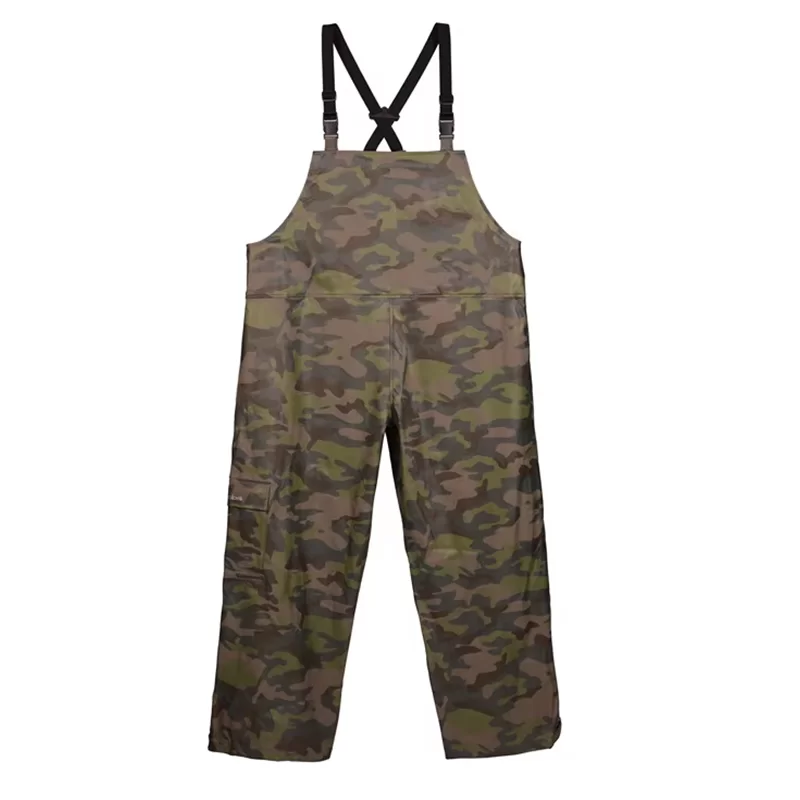
Historically, waterproof trousers relied on heavy, non-breathable plastics that offered protection but hindered mobility and caused overheating. The introduction of knitted polyester fabrics coated with polyurethane (PU) marked a significant transition, allowing for a garment that could bend and stretch without cracking the waterproof layer.
Today, the focus has shifted toward specialized constructions like bibpants. By incorporating adjustable suspenders and reinforced crotch welds, manufacturers have addressed the most common failure points in workwear, ensuring that the garment remains secure and leak-proof even during strenuous physical activity.
The efficacy of professional waterproof trousers depends on the synergy between the shell fabric and the assembly method. A standard high-performance build utilizes a 100% polyester knitted base fabric with a PU coating, typically ranging between 190-200gsm. This weight provides a critical balance: it is heavy enough to resist abrasion and punctures but light enough to prevent wearer fatigue.
Welded seams are the most critical design element. Unlike traditional stitching, which creates thousands of tiny holes (needle penetrations), welding uses heat and pressure to fuse the material together. This creates a monolithic barrier that is inherently waterproof. In high-stress areas like the crotch, reinforced welds are applied to prevent the material from splitting under tension.
Ergonomic adjustments further enhance the technical utility. Fix-lock buckles on suspenders allow for precise torso adjustment, while Velcro or snap closures at the leg openings ensure a tight seal around boots. This prevents water from "wicking" upward from the ground into the trouser leg.
When evaluating waterproof gear, the "waterproof rating" is the primary metric. Measured in millimeters (mm), this indicates the amount of water pressure a fabric can withstand before leaking. For professional-grade workwear, a rating of 5000mm is a common benchmark, signifying that the material can resist significant pressure from rain and temporary contact with wet surfaces.
The true measure of waterproof trousers is not just the fabric's rating, but the integrity of the seams and the quality of the coating. A 5000mm fabric with stitched seams will fail far sooner than a 3000mm fabric with fully welded seams.
Beyond waterproofness, windproofing is essential for thermal regulation. By blocking wind penetration, the PU coating prevents "wind chill," which can rapidly lower the body temperature of outdoor workers. This dual-functionality ensures that the wearer remains dry and warm, reducing the risk of hypothermia in cold, rainy climates.
Different fabric constructions offer varying levels of performance across key categories. While pure rubber is unmatched in waterproofness, it fails in flexibility and weight. Conversely, light nylon is highly flexible but requires expensive membranes to achieve industrial-grade waterproofing.
Polyurethane-coated polyester, as used in many professional mens waterproof trousers, provides a balanced efficiency profile. It offers high durability and absolute water blocking while maintaining a weight that allows for a full range of motion.
In a typical industrial setting, such as a shipyard or a construction site, workers frequently kneel or climb, putting immense stress on the crotch and knee areas of their trousers. This is where the PU Overall design proves its value. The integration of a bib with adjustable suspenders prevents the trousers from slipping during deep squats, while reinforced welds ensure the garment doesn't tear under pressure.
For outdoor excursionists or field researchers, the requirement shifts slightly toward versatility. The addition of large cargo pockets on the legs and adjustable leg openings allows these trousers to be worn over various types of footwear, from heavy-duty work boots to hiking shoes, ensuring that no water enters through the ankle gap regardless of the terrain.
The textile industry is facing increasing pressure to reduce the environmental footprint of synthetic waterproof coatings. Traditional PFAS-based water repellents have raised ecological concerns, leading manufacturers to seek OEKO-TEX Standard 100 certified materials. This certification ensures that the fabrics are free from harmful substances, protecting both the wearer and the environment.
Durability is a core pillar of sustainability. A garment that lasts three seasons instead of one significantly reduces waste. By utilizing high-gsm PU coatings and reinforced welds, companies can produce rainwear that resists wear and tear, reducing the frequency of replacement. This "slow fashion" approach to industrial gear is becoming the standard for European and North American markets.
Furthermore, the integration of GRS (Global Recycled Standard) auditing in factories allows for better tracking of raw materials. Using recycled polyester for the base fabric of waterproof trousers reduces the reliance on virgin petroleum products without compromising the 5000mm waterproof rating.
Choosing the right pair of mens waterproof trousers requires a systematic evaluation of the specific environment. A worker in a light-rain environment may prioritize breathability and weight, whereas a professional in a heavy-industrial setting must prioritize weld strength and abrasion resistance.
The trade-off usually exists between flexibility and protection. Heavier PU coatings offer better puncture resistance but can feel restrictive. Therefore, a 190-200gsm knitted fabric is often the "sweet spot" for general industrial use, providing sufficient protection while allowing the user to perform complex movements.
Finally, the method of closure—whether using Velcro, snaps, or elasticated braces—should match the user's operational needs. For those working with heavy boots, adjustable leg openings are non-negotiable to prevent water ingress.
| Application Scenario | Priority Factor | Recommended Spec | Suitability Index |
|---|---|---|---|
| Heavy Construction | Abrasion Resistance | Reinforced PU Welds | High |
| Light Logistics | Weight/Mobility | 190gsm PU Coating | High |
| Forestry/Outdoor | Tear Strength | Ripstop Polyester Base | Medium-High |
| Urban Maintenance | Versatility | Standard Bibpants | High |
| Extreme Rainfall | Water Pressure | 5000mm+ Rating | Critical |
| Cold/Wet Climate | Windproofing | PU Laminated Shell | High |
Stitched seams use a needle and thread to join fabric, which creates small holes that can leak under pressure. Even with seam tape, they are more prone to failure. Welded seams use heat to fuse the PU material together, creating a continuous, airtight, and waterproof bond. For professional industrial gear, welded seams are far superior as they eliminate the primary point of water penetration.
A 5000mm rating means the fabric can withstand a column of water 5,000 millimeters high before water begins to seep through. In real-world terms, this is more than enough for heavy rain and light pressure. However, if you lean against a wet wall or kneel in a puddle, the pressure at that specific point increases significantly, which is why reinforced areas and high-quality PU coatings are necessary.
Bibpants (or overalls) provide superior protection by covering the torso, preventing water from leaking into the waistline—a common issue with standard trousers. They also feature adjustable suspenders that hold the trousers securely in place, preventing them from slipping during physical labor. This makes them the ideal choice for professionals who spend long hours in wet environments.
Traditional PU coatings are primarily designed for absolute waterproofness and windproofing, which means they have lower breathability than expensive GORE-TEX membranes. However, for many industrial applications, absolute protection from external water is the priority. To manage internal moisture, these garments are often designed for layering, allowing the wearer to adjust their base layers for thermal comfort.
Look for certifications such as OEKO-TEX Standard 100, which ensures the chemicals used in the PU coating and fabric are non-toxic. Additionally, BSCI and GRS certifications indicate that the manufacturer adheres to social responsibility and recycled material standards. Choosing durable, high-quality gear also reduces waste by extending the garment's lifecycle.
Avoid washing PU gear with harsh detergents or high heat, as this can degrade the polyurethane coating. Instead, wipe down the exterior with a damp cloth. If the garment is heavily soiled, use a mild soap and cool water. Avoid machine drying; air drying in a shaded area prevents the coating from cracking and maintains the 5000mm waterproof barrier.
The effectiveness of waterproof workwear is defined by the intersection of material science and ergonomic design. From the 5000mm waterproof rating of the PU coating to the precision of welded seams, every technical detail serves to protect the wearer from the elements while maintaining operational efficiency.
As the industry moves toward more sustainable, OEKO-TEX certified materials, the focus remains on longevity and reliability. By selecting gear based on a rigorous framework of application-specific needs, professionals can ensure they remain dry, safe, and productive in any weather condition.