
Selecting the right outer layer for wet weather often comes down to a balance between absolute waterproofness and physical mobility. For professionals and enthusiasts who operate in unpredictable environments, the material choice determines whether the gear remains a protective shield or becomes a restrictive hindrance.
The shift toward polyurethane (PU) coatings in modern rainwear addresses the need for an impermeable barrier that does not compromise the structural integrity of the base fabric. Unlike simple treated nylon, a high-quality pu raincoat provides a consistent surface tension that sheds water instantly while maintaining wind resistance.
This analysis examines the technical requirements of heavy-duty rainwear, specifically focusing on the integration of PU coatings and the design considerations necessary for specialized activities like equestrian riding and outdoor industrial work.
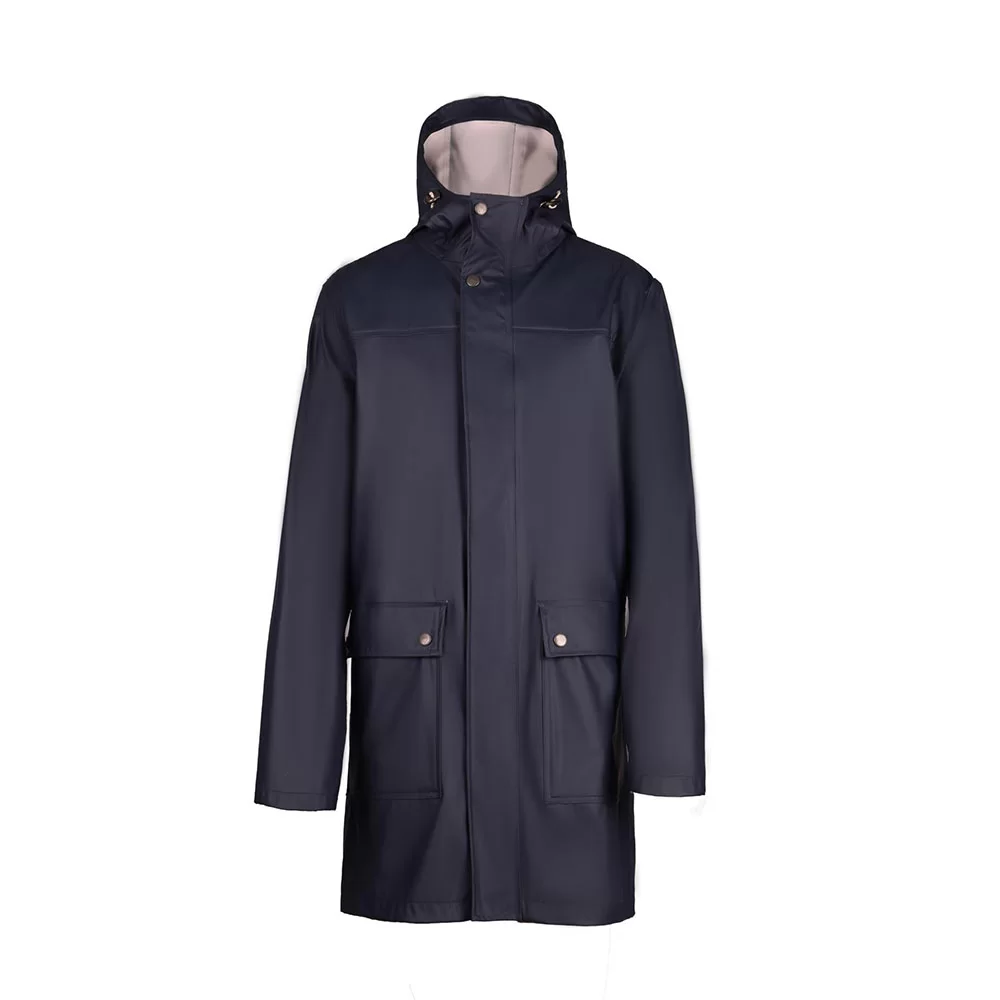
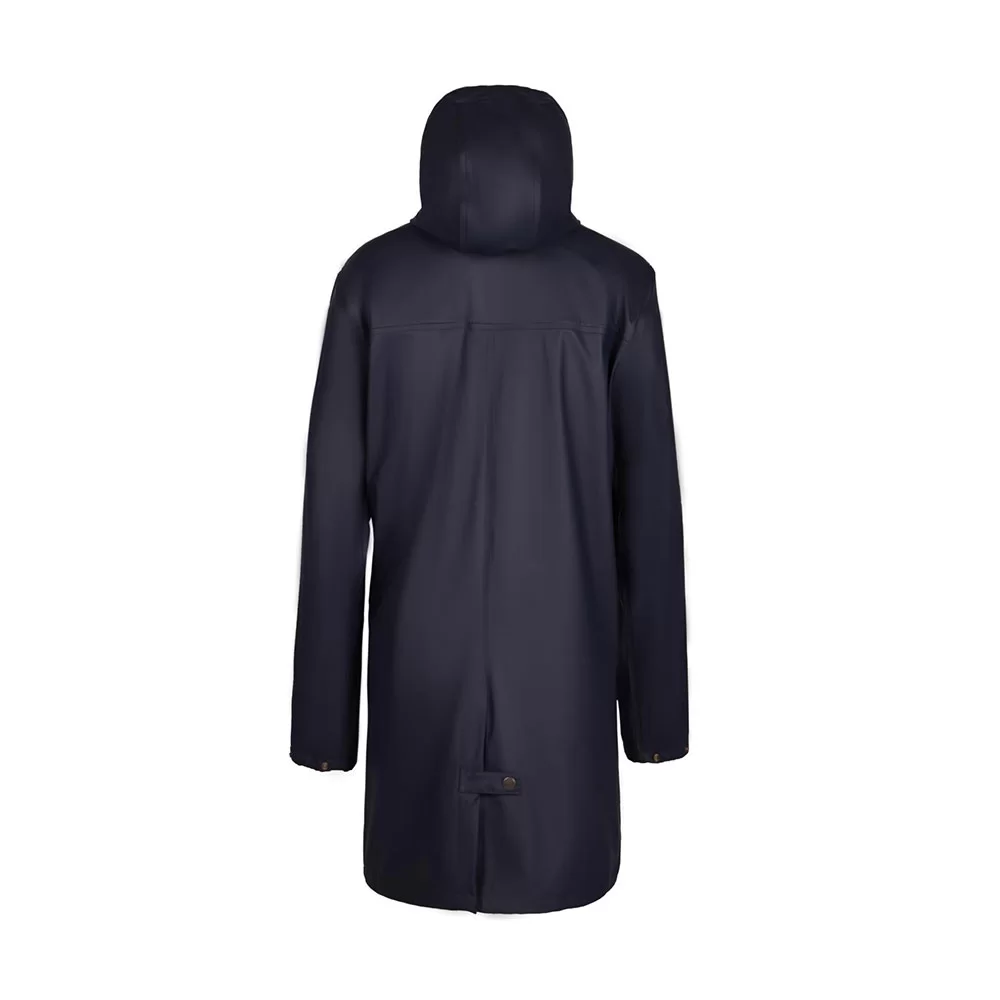
At its core, a PU raincoat relies on a polymer layer applied to a base substrate—often polyester knitted fabric. This coating fills the gaps between the yarns, creating a continuous, non-porous membrane that prevents water molecules from penetrating the garment. The density, typically measured in gsm (grams per square meter), determines the balance between protection and flexibility.
A range of 190-200gsm is frequently utilized for professional-grade gear, providing sufficient thickness to resist abrasion while remaining supple enough for repeated movement. This material architecture ensures that the garment is not only waterproof but also effectively windproof, which is critical for maintaining core body temperature in cold, rainy climates.
Achieving true waterproof status requires more than just a coated fabric; it requires a systemic approach to garment construction. The most critical points of failure in rainwear are the entry and exit points for zippers and the stitching lines where the fabric is joined. Without proper sealing, water will seep through needle holes via capillary action, regardless of how waterproof the fabric itself is.
Advanced manufacturing processes now integrate concealed two-way zippers and reinforced push-button closures to minimize leak paths. By overlapping the waterproof layers (flap design), the garment creates a physical barrier that forces water to flow away from the body rather than into the seams. This is particularly evident in high-performance gear where flap pockets and adjustable cuffs are standard.
Furthermore, the integration of an adjustable hood system is essential. A hood that can be extended and tightened prevents water from running down the neck, a common issue in standard rain jackets. When the hood is coupled with a high collar, the wearer is shielded from wind-driven rain that typically penetrates the upper chest area.
Traditional sewing creates thousands of tiny punctures in the PU layer. To counteract this, the industry has shifted toward welded seams, where heat and pressure fuse the material together without the need for a needle and thread. This creates a molecular bond that is as waterproof as the fabric itself.
The transition from taped seams to fully welded construction represents the difference between "water-resistant" and "waterproof." Welding eliminates the dependency on adhesive tapes that can peel over time, ensuring the garment remains impermeable throughout its lifecycle.
For garments intended for extreme use, such as horse riding or industrial excursions, welded seams provide the necessary durability to withstand constant friction and stretching. This technical approach is what allows professional PU gear to maintain its integrity even after hundreds of hours of exposure to heavy precipitation.
Evaluating the efficacy of rainwear involves analyzing several qualitative and quantitative metrics. While hydrostatic head pressure is the standard for waterproofness, the "usability index" considers how the material performs in real-world scenarios, including its weight, flexibility, and resistance to wind.
The following conceptual framework illustrates the relative performance of different PU-based rainwear types across five key technical dimensions. This helps buyers understand the trade-offs between lightweight everyday gear and heavy-duty professional equipment.
Rainwear for equestrian use requires a specific geometry to be effective. A standard coat is insufficient because it often bunches up or restricts the legs while in the saddle. The ideal riding coat is knee-length and flared at the bottom, allowing the fabric to hug the rider and the horse's back generously. This protects the saddle and the animal's back from moisture while providing the rider with full range of motion.
In practical terms, a robust pu raincoat designed for riding often incorporates a back vent with push-button closures. This allows the coat to expand as the rider moves, preventing the fabric from pulling tight across the shoulders. For everyday stable use, shorter cuts are often preferred for their agility, provided they maintain the core waterproof properties of the PU coating.
The textile industry is facing increasing pressure to reduce the environmental footprint of synthetic coatings. Traditional PU production often involved solvents that are harmful to the atmosphere. The current trend is moving toward water-based PU coatings and the use of GRS (Global Recycled Standard) certified materials to minimize waste.
Sustainability in rainwear is not just about the material, but also about longevity. A garment that lasts ten years is inherently more sustainable than a lightweight version that needs replacing every two seasons. By focusing on high-density fabrics (like 200gsm polyester) and welded seams, manufacturers can extend the lifecycle of the product significantly.
Compliance with certifications such as Oeko-Tex Standard 100 ensures that the chemicals used in the coating process are safe for human skin and the environment. This intersection of performance and safety is becoming a primary requirement for markets in Northern Europe, where environmental regulations are stringent.
When procuring professional rainwear, the decision should be based on the specific environment of use rather than a generic "waterproof" label. Different activities place different stresses on the garment—industrial work requires abrasion resistance, while riding requires ergonomic flaring and ventilation.
A systematic evaluation considers the base fabric, the coating weight, and the closure systems. For instance, a garment with a two-way zip is far more versatile for those who need to sit or operate machinery, as it allows the bottom of the coat to be opened for better leg movement.
The following table provides a comparison of different rainwear configurations based on typical usage scenarios, helping stakeholders align product specifications with operational needs.
| Usage Scenario | Recommended Fabric | Critical Feature | Suitability Index |
|---|---|---|---|
| Long Distance Trekking | Heavy PU Coated | Knee-length / Flared | High |
| Daily Commuting | Lightweight PU | Adjustable Hood | Medium |
| Industrial Site | High-gsm PU | Welded Seams | High |
| Short Showers | Thin PU Film | Quick-fold Design | Medium |
| Equestrian Riding | Robust PU Coating | Back Vent / Slit | High |
| Kids' Outdoor Play | Soft PU Blend | Oeko-Tex Certified | High |
PU (Polyurethane) is generally more flexible, breathable, and durable than PVC (Polyvinyl Chloride). While both are waterproof, PU adapts better to the body's movement and is less likely to crack in cold temperatures. Additionally, PU coatings are often perceived as more environmentally friendly, especially when produced using water-based processes, whereas PVC can release harmful phthalates during production.
Look beyond the fabric and examine the construction. A truly waterproof jacket should have welded seams or high-quality seam taping. Check for "covered" zippers (flaps that overlap the zip) and adjustable cuffs that prevent water from entering the sleeves. If the garment is for professional use, check for certifications like Oeko-Tex 100 to ensure material quality and safety.
Yes, for long durations in the saddle, a knee-length flared coat is highly recommended. It provides a continuous shield that covers not only the rider's legs but also protects the saddle and the horse's back from rain. Shorter coats often allow water to seep into the saddle, which can be uncomfortable for both the rider and the animal.
GSM refers to grams per square meter. A 190-200gsm PU-coated polyester fabric is considered a medium-to-heavy weight. In practice, this means the coat is thick enough to provide an effective wind barrier and resist tearing, but not so heavy that it becomes cumbersome. It is a standard specification for professional-grade outdoor gear designed for durability.
Yes, most professional manufacturers offer OEM/ODM services. Common methods for adding logos to PU materials include screen printing and transfer printing. Because PU has a smooth surface, these methods provide high clarity and strong adhesion, making them suitable for corporate uniforms or promotional gear.
Avoid machine drying as high heat can degrade the PU coating and cause it to peel. Instead, wipe the garment with a damp cloth and hang it to air dry in a shaded, ventilated area. If the coating becomes dirty, use a mild detergent and a soft sponge; avoid harsh chemicals or abrasive brushes that could scratch the waterproof membrane.
The effectiveness of a pu raincoat depends on the synergy between material science and garment architecture. From the density of the polyurethane coating to the precision of welded seams, every detail contributes to the goal of keeping the wearer dry and warm in adverse conditions.
As the industry moves toward more sustainable production methods and tighter safety certifications, the focus is shifting from simple waterproofness to a holistic approach that balances durability, ergonomic design, and environmental responsibility.