
Selecting high-performance rainwear for children involves more than just choosing a bright color; it requires a deep understanding of textile waterproofing and ergonomic design. For procurement managers and retail buyers, identifying reliable childrens puddle suits manufacturers means balancing rigorous safety certifications with the practical demands of active outdoor play.
The technical shift toward Polyurethane (PU) coatings and sustainable textile blends has redefined how the industry approaches moisture barriers. Modern requirements now emphasize not only the exclusion of water but also the ability of the garment to remain lightweight and breathable, ensuring that children stay dry without overheating during physical exertion.
This analysis examines the manufacturing standards, material compositions, and quality control frameworks that define the current landscape of professional rainwear production, providing a roadmap for evaluating supplier capabilities in the specialized kids' rainwear sector.
Historically, children's rainwear relied on heavy rubberized fabrics that offered waterproofing at the cost of flexibility and breathability. This led to the "greenhouse effect," where moisture from the child's own skin trapped inside the suit caused discomfort and chilling.
The transition to polyurethane (PU) coatings on polyester bases allowed for a drastic reduction in weight without sacrificing water resistance. This innovation enabled the creation of garments that are not only windproof but also lightweight enough for children to move freely, facilitating the "puddle suit" concept that encourages outdoor exploration regardless of weather.
The efficiency of a puddle suit depends on the synergy between the shell fabric and the coating. A common industry standard involves a 100% polyester knitted fabric—often in the 190-200gsm range—which provides the structural integrity needed to withstand the abrasion of outdoor play. The application of a 100% polyurethane coating creates a non-porous barrier that prevents liquid water from penetrating the fibers.
Beyond the fabric, the construction techniques used by professional manufacturers are critical. Welded seams are preferred over traditional stitching in high-stress areas, as needle holes are primary points of leakage. When combined with press-button closures and fleece linings, the garment transforms from a simple plastic shell into a functional piece of outerwear capable of maintaining core body temperature.
Internal linings, such as 100% polyester fleece, serve a dual purpose: they provide essential warmth and act as a moisture-wicking layer that prevents the cold, damp feeling often associated with synthetic rainwear. This layered approach ensures that the suit remains functional across various temperature ranges, from early spring rains to late autumn chills.
In the children's apparel sector, technical performance must be balanced with strict chemical safety. Because children have more sensitive skin and a higher likelihood of contact with their clothing, the materials used must be free from harmful phthalates and PFCs.
Certification standards like OEKO-TEX Standard 100 are not merely optional additives but essential requirements for entering European and North American markets, guaranteeing that every component—from the shell fabric to the buttons—is safe for prolonged skin contact.
Furthermore, ethical manufacturing is now a primary filter for B2B buyers. Audits such as BSCI (Business Social Compliance Initiative) and GRS (Global Recycled Standard) verify that the production facility maintains fair labor practices and integrates recycled content into its supply chain, reducing the overall environmental footprint of the garment.
When evaluating materials, manufacturers typically weigh several competing factors: waterproofness, weight, durability, and breathability. A high GSM polyester shell provides better durability but increases the garment's weight, which can hinder a child's mobility.
The following index illustrates the relative performance of common rainwear material strategies. By analyzing these values, buyers can determine if a product is better suited for light drizzle (low weight, moderate waterproofness) or extreme wet conditions (high durability, maximum waterproofness).
The utility of children's rainwear varies significantly by environment. In a typical educational setting, such as a forest school or early childhood center, garments must withstand constant abrasion against soil, wood, and concrete. This requires the high-density PU coating and reinforced welded seams found in professional-grade suits, ensuring that the gear does not leak during immersive outdoor learning activities.
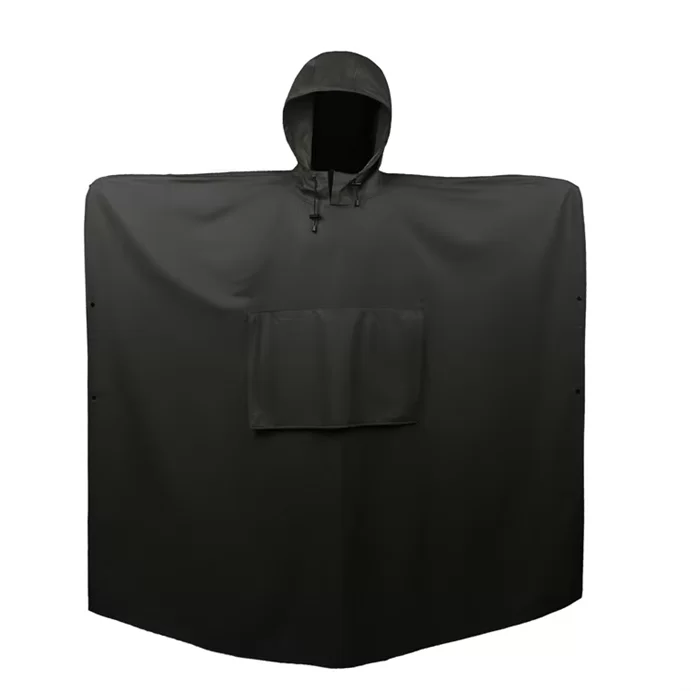
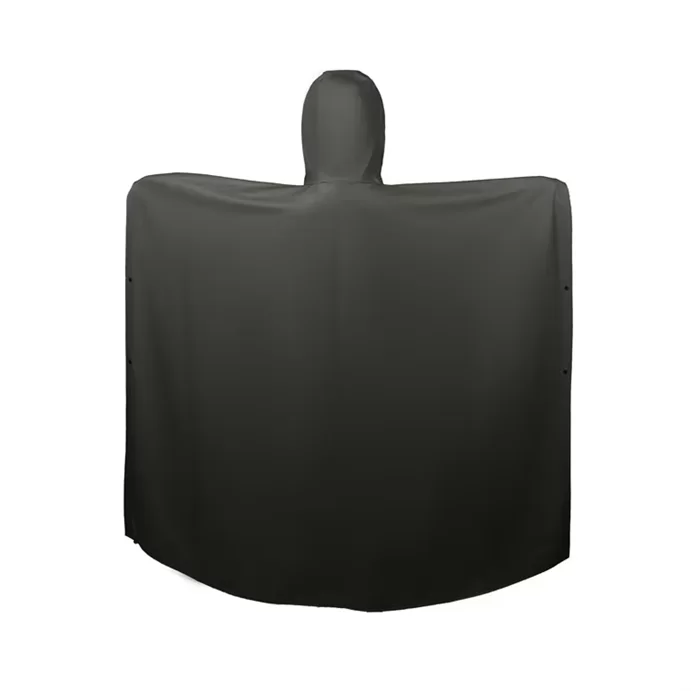
For casual family use, the priority shifts toward packability and ease of use. Lightweight designs that can be folded into a compact pocket—similar to the portable PU ponchos utilized for cycling and festivals—offer the flexibility parents need for unpredictable weather transitions. In both cases, the integration of a soft fleece lining prevents the "clammy" feel, making the gear comfortable for hours of wear.
The rainwear industry is facing a pivotal transition toward a circular economy. Historically, synthetic waterproofs were criticized for their reliance on virgin plastics and non-biodegradable coatings. Today, leading manufacturers are pivoting toward GRS-certified recycled polyesters, which repurpose post-consumer plastic waste into high-performance fabric.
Beyond material sourcing, the focus has expanded to the longevity of the product. A sustainable suit is one that does not need to be replaced every season. By implementing higher-grade PU coatings and superior seam-welding technology, producers are extending the lifecycle of the garments, thereby reducing the volume of textile waste entering landfills.
The integration of eco-friendly dyes and PFC-free water repellents is also becoming standard. This shift not only aligns with global environmental regulations but also meets the growing consumer demand for "green" parenting products, where the safety of the planet is viewed as inextricably linked to the safety of the child.
For buyers sourcing from childrens puddle suits manufacturers, the primary challenge is distinguishing between superficial "water-resistant" claims and genuine waterproof engineering. A professional manufacturer should be able to provide specific hydrostatic test results and proof of certification for all chemical components.
Capacity and consistency are equally vital. A factory with integrated production management systems can ensure that a batch of 500,000 pieces maintains the same coating thickness and seam integrity from the first unit to the last. This reliability is what separates industrial-scale exporters from small-scale workshops.
The following table provides a comparative framework for evaluating different tiers of rainwear production, helping buyers align their product requirements with the appropriate manufacturing capability.
| Evaluation Factor | Entry-Level Factory | Professional OEM/ODM | Premium Sustainable Tier |
|---|---|---|---|
| Certification | Basic Trade License | BSCI, OEKO-TEX 100 | GRS, BSCI, OEKO-TEX |
| Seam Technology | Standard Stitching | Welded/Taped Seams | High-Frequency Welding |
| Material Base | Virgin PVC/Polyester | PU-Coated Polyester | Recycled PU/Bio-Poly |
| Quality Control | Visual Inspection | Hydrostatic Testing | SGS/BV Third-Party Audit |
| Production Scale | Low/Inconsistent | High (500k+ annual) | Optimized Lean Flow |
| Customization | Basic Logo Print | Full OEM/ODM Service | Eco-Design Integration |
Water-resistant suits typically use a DWR (Durable Water Repellent) coating that causes water to bead off the surface, but they can eventually leak under pressure. Truly waterproof suits, produced by professional childrens puddle suits manufacturers, utilize a PU (Polyurethane) coating and welded seams to create a complete moisture barrier that prevents water from penetrating the fabric even during prolonged exposure or immersion in puddles.
OEKO-TEX Standard 100 ensures that every thread, button, and coating used in the garment has been tested for harmful substances. Since children have thinner skin and often put clothing near their mouths, this certification guarantees the absence of toxic chemicals, formaldehyde, and banned dyes, providing a safety benchmark that is mandatory for high-quality exports to the EU and North America.
Durability should be assessed by checking the GSM (grams per square meter) of the shell fabric—usually 190-200gsm for high-use suits—and the method of seam construction. Look for welded seams rather than just stitched seams, as the latter are prone to leaking over time. Additionally, checking if the manufacturer utilizes hydrostatic pressure testers indicates a scientific approach to quality control.
Yes, when processed correctly through GRS (Global Recycled Standard) certified channels, recycled polyester can achieve identical performance metrics to virgin polyester. The waterproofing is primarily provided by the PU coating layer, not the base polymer. Modern recycling technology allows for the creation of high-tenacity yarns that support the same coating adhesion and durability as traditional synthetic fabrics.
For professional manufacturers with integrated production lines, the typical delivery window is 30 to 90 days after a firm order is placed. This timeline accounts for material sourcing (especially for certified OEKO-TEX fabrics), PU coating application, welding, assembly, and final third-party quality inspections by companies such as SGS or BV to ensure the batch meets the specified standards.
While not strictly required for waterproofing, a fleece lining is critical for thermal regulation. PU-coated fabrics are windproof but can feel cold against the skin. A polyester fleece lining adds a layer of insulation and wicks moisture away from the body, preventing the child from becoming chilled in damp, cold conditions, which is essential for suits intended for use in autumn and winter.
The production of high-quality children's rainwear is a complex intersection of chemical engineering, textile science, and ethical manufacturing. For those seeking to partner with professional childrens puddle suits manufacturers, the focus must remain on verifiable certifications, advanced seam-welding techniques, and a commitment to material safety.
As the industry moves toward sustainable, GRS-certified materials, the ability to maintain peak waterproof performance while reducing environmental impact will define the next generation of market leaders. Investing in garments that prioritize both child safety and long-term durability is the only viable path for retailers aiming for sustainable growth in the global rainwear market.