
Selecting protective outerwear for cold, wet climates often presents a conflict between absolute waterproofness and thermal retention. While a standard raincoat keeps water out, it frequently fails to provide the warmth necessary for extended outdoor exposure in autumn or winter.
This gap in functional apparel has led to the rise of composite layering, specifically the integration of thermal linings into waterproof shells. The goal is to eliminate the need for bulky separate layers, allowing for greater mobility without sacrificing core body temperature.
Understanding the technical synergy between outer coatings and inner insulation is key to selecting a fleece lined hooded rain jacket that performs under actual field conditions rather than just in controlled environments.
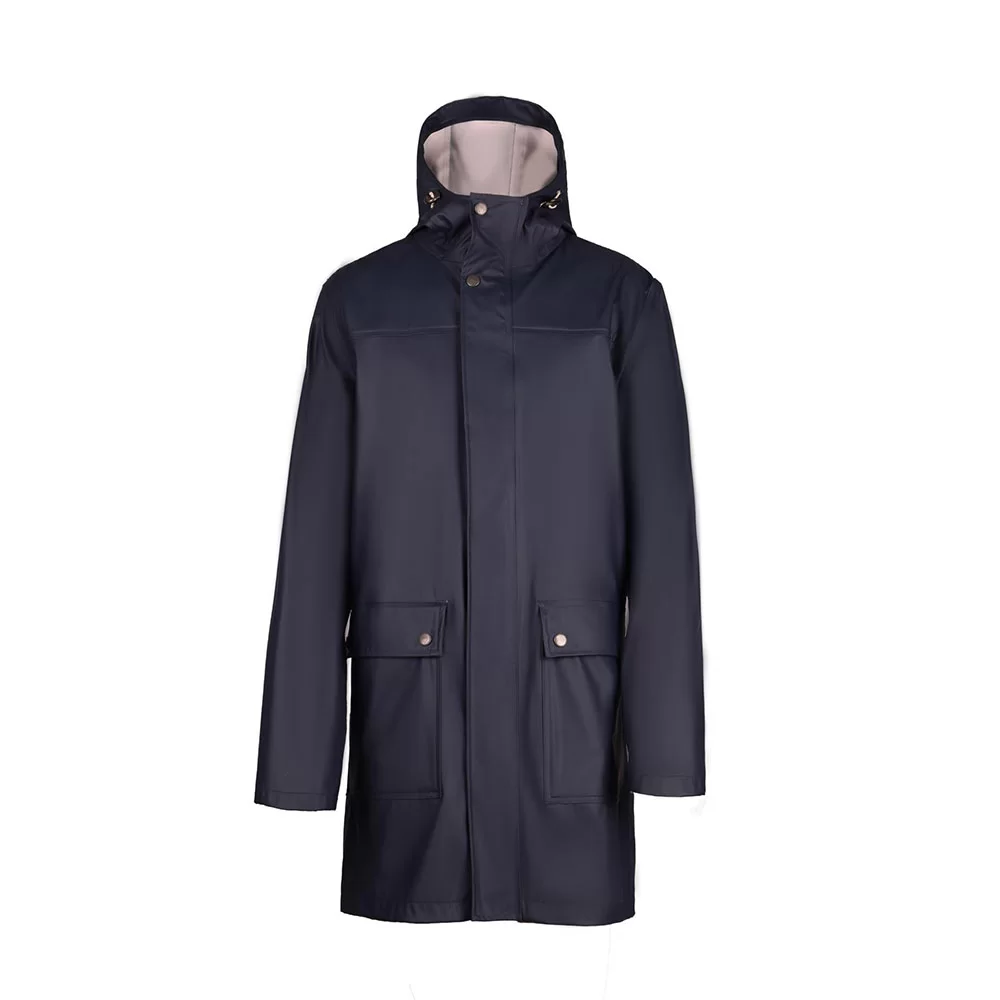
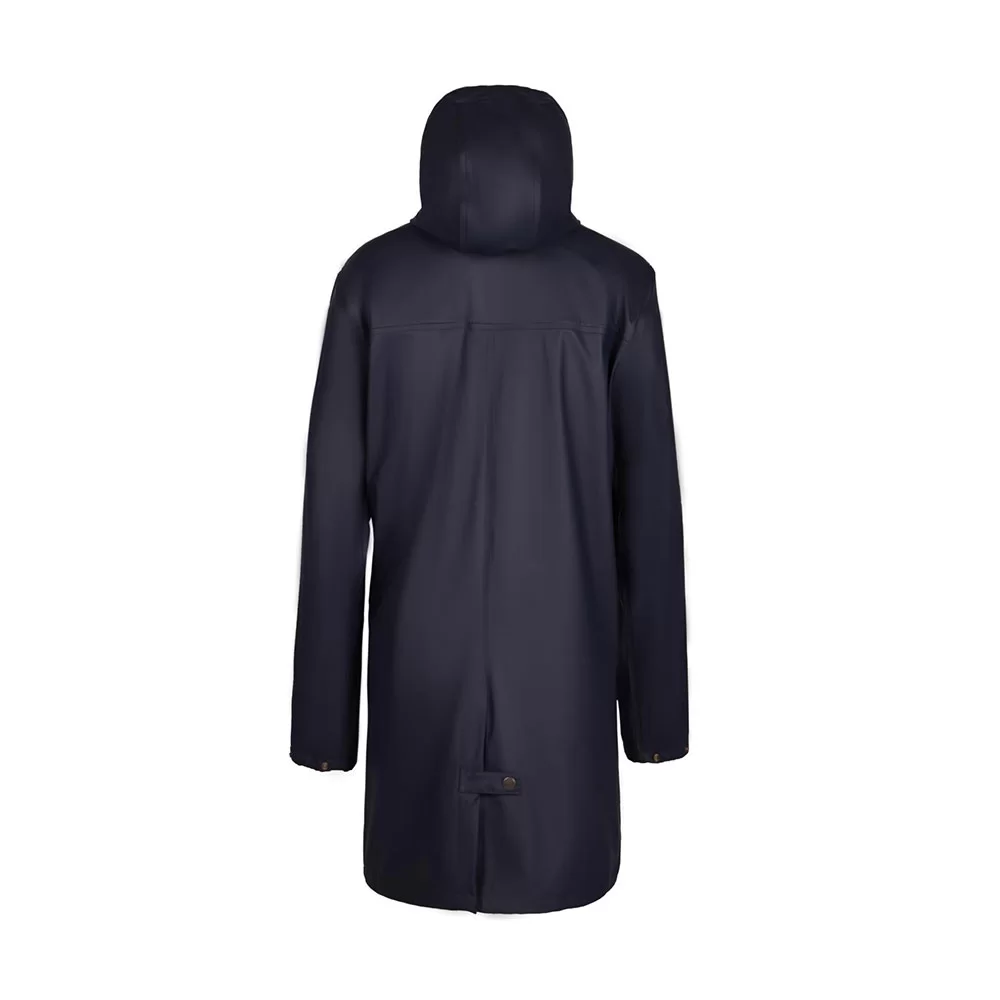
The primary challenge of rainwear is managing the "chill factor" that occurs when wind penetrates thin fabrics or when moisture seeps into the lining. A fleece lining serves as a thermal buffer, trapping air pockets close to the body to maintain heat, while the outer shell prevents external water from reaching those insulating fibers.
In professional manufacturing, this requires a precise balance of weight and breathability. If the shell is too heavy, the garment becomes cumbersome; if the lining is too thick, the wearer may overheat during physical activity.
Modern high-performance rainwear often utilizes a combination of polyester knitted fabrics and polyurethane (PU) coatings. A typical professional specification involves a 100% polyester base with a 100% PU coating, often ranging between 190-200gsm. This density ensures that the fabric is robust enough to withstand abrasion while remaining flexible.
The PU coating acts as a non-porous barrier, making the garment completely waterproof and windproof. Unlike some treated fabrics that rely on chemical sprays (DWR) which wash away over time, a PU coating is integrated into the fabric structure, offering longer-term durability.
When paired with a hooded design, this material system creates a sealed environment. For added security, welded seams are employed to prevent water from leaking through the stitching, which is traditionally the weakest point in waterproof clothing.
Effective moisture management extends beyond the fabric itself; it involves the architectural design of the garment. Key elements include adjustable hoods that can be extended during heavy downpours and concealed two-way zippers that prevent wind from entering the torso.
True weather protection is achieved through the convergence of three factors: a non-permeable outer shell, a thermal insulating layer, and sealed entry points (cuffs, zippers, and hoods).
For those in high-activity environments, such as equestrian riding, additional features like back vents with push-button closures are essential. These allow for controlled airflow and movement, ensuring the wearer does not overheat while remaining protected from the rain.
Evaluating the quality of a rain jacket requires looking at specific indices rather than general descriptions. The balance between waterproofness, wind-resistance, thermal retention, and weight determines the garment's suitability for different climates.
In an analytical framework, we can compare different lining types and shell thicknesses to see how they impact the overall utility of the jacket across various weather intensities.
For riders, rainwear must solve a unique problem: protecting the rider and the animal's back while allowing for a seated posture. A classic riding coat is typically knee-length and flared, ensuring that the fabric hugs the saddle generously. This prevents moisture from seeping into the saddle leather and protects the horse's sensitive back.
Manufacturers like Cangzhou Jiujiang Imp. & Exp. Trading Co., Ltd. address these needs by integrating PU materials that are robust enough for daily stable use but flexible enough for long treks. Features such as the riding slit with press studs are critical for ergonomic movement during active riding.
The industry is shifting toward reducing the environmental footprint of synthetic rainwear. This involves adopting certifications like GRS (Global Recycled Standard) and OEKO-TEX Standard 100, which ensure that the chemicals used in PU coatings and dyes are safe for the wearer and the ecosystem.
Durability is a core component of sustainability. A jacket that lasts for years reduces the frequency of replacement and waste. High-quality PU coatings combined with reinforced welded seams extend the lifecycle of the garment significantly.
By focusing on industry-trade integration, manufacturers can better control the production process, reducing waste during the cutting and sewing of polyester fabrics and ensuring a more efficient use of raw materials.
When sourcing a fleece lined hooded rain jacket, buyers should look beyond the aesthetic. The technical specifications—such as the GSM of the fabric, the type of coating, and the quality of the seams—provide the only reliable indicators of performance.
A trade-off always exists between breathability and total waterproofness. For extreme rain, a PU coating is superior; for mild moisture and high activity, a breathable membrane may be preferable. However, for cold-weather protection, the addition of a fleece lining is non-negotiable.
The following table provides a conceptual framework for selecting the appropriate rainwear configuration based on typical environmental requirements.
| Scenario | Primary Need | Recommended Fabric | Critical Feature |
|---|---|---|---|
| Urban Commute | Lightweight / Style | Light PU Coating | Adjustable Hood |
| Outdoor Trekking | Thermal / Waterproof | Fleece Lined PU | Welded Seams |
| Equestrian Riding | Ergonomics / Length | Robust PU / Flared Cut | Back Riding Slit |
| Industrial Work | Extreme Durability | High GSM PU | Reinforced Cuffs |
| Mild Autumn Rain | Breathability | Light Polyester | Two-way Zipper |
| Winter Storms | Max Insulation | Thick Fleece + PU | Concealed Zips |
The primary advantage is thermal regulation. While the outer PU layer blocks wind and water, the fleece lining creates a layer of trapped air that insulates the body. This is essential for cold-weather environments where a standard thin raincoat would allow the wearer's body heat to escape, leading to rapid cooling.
A PU (Polyurethane) coating is a physical layer applied to the fabric, creating a permanent, non-porous waterproof barrier. In contrast, DWR (Durable Water Repellent) is a chemical treatment that causes water to bead off the surface. DWR wears off over time and requires re-application, whereas a PU coating is integral to the fabric's structure and provides superior waterproofness.
Traditional sewing creates thousands of tiny holes in the fabric where the needle passes through. In heavy rain, water can seep through these needle holes. Welded seams use heat and pressure to bond the fabric together without needles, effectively sealing the garment completely and ensuring no water penetration at the joins.
It depends on the breathability of the shell. Because PU coatings are non-porous, they can trap sweat. For high-intensity activity, it is recommended to choose a jacket with ventilation features, such as back vents or underarm zips, to allow moisture vapor to escape while keeping external rain out.
Look for OEKO-TEX Standard 100, which certifies that the textile is free from harmful substances. For corporate responsibility and ethical manufacturing, BSCI (Business Social Compliance Initiative) and GRS (Global Recycled Standard) certifications indicate that the product was made under fair labor conditions and utilizes recycled materials where possible.
Avoid using harsh detergents or fabric softeners, as these can degrade the PU coating. Wash in cool water and air dry. Never use high heat or tumble dry, as excessive heat can melt or crack the polyurethane layer, compromising the jacket's waterproof integrity.
The evolution of weather-resistant apparel has moved toward integrated solutions. By combining a robust PU-coated polyester shell with a thermal fleece lining, manufacturers can provide a single garment that addresses both moisture and temperature challenges.
Ultimately, the value of a rain jacket is measured by its performance in the field. Whether for urban use or specialized equestrian activities, prioritizing material density, seam integrity, and ergonomic design ensures a reliable barrier against the elements.