
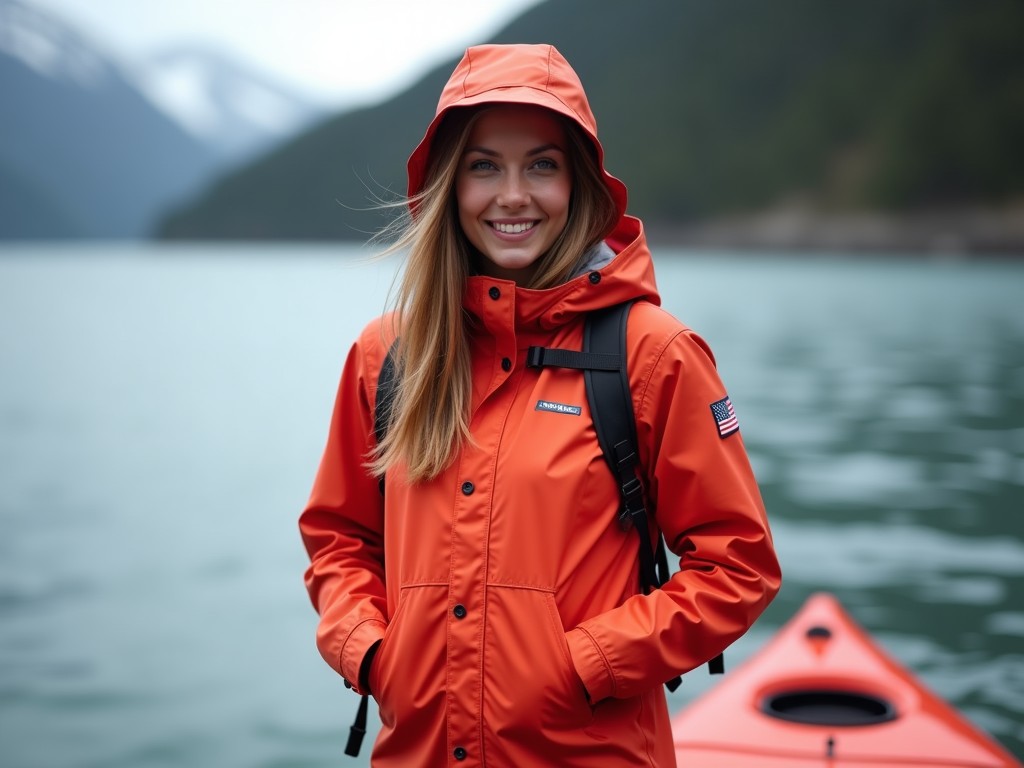
Womens Rain Suits For Fishing
Women’s Rain Suits for Fishing: Technical Specifications and Performance Criteria
Selecting appropriate rain protection for fishing requires understanding how material properties, seam construction, and ergonomic design interact under prolonged exposure to moisture, wind, and physical strain. This guide details the engineering considerations that determine suitability for professional and recreational anglers operating in variable wet environments.
Material Composition and Waterproofing Mechanisms
The primary barrier against water ingress is determined by the fabric’s hydrostatic head rating and coating integrity. Suits intended for fishing typically employ nylon or polyester substrates laminated with polyurethane (PU) or polyvinyl chloride (PVC) coatings, achieving hydrostatic resistance between 5,000 mm and 15,000 mm. Higher ratings indicate greater resistance to water pressure before leakage occurs, critical when sitting in a boat or kneeling on wet surfaces. Breathability, measured in grams of moisture vapor transmitted per square meter per 24 hours (g/m²/24h), ranges from 2,000 to 8,000 for PU-coated fabrics, balancing sweat evacuation with external waterproofing. PVC laminates offer superior chemical resistance but lower breathability (<2,000 g/m²/24h), making them suitable for short-duration, high-exposure scenarios where durability outweighs comfort.
Seam sealing is equally vital; untreated needle holes create leakage paths. Fully taped seams apply heat-activated tape over stitched joints, achieving waterproof continuity. Critically taped seams seal only high-stress areas (shoulders, chest, inseam), reducing cost but leaving vulnerable zones. For fishing applications involving constant movement and abrasion, fully taped construction is recommended to prevent gradual water accumulation at stress points.
Ergonomic Design and Mobility Constraints
Fishing demands unrestricted upper-body movement for casting, reeling, and landing fish. Rain suits must accommodate these motions without binding or riding up. Articulated elbows and knees, achieved through pre-bent patterning or gusseted inserts, maintain range of motion when flexed. A minimum shoulder-to-cuff sleeve length of 60 cm ensures coverage during overhead casting, while a drop-tail hem (rear hem extending 5–7 cm beyond front) prevents water ingress when seated. Adjustable cuffs with hook-and-loop closures allow tightening over gloves or bare wrists, reducing water travel up the sleeve.
Ventilation zippers under the arms (pit zips) enable active cooling without compromising waterproof integrity when closed. These zippers require storm flaps and water-resistant coils to prevent leakage. Waist adjustment via internal drawstrings or external tabs prevents billowing in wind, maintaining thermal efficiency and reducing snag hazards on gear. Hood design must integrate with fishing hats or caps; a three-point adjustment system (front, sides, rear) ensures compatibility with headwear while maintaining peripheral vision.
Durability and Abrasion Resistance
Fishing environments expose suits to abrasion from boat gunwales, rocks, fishing gear, and repeated kneeling. Fabric durability is quantified by abrasion resistance cycles (Martindale or Wyzenbeek test). Suits using 420D nylon oxford with PU coating typically withstand 15,000–25,000 cycles before noticeable degradation, whereas 210D variants may fail below 5,000 cycles. Reinforcement patches at high-wear zones (seat, knees, elbows) using 600D nylon or thermoplastic polyurethane (TPU) overlays extend service life by distributing stress.
UV stability is another factor; prolonged sun exposure degrades PU coatings, causing delamination or cracking. UV stabilizers added during coating formulation can extend functional life by 20–30%. Saltwater resistance is implicit in coating choice; PU resists salt crystallization better than PVC, which may become brittle over time. Zippers and hardware should be marine-grade nylon or polyester with corrosion-resistant sliders to prevent seizure.
Sizing, Layering Compatibility, and Fit Logic
Rain suits function as outer shells; therefore, internal volume must accommodate base and mid-layers without compressing insulation or restricting movement. Manufacturers define fit categories: trim (minimal excess, for active use), regular (accommodates light fleece), and roomy (allows thick insulation). For fishing in temperatures above 5°C, a regular fit typically suffices, allowing a synthetic fleece mid-layer. Below 5°C, a roomy cut is necessary to avoid compressing insulating layers, which reduces thermal efficiency. Chest, waist, and hip measurements should be taken over intended underlayers to select correct size.
Inseam length affects boot compatibility; standard lengths range from 76 cm to 82 cm. Adjustable ankle closures (hook-and-loop or elastic with cord locks) prevent water entry while accommodating different boot heights. Overboot gaiters, integrated or detachable, provide additional protection when wading or launching from shore.
Comparison of Common Configurations
| Feature | Entry-Level (PVC-Coated Polyester) | Mid-Range (PU-Coated Nylon) | High-Performance (Laminated Membrane) |
|---|---|---|---|
| Hydrostatic Head | 3,000–5,000 mm | 8,000–12,000 mm | 15,000–25,000 mm |
| Breathability | <1,500 g/m²/24h | 3,000–6,000 g/m²/24h | 8,000–15,000 g/m²/24h |
| Seam Treatment | Critically taped | Fully taped | Fully taped + welded |
| Abrasion Resistance (Cycles) | 3,000–6,000 | 12,000–20,000 | 20,000–35,000 |
| Typical Use Case | Short trips, light rain | Multi-day trips, variable conditions | Extended exposure, harsh marine environments |
Quality Control and Validation Testing
Consistent performance relies on standardized testing during production. Hydrostatic head testing follows ISO 811 or AATCC 127 methods, measuring water penetration resistance under increasing pressure. Breathability is assessed via ISO 11092 (sweating guarded hotplate) or ASTM E96 (desiccant or water cup methods). Abrasion resistance uses Martindale (ISO 12947) or Wyzenbeek (ASTM D4157) protocols. Seam strength is evaluated via grab tensile tests (ASTM D5034) to ensure tape adhesion exceeds fabric tear strength. Batch testing of coating thickness, adhesion, and flexibility after accelerated aging (UV exposure, flex cycling) validates long-term reliability.
Dimensional stability after washing is critical; suits should retain dimensions within ±2% after 5 cycles per ISO 6330. Colorfastness to washing, light, and perspiration (ISO 105 series) prevents fading and staining. Functional testing—simulated casting, kneeling, and hood movement—confirms ergonomic suitability before market release. Suppliers should provide test reports upon request to verify compliance with claimed specifications.
Customization and Procurement Considerations
Industrial buyers often require tailored solutions for team uniforms, charter fleets, or branded merchandise. Customization options include:
- Adjustable inseam and sleeve lengths for non-standard proportions
- Reinforced seat and knee patches in custom materials (e.g., Kevlar®-blend nylon)
- Integrated tool loops, D-rings, or gear attachment points
- Custom color matching to corporate or team palettes (Pantone® references)
- Reflective tape placement for low-visibility safety compliance
- Removable hoods with stowage pockets
- Internal mesh pockets for electronics or licenses
Minimum order quantities for custom runs typically start at 50 units per size variant. Lead times range from 4–8 weeks for standard fabrics, extending to 10–12 weeks for specialized coatings or trims. Tooling fees for logos or custom zippers may apply but are often waived above 200 units. Packaging options include individual polybags, bulk cartons, or hanging kits for retail display, with desiccant packs included to prevent moisture damage during transit.
Environmental and Regulatory Compliance
Material safety and environmental impact are increasingly scrutinized. Suits should comply with Oeko-Tex® Standard 100 for harmful substances, ensuring coatings and dyes are free from restricted phthalates, heavy metals, and formaldehyde. PVC-free alternatives using thermoplastic polyurethane (TPU) or polyether-based polyurethanes reduce chlorine content and improve recyclability. Some manufacturers offer take-back programs for end-of-life garments, though infrastructure remains limited.
For marine use, biodegradability of coatings is not a primary concern due to limited water solubility, but microfiber shedding from nylon/polyester shells should be minimized through tight weave construction and surface treatments. Claims regarding biodegradability or compostability should be substantiated by third-party testing (e.g., ASTM D6400) to avoid misleading interpretations.