
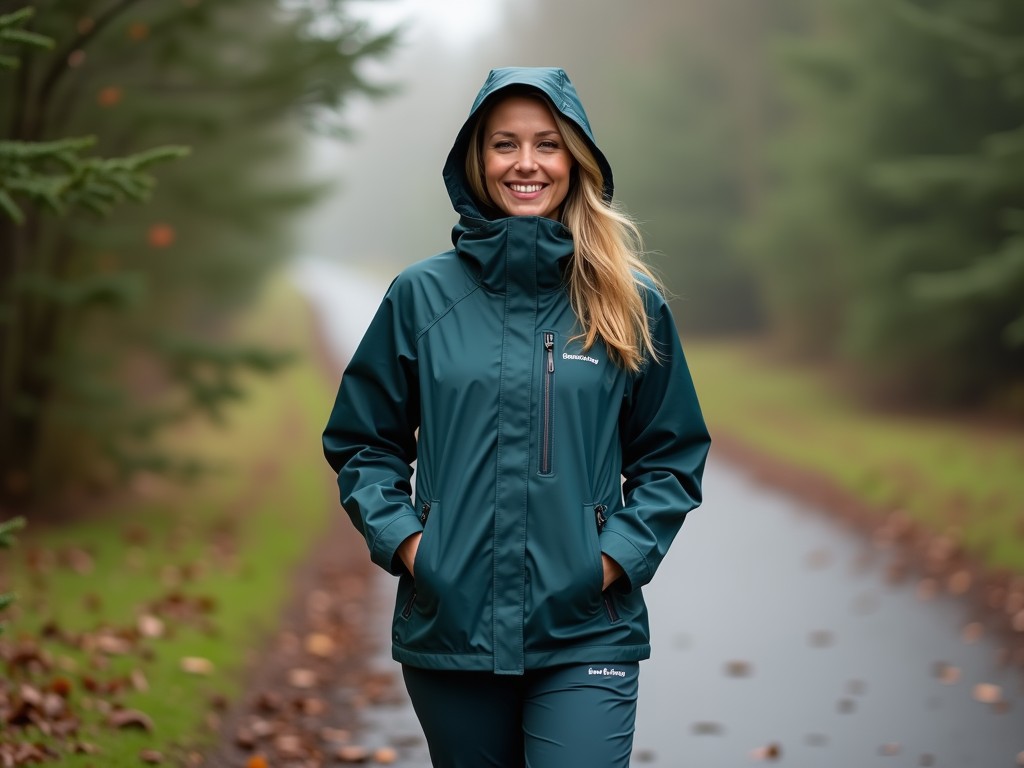
Waterproof Walking Trousers Women
Waterproof Walking Trousers Women
Selecting appropriate waterproof walking trousers for women requires understanding the interaction between material science, environmental exposure, and biomechanical performance. These garments are engineered to manage moisture transfer while maintaining freedom of movement across variable terrain and weather conditions. The following sections detail the technical considerations that inform material selection, construction methods, and performance validation for professional and recreational use.
Material Composition and Moisture Management
The primary fabric system combines a hydrophilic polyurethane (PU) membrane laminated to a woven nylon or polyester outer shell. The membrane operates via solid-state diffusion, transporting water vapor from the inner surface to the exterior based on humidity gradients. Typical water vapor transmission rates (WVTR) range from 8,000 to 15,000 g/m²/24h under standard testing conditions (JIS L 1099 B1), sufficient for moderate aerobic activity. Outer shell denier typically falls between 70D and 150D, balancing abrasion resistance with packability.
Seam sealing employs thermoplastic polyurethane tape applied via heat bonding at 135–145°C, creating a continuous barrier against liquid ingress. Tape width is standardized at 20mm to cover stitch holes while minimizing stiffness. Durable water repellent (DWR) finish on the outer shell uses C6-based fluoropolymers or silicone alternatives, reducing surface tension to cause water beading and roll-off. DWR efficacy is measured via spray rating (AATCC 22), with initial scores of 90–100 declining to 60–70 after 20 wash cycles without re-treatment.
Ergonomic Design and Articulation
Pattern cutting incorporates 3D anthropometric data specific to female lower body morphology, addressing variations in hip-to-waist ratio, thigh circumference, and knee joint positioning. Knees feature pre-shaped articulation using double-layer darts or gusseted inserts, typically adding 15–25° of flexion without binding. The crotch gusset is diamond-shaped, with dimensions of 100mm x 80mm, to prevent seam stress during stride extension and lateral movement.
Waistband construction uses a partial elastic core (20mm width) covered by nylon webbing, allowing 30–40mm of horizontal adjustment via internal drawcord. Belt loops are omitted to reduce snag points; instead, rear waistband includes two silicone grip strips (15mm wide x 50mm long) to prevent slippage under load. Ankle closures utilize adjustable hook-and-loop straps (25mm wide) over a tapered hem, enabling compatibility with gaiters or bulky footwear while maintaining seal integrity.
Performance Validation and Testing Protocols
Waterproofness is assessed using hydrostatic head testing (ISO 811), with minimum acceptable ratings of 10,000mm for prolonged exposure to rain and wind-driven moisture. Breathability is quantified via RET (Resistance to Evaporative Heat Transfer) values measured on a sweating guarded hotplate (ISO 11092), where RET < 6 indicates comfortable moisture dissipation during sustained activity. Abrasion resistance follows Martindale method (ISO 12947-2), with typical endurance exceeding 25,000 cycles before thread breakage in high-wear zones.
| Parameter | Test Method | Typical Performance Range |
|---|---|---|
| Hydrostatic Head | ISO 811 | 10,000–20,000 mm |
| Water Vapor Transmission | JIS L 1099 B1 | 8,000–15,000 g/m²/24h |
| RET Value | ISO 11092 | < 6.0 (m²·Pa)/W |
| Abrasion Resistance | ISO 12947-2 | > 25,000 cycles |
| Seam Strength | ISO 13935-2 | > 25 N/mm |
Colorfastness to light (ISO 105-B02) and washing (ISO 105-C06) is maintained at grade 4 or higher after 20 cycles, ensuring minimal fading under UV exposure and repeated laundering. Dimensional stability is controlled via heat-setting during fabrication, limiting shrinkage to < 3% in both warp and weft directions after 5 wash cycles at 40°C. These specifications are validated through batch testing rather than assumed from material datasheets.
Application-Specific Adaptations
For alpine trekking above 2,500m, reinforced scuff patches (600D Cordura nylon) are applied to the inner ankle and hem, extending 100mm above the sole line to resist crampon points and ice axe contact. These patches are bonded using thermoplastic adhesive film, avoiding stitching that could compromise moisture barriers. In tropical environments, versions with 10mm side ventilation zippers (covered by storm flaps) increase local airflow by approximately 18–22% without significantly reducing overall waterproof integrity.
Urban commuting models prioritize low-profile reflectivity, using 3M Scotchlite™ reflective tape (50mm width) positioned at biomechanically relevant points: posterior calf, lateral thigh, and heel. Reflectivity meets EN 20471 Class 2 requirements when combined with background fabric. For extended wear, antimicrobial treatment (silver-ion based) is applied to the interior waistband and inner thigh panels to mitigate odor accumulation, maintaining efficacy for 30+ wash cycles.
Customization and Procurement Considerations
Waist and inseam lengths are adjustable in 25mm increments via internal tuck-and-snap systems, allowing fine-tuning without external alteration. Custom sizing requires submission of key measurements: waist (narrowest torso circumference), hip (widest pelvic circumference), thigh (mid-quadriceps), and inseam (crotch to floor along inner leg). Lead time for made-to-order units increases by 10–15 days compared to standard stock items due to pattern nesting and cutting adjustments.
Fabric color options are limited to solution-dyed polyester or nylon to ensure UV stability and reduce effluent during dyeing. Standard palette includes muted earth tones (olive, taupe, slate) and high-visibility safety yellow (ISO 20471 compliant). Custom Pantone matching is available for orders exceeding 50 units, subject to minimum dye lot requirements. Packaging utilizes recycled polyethylene bags with desiccant packs, folded to minimize creasing along stress lines.