
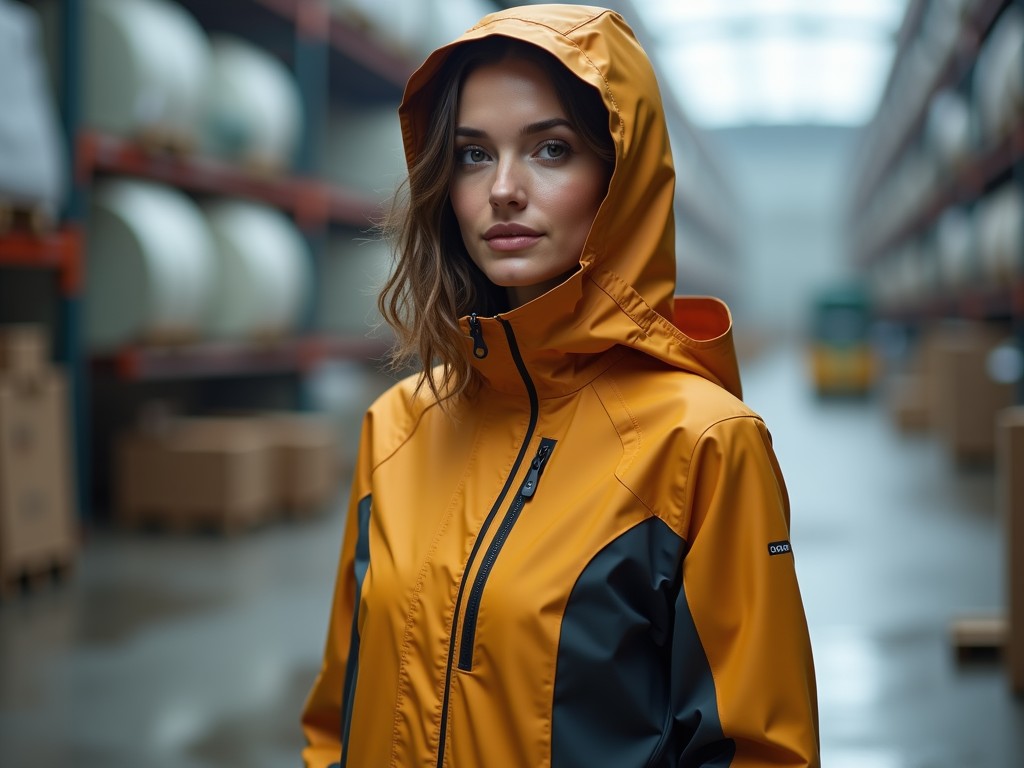
Waterproof Walking Jacket Womens Factory
Waterproof Walking Jackets for Women - Factory Direct Supply
Industrial buyers sourcing waterproof walking jackets for women require technical clarity on material performance, seam construction, and compliance with outdoor apparel standards. This page details the engineering specifications, manufacturing considerations, and quality control processes that define factory-produced women’s waterproof walking jackets, enabling informed procurement decisions based on measurable characteristics rather than marketing claims.
Core Material Systems and Waterproofing Mechanisms
The primary waterproof barrier in factory-produced women’s walking jackets relies on microporous or hydrophilic membranes laminated to face fabrics. Microporous membranes (e.g., ePTFE-based) block liquid water via pore sizes smaller than water droplets while allowing vapor transmission through molecular diffusion. Hydrophilic membranes (e.g., PU-based) transport moisture via solid-state diffusion, where water molecules move through polymer chains via hydrogen bonding. Both systems achieve hydrostatic head ratings typically ranging from 5,000 mm to 20,000 mm under ISO 811 testing, with higher values indicating greater resistance to water penetration under pressure.
Face fabrics are commonly nylon 6,6 or polyester microdenier yarns, selected for abrasion resistance (measured via Martindale test, typically >20,000 cycles) and dimensional stability. Denier ratings range from 40D to 70D for the face layer, balancing weight and durability. A durable water repellent (DWR) finish is applied to the outer surface, reducing surface tension to cause water beading; this finish degrades over time and requires reactivation via heat or reapplication, a maintenance consideration for end-users.
Seam Construction and Critical Point Sealing
Seam integrity is the most common failure point in waterproof jackets. Factory production uses either taped seams or welded seams to prevent water ingress through needle holes. Taped seams apply a polyurethane tape over sewn seams using heat and pressure, achieving a bond strength typically exceeding 5 N/mm. Welded seams, used in laminated constructions, fuse the membrane and face fabric directly via ultrasonic or heat welding, eliminating the need for tape and reducing weight by approximately 15–20% compared to taped equivalents.
Critical zones such as shoulders, hood attachments, and zipper flaps receive reinforced taping or additional layers. Stitch density in sewn seams before taping is maintained at 8–10 stitches per cm to minimize hole size. Zipper systems utilize waterproof zippers with storm flaps or coated coil zippers, where the zipper teeth are covered by a hydrophobic layer to prevent capillary action. Storm flaps are designed with a minimum 20 mm overlap and secured with hook-and-loop or snap closures to ensure consistent coverage during movement.
Design Considerations for Women’s Walking Jackets
Women-specific patterning accounts for anatomical differences in shoulder slope, bust contour, and hip-to-waist ratio. Factory patterns incorporate darting in the bust area and tapered waist shaping to reduce excess fabric and improve mobility. Sleeve articulation uses gusseted underarms or articulated elbows to maintain range of motion without pulling the jacket upward during arm movement. Hood design includes a three-panel construction with adjustable volume via drawcords at the rear and sides, ensuring compatibility with helmets or hats while maintaining peripheral vision.
Ventilation systems are strategically placed to manage microclimate without compromising waterproofing. Pit zips under the arms allow airflow when opened, typically covered by storm flaps to prevent rain ingress. Back panel vents or mesh-lined pockets enhance breathability during high-exertion activities. The length of the jacket is designed to provide coverage to the mid-hip or lower, balancing protection with freedom of movement for walking and light hiking scenarios.
Quality Control and Testing Protocols
Factory quality control begins with incoming material inspection. Face fabric is tested for tensile strength (ASTM D5034), tear strength (ASTM D2261), and DWR durability (AATCC 193, 20 wash cycles). Membrane lots are verified for hydrostatic head and moisture vapor transmission rate (MVTR, ASTM E96) before lamination. Post-lamination, bonded strength between layers is measured via peel strength tests (ASTM D903), with acceptable values typically >1.5 N/mm to prevent delamination during use.
Finished jackets undergo hydrostatic head testing on critical areas (shoulders, chest, back) and seam sealing verification via dye penetration tests. Colorfastness to light (ISO 105-B02) and washing (ISO 105-C06) is assessed to ensure durability against fading. Dimensional stability after washing is checked to confirm minimal shrinkage (<3% in length and width). Functional testing includes zipper endurance (ASTM D2062) and abrasion resistance of high-wear areas (e.g., cuffs, hem) using Martindale or Taber abrasers.
Customization Options and Manufacturing Flexibility
Factories offer customization across material selection, color, and functional details. Face fabric denier and weave (e.g., ripstop vs. plain) can be adjusted based on expected abrasion exposure. Membrane type (microporous vs. hydrophilic) and MVTR targeting (e.g., 5,000–15,000 g/m²/24h) are specified according to the intended activity level and climate. Color matching is available via Pantone or custom lab dips, with colorfastness validated per order.
Design modifications include adjustable hood systems, pocket placement and quantity (e.g., chest, hand, internal mesh), cuff adjustment methods (hook-and-loop, elastic, or snap), and hem drawcord types. Reflective trims for low-visibility conditions can be integrated using heat-transfer or sew-on methods, with placement aligned to EN 1150 or ANSI/ISEA 107 standards upon request. Packaging options range from individual polybags to bulk packing in cartons, with labeling compliant to destination country regulations (e.g., GB/T 8688, EU textile labeling).
Applications in Outdoor and Institutional Markets
Waterproof walking jackets for women are specified in institutional procurement for guided hiking programs, outdoor education centers, and national park services where standardized PPE is required for staff and participants. The consistent sizing and performance validation from factory production reduce variability in fit and protection compared to retail-sourced alternatives. In commercial outdoor recreation, these jackets are used as rental fleet gear, where durability and ease of maintenance (e.g., simple re-DWR treatment) lower total cost of ownership over multiple seasons.
Industrial buyers in workwear sectors specify these jackets for light outdoor duties such as surveying, environmental monitoring, or agricultural inspection where full rain suits are excessive but reliable precipitation protection is needed. The breathability profile prevents overheating during moderate activity, while the waterproofing maintains comfort in prolonged drizzle or intermittent rain. Factory traceability of materials and processes supports compliance with corporate sustainability reporting or supplier codes of conduct.
| Specification | Typical Range | Test Standard |
|---|---|---|
| Hydrostatic Head | 5,000–20,000 mm | ISO 811 |
| Moisture Vapor Transmission Rate (MVTR) | 5,000–15,000 g/m²/24h | ASTM E96 |
| Face Fabric Abrasion Resistance | >20,000 cycles | Martindale (ASTM D4966) |
| Seam Peel Strength (Taped) | >1.5 N/mm | ASTM D903 |
| Colorfastness to Washing | Grade 3–4 (min) | ISO 105-C06 |
| DWR Durability (Wash Cycles) | 15–20 cycles | AATCC 193 |
Procurement teams should request test reports for hydrostatic head, MVTR, and seam strength specific to the ordered configuration, as values vary with membrane thickness, face fabric choice, and seam treatment. Factories provide material data sheets and compliance documentation upon request, enabling verification against internal technical specifications or end-use requirements. Long-term value is assessed through lifecycle cost analysis, factoring in replacement frequency based on abrasion exposure and maintenance needs.