
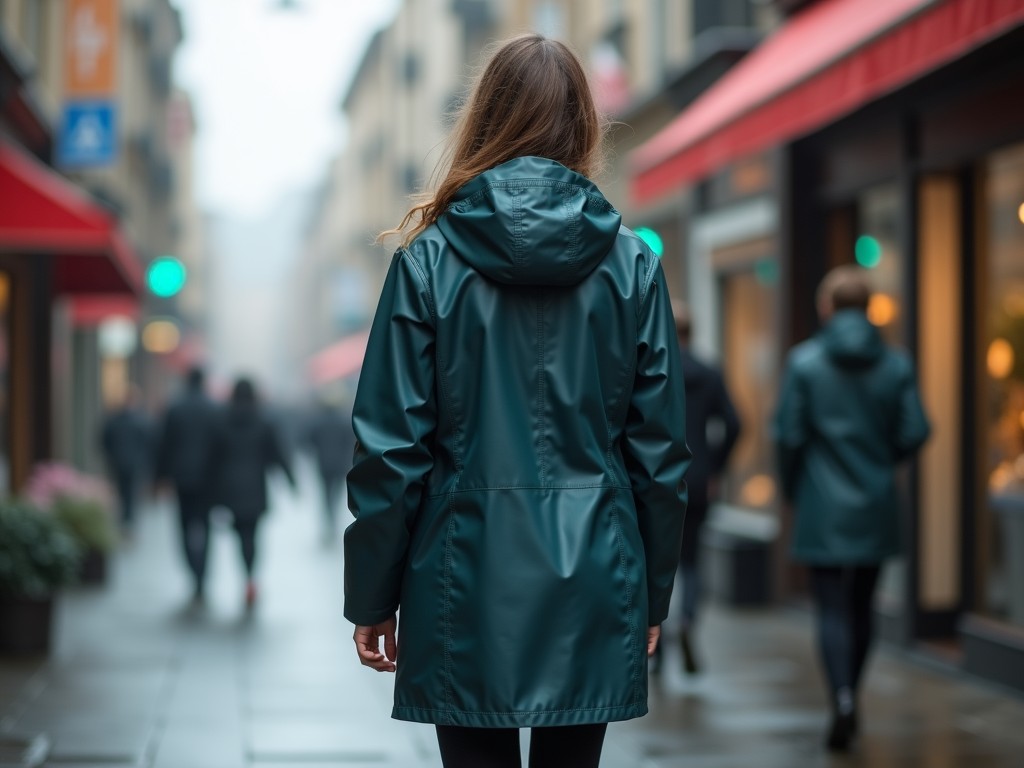
Waterproof Walking Coats For Women
Waterproof Walking Coats for Women
Waterproof walking coats for women are engineered outerwear designed to provide reliable protection against precipitation while maintaining mobility and comfort during extended outdoor activity. Unlike fashion-focused rainwear, these garments prioritize functional performance through specific material selections, seam construction methods, and ergonomic patterning tailored to the biomechanics of walking. The core objective is to minimize water ingress without compromising breathability or adding excessive weight that could impede natural gait.
Industrial buyers evaluating these products focus on measurable engineering characteristics rather than subjective descriptors. Key performance indicators include hydrostatic head rating (measured in millimeters of water column), moisture vapor transmission rate (MVTR in g/m²/24h), seam seal integrity, and weight-to-protection ratio. These metrics directly influence user comfort, durability in sustained wet conditions, and suitability for prolonged use in variable climates.
Material selection is critical to balancing waterproofing and breathability. Common constructions use microporous membranes (e.g., ePTFE or PU-based) laminated to face fabrics, where the membrane’s pore size blocks liquid water while allowing water vapor molecules to escape. Face fabrics are typically nylon or polyester with denier ratings between 40D and 70D, offering abrasion resistance without excessive stiffness. Durable water repellent (DWR) finishes applied to the outer surface enhance initial water beading but are not the primary waterproofing mechanism.
Technical Specifications and Performance Metrics
Hydrostatic head testing measures the fabric’s resistance to water penetration under pressure. For walking coats intended for prolonged exposure to rain, a minimum rating of 10,000 mm is typically required to prevent leakage during heavy rainfall or when carrying a backpack that exerts pressure on the shoulders and back. Higher ratings (e.g., 20,000 mm) provide additional margin for extreme conditions but may correlate with reduced breathability if membrane thickness increases disproportionately.
Moisture vapor transmission rate (MVTR) quantifies how effectively the garment transports sweat vapor from the skin to the exterior. Values below 5,000 g/m²/24h risk internal condensation buildup during moderate activity, while ratings above 15,000 g/m²/24h indicate strong breathability suitable for sustained walking. Optimal performance for active use generally falls between 8,000–12,000 g/m²/24h, balancing weather protection with thermal regulation.
Seam construction is a critical failure point in waterproof garments. Fully taped seams apply waterproof tape over stitched joints using heat-activated adhesive, preventing capillary action through needle holes. Critical seam taping (covering only high-exposure areas like shoulders and hood) offers reduced weight and cost but leaves lower-body seams vulnerable. Industrial specifications often require 100% seam taping for products marketed as fully waterproof for extended outdoor use.
Weight considerations directly impact user fatigue during long walks. Lightweight designs target 250–350 g for a size medium, achieved through thin face fabrics and minimal coatings. Midweight options (350–450 g) may include reinforced areas or additional features like adjustable hoods. Weight is frequently reported per square meter of fabric to enable material comparison independent of garment size.
Design Features for Functional Performance
Ergonomic patterning accounts for the natural range of motion during walking, particularly shoulder flexion and arm swing. Patterns often incorporate underarm gussets or articulated elbows to prevent binding when arms move forward and backward. Back length is typically extended compared to front length to maintain coverage when leaning forward, a common posture during uphill walking or when using trekking poles.
Ventilation systems enhance breathability without compromising waterproofing. Pit zippers (underarm zippers with storm flaps) allow users to increase airflow during high-exertion periods. Some designs include back vents or mesh-lined pockets that serve dual purpose as ventilation and storage. The effectiveness of these features depends on zipper quality—water-resistant zippers with polyurethane coating or laminated flaps prevent leakage at closure points.
Adjustability features ensure a secure fit that prevents water ingress at openings. Adjustable cuffs with hook-and-loop closures or elastic drawcords seal against sleeves, reducing water spray entry. Hem drawcords allow tightening around the hips to block wind-driven rain. Hood designs often include perimeter adjustment and brim stiffening to maintain visibility in wind and rain without impeding peripheral vision.
Pocket placement considers accessibility while wearing a backpack or waist belt. Hand-warmer pockets are positioned higher on the torso to remain reachable when a hip belt is worn. Interior security pockets, often zippered, protect valuables like phones or maps. All pocket openings incorporate storm flaps or water-resistant zippers to maintain overall garment integrity.
Material Options and Customization Logic
Face fabric selection influences abrasion resistance, weight, and noise characteristics. Nylon 6,6 offers higher tensile strength and abrasion resistance than polyester but may absorb more moisture, slightly increasing weight when wet. Polyester provides better UV resistance and retains strength when damp, making it suitable for prolonged sun exposure. Ripstop weaves (e.g., 3x3 or 5x5 mm patterns) inhibit tear propagation without significant weight penalty.
Membrane technology affects the breathability-waterproofing trade-off. Microporous membranes (ePTFE) rely on physical pore size exclusion and typically offer high MVTR but require careful handling to avoid pore clogging from oils or dirt. Non-porous hydrophilic membranes (PU-based) absorb and diffuse water vapor through molecular movement, often providing more consistent performance when contaminated but with lower peak MVTR values. Hybrid constructions combine both approaches.
DWR finishes are not permanent and degrade with use, washing, and exposure to contaminants. Industrial buyers should specify re-treatment protocols or consider fabrics with hydrophobic face yarns (e.g., solution-dyed polyester) that maintain water resistance longer than surface-applied DWR. Some advanced constructions use plasma-treated faces to enhance hydrophobicity without fluorocarbon-based chemicals.
Customization options are driven by end-use requirements rather than aesthetics. For coastal or high-humidity environments, buyers may prioritize membranes with superior hydrolytic stability. For alpine use with significant temperature variation, features like pit zippers and adjustable hoods become more critical. Weight-sensitive applications (e.g., long-distance trail walking) drive selection toward minimalist designs with lightweight fabrics and reduced feature sets.
| Performance Parameter | Typical Range for Walking Coats | Relevance to End Use |
|---|---|---|
| Hydrostatic Head | 10,000–20,000 mm | Determines rainproof capability under pressure (e.g., backpack straps, wind-driven rain) |
| MVTR | 8,000–15,000 g/m²/24h | Indicates comfort during sustained activity; prevents internal moisture buildup |
| Weight (Size M) | 250–450 g | Directly impacts fatigue during long walks; lower weight preferred for distance |
| Seam Taping | 100% fully taped | Eliminates leakage points at stitch holes; essential for guaranteed waterproofing |
| Face Fabric Denier | 40D–70D nylon/polyester | Balances abrasion resistance with weight and packability |
Quality Control and Manufacturing Considerations
Quality assurance begins with incoming material inspection. Face fabrics are tested for dimensional stability after washing to ensure shrinkage does not alter seam placement or fit. Membranes are verified for hydrostatic head and MVTR consistency across rolls, as variations can occur due to lamination temperature or adhesive coating thickness. DWR finish durability is assessed via standardized spray rating tests (AATCC 22) after multiple wash cycles.
During production, seam sealing effectiveness is validated through hydrostatic testing of taped seams at specified pressure points. Needle penetration tests confirm that tape adhesive fully encapsulates stitch holes without gaps. Visual inspection under magnification checks for tape wrinkles, incomplete adhesion, or contamination that could create leakage paths. Batch tracking links raw material lots to finished garments for traceability.
Finished garment testing includes wear simulations where coats are subjected to rainfall simulation chambers while wearing weighted backpacks to replicate real-world stress points. Post-test inspections check for internal dampness, particularly at shoulders, hips, and hood. Colorfastness testing ensures dyes do not bleed when wet, which could stain underlying layers or skin. Packaging methods are evaluated to prevent creasing that could damage tape seals during transit.
Applications in Professional and Recreational Contexts
In professional outdoor guiding, waterproof walking coats serve as essential personal protective equipment (PPE) where prolonged exposure to wet conditions is inevitable. Guides require garments that maintain performance over multiple days without failure, as equipment malfunction can compromise group safety. The ability to vent excess heat while remaining waterproof is critical during transitions between exertion levels (e.g., steep ascent followed by ridge walking).
For trail maintenance crews and ecological surveyors working in temperate climates, these coats enable consistent productivity during extended wet periods. Unlike ponchos or rubberized rain suits that trap heat, breathable walking coats allow workers to regulate temperature during physical tasks like brush clearing or soil sampling. Features such as reinforced cuffs and adjustable hoods prevent water entry when working in dense vegetation or under tree canopies.
In organized walking events or charity challenges covering 20–50 km per day, participants benefit from lightweight, packable designs that can be stowed in a daypack when weather improves. The low weight reduces cumulative fatigue over multi-day events, while reliable waterproofing prevents discomfort and chafing that could lead to abandonment. Reflective trims (when specified) enhance visibility during low-light sections of routes near roads.
Military and civil defense units operating in reconnaissance or patrol roles require walking coats that balance camouflage properties with weather protection. Near-infrared (NIR) compliant fabrics prevent detection by night vision devices while maintaining standard waterproofing performance. Quiet face fabrics (brushed or microfiber finishes) reduce noise during movement, which is critical for stealth operations in wet environments.
For technical specifications, material options, or to discuss customization for your specific walking coat requirements, please contact our engineering team.
Request Technical Consultation