
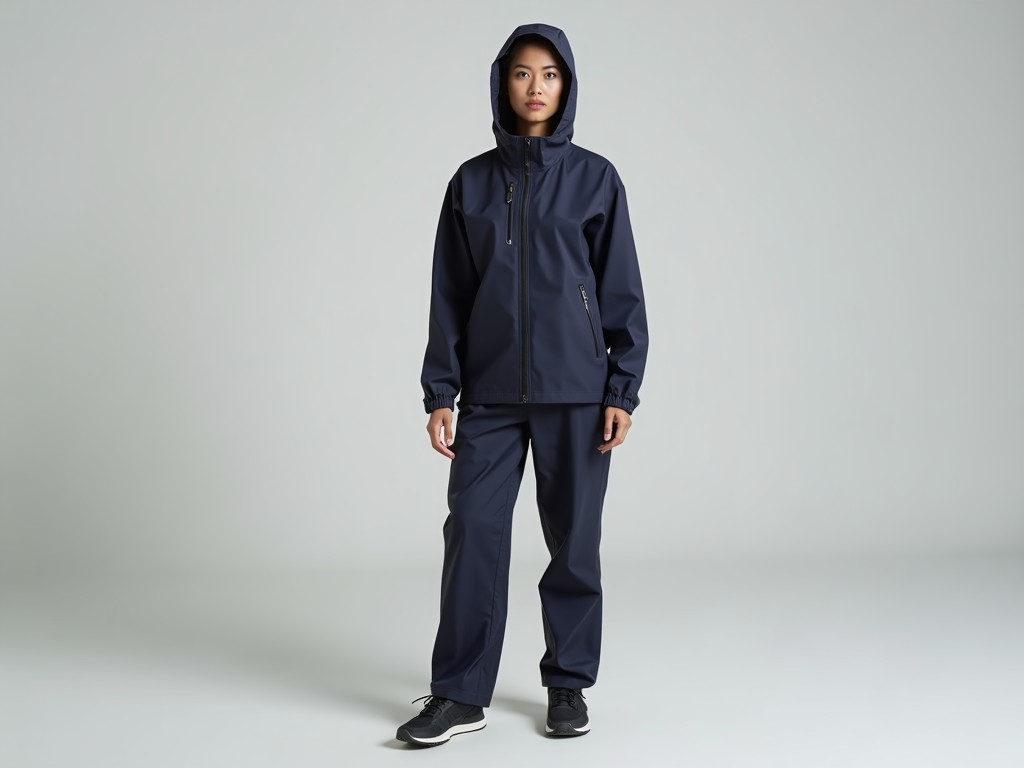
Waterproof Running Pants Womens Supplier
Waterproof Running Pants Women's Supplier
When sourcing waterproof running pants for women, industrial buyers prioritize material performance, seam integrity, and functional design over marketing claims. This page explains the technical considerations that determine suitability for athletic use in wet conditions, focusing on measurable properties that affect durability, comfort, and manufacturing consistency.
Understanding these factors enables procurement teams to evaluate suppliers objectively, reduce field failure risks, and specify products that meet both performance and production requirements.
Material Construction and Waterproofing Mechanisms
Effective waterproof running pants rely on a three-layer system: an outer face fabric, a microporous membrane, and an inner protective layer. The face fabric is typically nylon or polyester with a denier range of 20D to 40D, selected for abrasion resistance and low weight. The membrane—commonly ePTFE or PU-based—must maintain a hydrostatic head rating of at least 10,000 mm to resist penetration under dynamic pressure, such as knee bending or sitting on wet surfaces.
The inner layer protects the membrane from oils and abrasion; it is often a lightweight non-woven polyamide or a printed pattern that reduces skin contact area. Breathability, measured as moisture vapor transmission rate (MVTR), should exceed 10,000 g/m²/24h to prevent internal condensation during aerobic activity. These values are interdependent—increasing membrane thickness improves waterproofing but reduces MVTR, requiring careful balancing during material selection.
Seam Sealing and Structural Integrity
Seams represent the most vulnerable point in waterproof apparel. Even with a high-performing fabric, unsealed stitching allows water ingress through capillary action. Fully taped seams—where a polyurethane tape is heat-bonded over stitched joints—are essential. The tape width should be no less than 20mm to cover needle holes and fabric fraying, and adhesion strength must exceed 5N/cm after 5 wash cycles to prevent delamination.
Stitch density influences both seam strength and leakage risk; 10–12 stitches per cm provides adequate strength without creating excessive perforations. Flatlock or coverstitch seams are avoided in waterproof constructions due to their inherent porosity; instead, overlock or lockstitch seams followed by taping are standard. Suppliers should provide seam sealing validation data, such as rain tunnel test results or hydrostatic pressure testing on taped seams.
Design Features for Athletic Performance
Beyond waterproofing, running pants must accommodate biomechanical movement. Articulated knees—achieved through anatomical shaping or darting—reduce fabric strain during flexion. Gusseted crotches, typically a diamond-shaped insert of the same 3-layer fabric, prevent seam stress and improve range of motion. Waistband construction uses elasticated tape (often polyester-spandex core) laminated to the fabric edge, with a width of 25–40mm to distribute pressure without rolling.
Ankle closures vary: elastic cuffs with silicone grip prevent ride-up but may retain moisture; adjustable hook-and-loop tabs offer ventilation control but add weight. Reflective elements, if used, must be laminated or bonded—not sewn—to maintain seam integrity. Pocket placement avoids high-stress areas; zippered pockets require water-resistant zippers (coil or molded polyurethane) with storm flaps to prevent leakage through the teeth.
Customization and Supply Chain Considerations
Industrial buyers often require customization beyond standard sizing. Common adjustable parameters include inseam length (±25mm), waistband rise (high/mid/low), and leg opening circumference. Material substitutions—such as switching from ePTFE to PU membrane for cost sensitivity or using recycled polyester face fabric—are feasible but require requalification of hydrostatic head and MVTR values.
Logo application methods must not compromise waterproofing; heat transfer or laminated patches are preferred over embroidery, which punctures the membrane. Minimum order quantities typically start at 300 units per style/color for fully customized runs, though stock fabrics may allow lower MOQs. Lead times range from 6–10 weeks for material sourcing and production, depending on membrane availability and seasonal demand.
Quality Control and Testing Protocols
Consistent performance relies on rigorous incoming material testing and in-line inspections. Face fabric is checked for denier uniformity, tear strength (ASTM D2261), and DWR (durable water repellent) reapplication needs. Membrane lots are tested for hydrostatic head (ASTM D3393) and MVTR (ASTM E96 BWP) before lamination. Post-lamination, bonded strength between layers is measured via peel resistance (ASTM D903), with a minimum of 1.5 N/cm required.
Finished goods undergo seam seal verification via hydrostatic testing on taped joints and functional checks for elastic recovery and zipper operation. AQL 2.5 is standard for major defects (e.g., leaks, missing tape) and AQL 4.0 for minor defects (e.g., stitch variation, shade difference). Suppliers should provide batch-specific test reports upon request, including conditioning protocols (typically 24h at 20°C/65% RH pre-test).
Traceability is maintained through lot numbers linking raw materials to finished goods, enabling root-cause analysis if field failures occur. This documentation supports warranty claims and continuous improvement in material selection or process parameters.
| Property | Typical Range | Test Method | Relevance to Performance |
|---|---|---|---|
| Hydrostatic Head | 10,000–20,000 mm | ASTM D3393 | Resists water penetration under pressure |
| MVTR | 10,000–18,000 g/m²/24h | ASTM E96 BWP | Manages internal moisture during activity |
| Seam Tape Adhesion | >5 N/cm after 5 washes | ISO 105-C06 | Prevents seam leakage over product life |
| Fabric Tear Strength | >8 N (trapezoid tear) | ASTM D2261 | Resists propagation of rips from snags |
| Elastic Recovery (Waistband) | >85% after 100% elongation | ASTM D4964 | Maintains fit and comfort over time |
For technical inquiries, material data sheets, or to discuss specific application requirements such as temperature ranges, packability, or integration with layered systems, contact our engineering team. We provide detailed specification support to ensure the selected product meets both functional and manufacturing criteria.
To request a quote, share your required quantities, preferred materials, and any customization needs (e.g., inseam length, branding, color). Our team will respond with lead times, MOQ confirmation, and applicable tooling or setup considerations.