
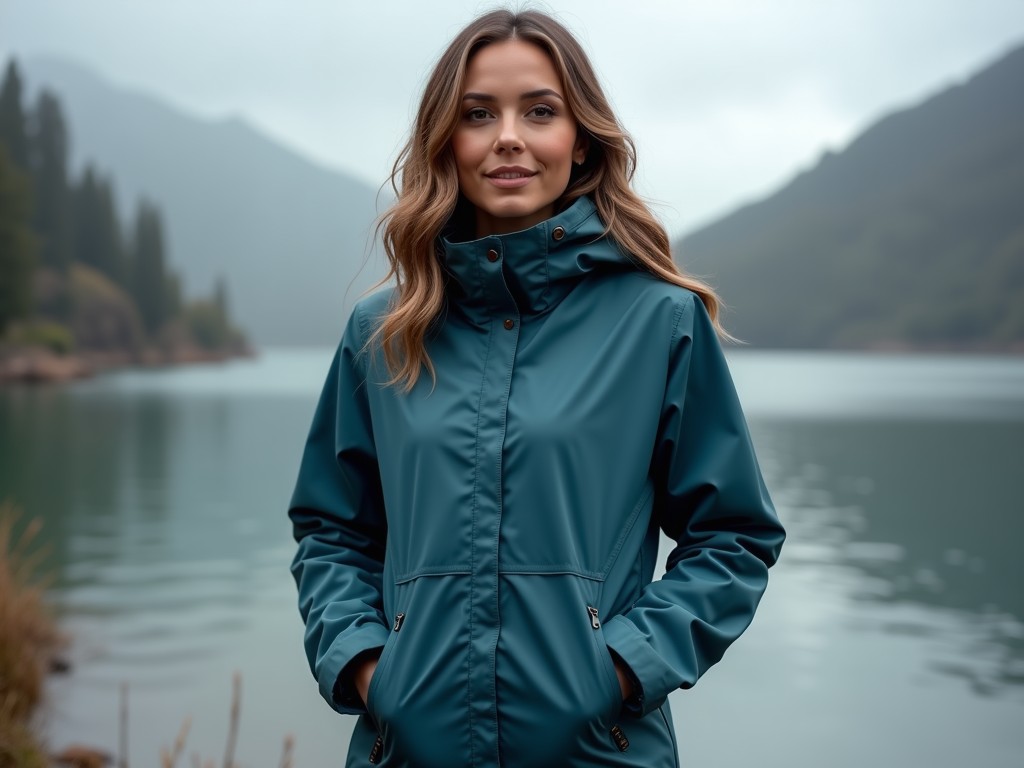
Waterproof Packable Rain Jacket Womens
Waterproof Packable Rain Jacket for Women
This technical overview details the engineering specifications, material properties, and functional design of a waterproof packable rain jacket intended for professional and industrial outdoor use by women. The garment is engineered to balance environmental protection with mobility and storage efficiency, addressing the operational needs of field personnel, site inspectors, and logistics teams operating in variable weather conditions.
Unlike consumer-oriented rainwear, this jacket prioritizes measurable performance metrics: hydrostatic head rating, breathability (MVTR), seam sealing integrity, pack volume, and weight-to-protection ratio. Each specification is selected to minimize operational downtime due to weather exposure while maintaining compliance with workplace safety and comfort standards in temperate to wet climates.
The following sections explain the technical rationale behind material selection, construction methods, and design features. Information is presented to support procurement decisions based on functional performance rather than promotional claims. All values represent typical ranges achievable through standard manufacturing processes; exact figures may vary based on specific fabric batches or customization requirements.
Material Composition and Waterproofing System
The jacket employs a 2.5-layer laminate system consisting of a nylon 6,6 face fabric, a microporous polyurethane (PU) membrane, and a protective print layer. The face fabric is constructed from 40D nylon 6,6 yarns with a tight plain weave (110 threads per inch warp, 90 weft), providing abrasion resistance equivalent to 15,000 cycles on the Martindale tester before noticeable degradation.
The microporous PU membrane delivers a hydrostatic head resistance of 15,000 mm under JIS L 1092 Method B testing conditions, meaning it can withstand the pressure of a 15-meter water column before leakage occurs. This level exceeds the minimum 1,300 mm threshold for "waterproof" classification in EN 343:2003+A1:2008 Class 3, ensuring protection against prolonged rain and wind-driven spray.
Breathability is rated at 12,000 g/m²/24h MVTR (Moisture Vapor Transmission Rate) per ASTM E96 BWC procedure, allowing sufficient internal moisture transfer to reduce condensation buildup during moderate activity. The membrane’s pore structure (0.2–0.5 μm) blocks liquid water while permitting vapor diffusion, a critical factor for maintaining wearer comfort during extended use in fluctuating temperatures.
Seam Sealing and Construction Integrity
All seams are sealed using 15mm-wide thermoplastic polyurethane (TPU) tape applied via hot-air welding at 280–300°C. The tape bonds to both the face fabric and membrane layers, creating a continuous barrier that prevents capillary wicking through stitch holes. Seam strength is tested per ASTM D2261, with typical peel adhesion values exceeding 8 N/cm, ensuring durability under flexing and tension loads.
Critical zones—shoulders, hood attachments, and underarm gussets—receive double-layer sealing to address high-stress areas where seam failure is most likely. The stitching density averages 8–10 stitches per inch using bonded polyester thread (TX-10), selected for UV resistance and minimal moisture absorption (<0.5% after 24h immersion).
The jacket’s cut follows a articulated pattern with underarm gussets and a dropped rear hem to maintain coverage during overhead reaching or bending motions. This design reduces strain on seams during dynamic movement, lowering the risk of premature failure compared to static-pattern garments.
Packability and Weight Efficiency
When packed into its integrated stuff sack (located in the left interior pocket), the jacket occupies a volume of approximately 0.8 liters (12 cm × 8 cm × 8 cm) and weighs 185 grams (±15g) for a size Medium. This represents a weight-to-protection ratio of 7.8 g per 1,000 mm hydrostatic head, competitive with technical outdoor gear designed for alpine use.
The stuff sack is constructed from the same 40D nylon 6,6 face fabric with a PU coating, ensuring durability and water resistance. A cordlock closure allows compression to 70% of the sack’s internal volume, enabling storage in standard tool belts, vehicle glove compartments, or emergency kits without deformation.
Packability is achieved through minimal seam bulk and the use of thin, lightweight layers—no insulation or lining is included, preserving the low mass profile. The jacket can be deployed in under 10 seconds from packed state, a critical factor for sudden weather changes in field operations.
Functional Design Features
The jacket includes a adjustable hood with laminated brim and rear volume adjusters, compatible with hard hats or helmets commonly worn in industrial settings. The hood opening adjusts via dual-side pull cords with cord locks, allowing a secure fit without obstructing peripheral vision. Brim stiffness is maintained through a 2mm PET insert, preventing flapping in winds up to 24 km/h.
Front closure consists of a YKK Vislon zipper with storm flap and magnetic closure at the chin guard. The zipper teeth are acetal copolymer, resistant to corrosion and freezing, with a pull tab designed for gloved operation. The storm flap overlaps by 25mm and is secured with hidden snap fasteners to prevent wind-driven water ingress.
Two hand pockets feature water-resistant zippers with drainage grommets at the base to prevent water accumulation. Interior includes a single mesh pocket for small items and the integrated stuff sack. Cuffs are adjustable via hook-and-loop tabs with 38mm overlap, allowing sealing over gloves or bare wrists.
Typical Applications in Industrial and Field Operations
This jacket is suited for personnel requiring reliable, short-duration weather protection during transit between sheltered work zones, such as utility meter readers, pipeline inspectors, agricultural surveyors, and construction site supervisors. Its packability allows storage in vehicles or personal kits without sacrificing space for tools or safety equipment.
In logistics and warehousing, it supports outdoor loading/unloading operations during precipitation, reducing downtime compared to seeking shelter. The breathability profile prevents overheating during moderate exertion, a consideration in environments where layered clothing may cause thermal stress.
Emergency response teams and field maintenance crews benefit from the rapid deployment time and compact stowage, enabling immediate use during sudden weather shifts. The absence of insulation allows layering under fleece or thermal liners in colder conditions, adapting the garment to seasonal variations without requiring multiple outer shells.
Quality Control and Manufacturing Consistency
Each batch undergoes hydrostatic head testing on three random samples per 1,000 units produced, following ISO 811:2018. Acceptance criteria require a minimum of 13,500 mm (90% of nominal 15,000 mm) to account for minor variance in membrane lamination. Breathability is verified via MVTR testing on one sample per lot, with a lower acceptance limit of 10,000 g/m²/24h.
Seam seal integrity is confirmed via dye penetration test (AATCC TM127) on all critical seams, with zero leakage points allowed. Visual inspection checks for tape adhesion uniformity, fabric defects, and stitching consistency under 10x magnification. Dimensional stability is assessed after 5 wash cycles at 40°C per ISO 6330, with shrinkage limited to <2% in length and <1.5% in width.
Colorfastness to light (ISO 105-B02) and rubbing (ISO 105-X12) is maintained at grade 4 or higher to ensure professional appearance over time. All materials are OEKO-TEX® Standard 100 certified, confirming absence of harmful substances above regulated limits, a requirement for garments worn in direct skin contact during extended use.
| Specification | Typical Value | Test Standard |
|---|---|---|
| Hydrostatic Head | 15,000 mm | JIS L 1092 Method B |
| Breathability (MVTR) | 12,000 g/m²/24h | ASTM E96 BWC |
| Packed Weight (Size M) | 185 g | Internal scale (±15g tolerance) |
| Packed Volume | 0.8 L | Internal dimensions (L×W×H) |
| Seam Peel Adhesion | >8 N/cm | ASTM D2261 |
| Abrasion Resistance | 15,000 cycles | Martindale Tester |
For procurement teams evaluating this jacket against alternatives, consider the trade-off between packability and long-term abrasion resistance. The 40D nylon face fabric offers optimal weight savings but may show wear faster than 70D variants in high-friction environments such as rocky terrain or frequent contact with equipment. Users requiring extended service life in abrasive conditions may specify a reinforced face fabric option, available upon request, which increases weight by ~40g but improves abrasion resistance to 25,000+ cycles.
Customization options include adjustable hem drawcords, reflective trim compliant with EN ISO 20471 Class 2, and alternative zipper brands (e.g., YKK AquaGuard for enhanced water resistance). Color matching to corporate or safety standards is available via Pantone reference or physical sample submission. Minimum order quantities for custom features typically start at 100 units.
Lead times for standard configurations average 3–4 weeks from approved artwork, with sample production available within 5–7 business days. Shipping is conducted in folded, poly-bagged units within master cartons to minimize creasing and moisture exposure during transit. All units include a care label detailing machine wash instructions (30°C, mild detergent, no fabric softener) and tumble dry restrictions to preserve membrane integrity.
For technical inquiries, customization requests, or to request a sample kit containing fabric swatches and seam seal examples, contact our engineering team.
Request Technical Specification Sheet