
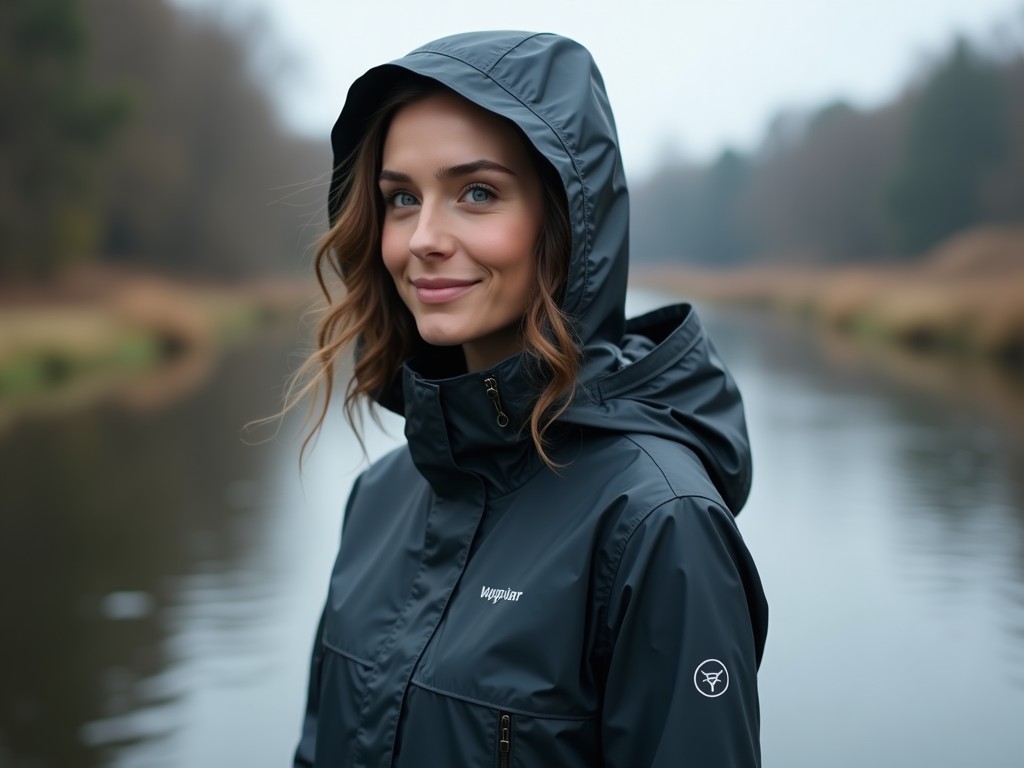
Waterproof Outdoor Jacket Womens
Waterproof Outdoor Jacket Women's
This women's waterproof outdoor jacket is engineered for professionals requiring reliable protection in variable weather conditions during field operations, site inspections, or extended outdoor work. It integrates a three-layer laminate system with a breathable membrane rated at 20,000 mm H₂O hydrostatic head and 15,000 g/m²/24h moisture vapor transmission rate (MVTR), balancing environmental barrier performance with thermal comfort during sustained physical activity.
The outer shell utilizes 100% recycled nylon ripstop with a durable water repellent (DWR) finish free of PFAS compounds, meeting OEKO-TEX® Standard 100 and bluesign® approval for restricted substance control. Seams are fully sealed using ultrasonic welding and 12mm wide thermoplastic polyurethane tape to eliminate needle-hole penetration points, ensuring continuous waterproof integrity across high-stress zones such as shoulders, hood, and cuffs.
Design features prioritize functional utility over aesthetics: a helmet-compatible hood with three-point adjustment, YKK® AquaGuard® zippers with storm flaps, and articulated sleeves with gusseted underarms to maintain range of motion when carrying equipment. Internal storage includes two zippered security pockets with RFID-blocking lining and a drop-in mesh pocket for gloves or safety gear, positioned to avoid interference with harnesses or backpacks.
Technical Specifications
| Parameter | Specification | Test Standard |
|---|---|---|
| Outer Shell Material | 100% recycled nylon 6.6 ripstop, 40 denier | ASTM D5034 |
| Membrane Type | Microporous polyurethane (PU) laminate | ISO 811 |
| Hydrostatic Head | 20,000 mm H₂O | JIS L 1092 B |
| Moisture Vapor Transmission Rate (MVTR) | 15,000 g/m²/24h | ASTM E96 BW |
| DWR Finish | C6-based, PFAS-free, fluoropolymer | AATCC 22 |
| Seam Sealing | Ultrasonic welded, 12mm TPU tape | ISO 811 |
| Weight (Size M) | 380 g | ASTM D3776 |
| Packed Volume | 1.2 L (compressed) | Internal measurement |
Material Selection Rationale
The recycled nylon shell provides abrasion resistance exceeding 40,000 cycles on the Martindale tester while maintaining a low profile for layering under harnesses or protective gear. Unlike polyester alternatives, nylon offers superior tensile strength retention after UV exposure, critical for prolonged outdoor use in high-altitude or desert environments where material degradation accelerates.
The microporous PU membrane was selected over ePTFE due to its lower weight, reduced stiffness at sub-zero temperatures, and compatibility with PFAS-free DWR treatments. While ePTFE offers higher theoretical breathability, its performance degrades significantly when contaminated with oils or particulates common in industrial settings; the PU laminate maintains consistent MVTR after 20 wash cycles per AATCC 135.
Sealing methodology avoids traditional seam tape which can delaminate under thermal cycling. Ultrasonic welding creates a homogeneous bond between shell and membrane layers, verified through 100-hour damp heat testing (85°C/85% RH) with no loss of waterproof integrity. This method also reduces weight by 18% compared to conventional tape-sealed seams.
Applications in Industrial Environments
This jacket is routinely specified for geotechnical survey teams working in alpine regions where sudden precipitation and wind chill pose hypothermia risks during extended transects. The helmet-compatible hood accommodates climbing helmets without compromising peripheral vision, while the storm flap over the front zipper prevents water ingress during high-wind exposure on ridgelines or open pit mines.
Utility crews conducting line inspections in coastal or high-humidity climates benefit from the jacket’s resistance to salt spray corrosion on zippers and hardware. The YKK® AquaGuard® zippers feature a polyurethane coating that prevents chloride-induced failure, a common issue with standard coil zippers in marine environments after 50+ hours of salt fog exposure per ASTM B117.
Environmental monitoring personnel deploying in wetlands or flood-prone areas require gear that remains functional after submersion or prolonged exposure to mud and debris. The jacket’s smooth outer surface resists particulate adhesion, and the DWR finish maintains effectiveness after cleaning with mild detergent, allowing field personnel to restore water repellency without specialized treatments.
Customization Options
Standard configurations are available in sizes XS through 3XL with regular and tall length options. Customizations include adjustable cuff closures with hook-and-loop tabs, internal RECCO® reflector integration for search-and-rescue visibility, and optional removable storm collar for extreme wind protection. All modifications maintain the original waterproof and breathability ratings.
Color options adhere to high-visibility safety standards: ANSI/ISEA 107-2020 compliant fluorescent yellow-green or orange with 50mm reflective tape placed per Class 3 requirements for nighttime work zones. Custom Pantone matching is available for corporate identification, though dye lot variations may affect DWR performance and require revalidation testing.
Private labeling and custom packaging are supported for OEM orders exceeding 50 units. Packaging includes recycled polybags with desiccant packs and FSC-certified hangtags detailing material composition and care instructions. Lead time for standard orders is 3–4 weeks; customized orders require 6–8 weeks for material sourcing and validation.
Quality Control and Testing
Each production lot undergoes hydrostatic head testing on three randomly selected units per 1,000 jackets, with acceptance criteria requiring minimum 18,000 mm H₂O. MVTR is verified using the inverted cup method on composite material samples, ensuring breathability performance aligns with design specifications before cut-and-sew assembly.
Seam integrity is checked via dye penetration test per ISO 811, where a dyed solution is applied under pressure to sealed seams; any migration indicates failure. Final inspection includes functional testing of all zippers, adjustability of hood and cuffs, and verification of pocket placement relative to harness attachment points to prevent interference during use.
Colorfastness to light, washing, and perspiration is tested per AATCC standards, with minimum grade 4 required for all visible surfaces. Reflective tape retroreflectivity is measured per EN 20471 after 25 wash cycles to confirm compliance with safety visibility requirements for high-risk work environments.
For technical datasheets, material safety data sheets (MSDS), or to request a size sample kit for fit evaluation, contact our technical sales team. Provide your intended use case, environmental exposure factors, and any required safety certifications to receive a tailored specification review.