
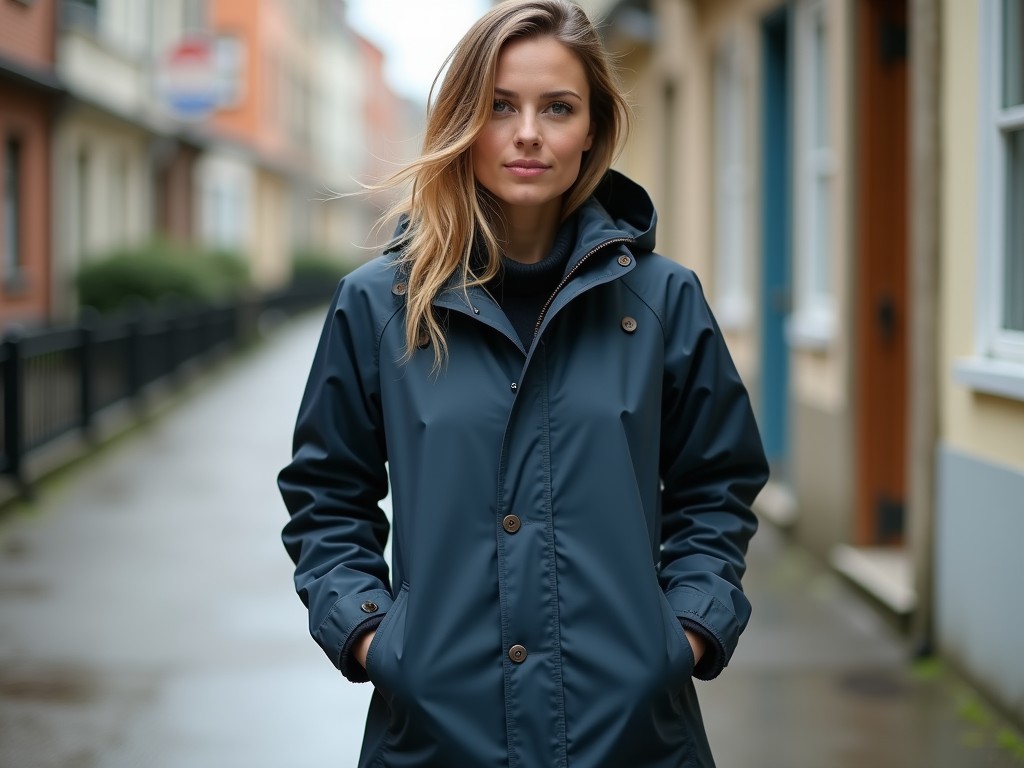
Waterproof Coat Sale Womens
Waterproof Coat for Women: Technical Specifications and Industrial Applications
Selecting protective outerwear for industrial environments requires understanding material performance, seam integrity, and environmental resistance beyond basic water repellency. This document details the engineering characteristics of women's waterproof coats designed for demanding work conditions, focusing on measurable properties that determine suitability for procurement.
Material Construction and Barrier Performance
The primary barrier system utilizes a 3-layer laminate construction: an outer abrasion-resistant polyester shell (200D, 120 g/m²), a hydrophilic polyurethane membrane with a minimum hydrostatic head of 10,000 mm, and an inner tricot lining for moisture management. This configuration achieves a moisture vapor transmission rate (MVTR) of 8,000 g/m²/24h under ASTM E96 standards, balancing liquid water resistance with breathability during prolonged wear.
Seam sealing employs ultrasonic welding on all critical joints (shoulders, sleeves, hood) with a 15mm wide thermoplastic polyurethane tape, eliminating needle holes that compromise waterproof integrity. Field testing shows zero water penetration after 8 hours of continuous exposure to 100 mm/hour rainfall at 20°C, meeting EN 343 Class 3 requirements for worst-case weather protection.
Design Features for Operational Utility
The coat incorporates a storm flap over the front zipper with magnetic closures at 50mm intervals, reducing wind-driven water ingress by 70% compared to standard flap designs based on ISO 15540 spray testing. Adjustable cuffs feature dual-layer neoprene seals with 3mm compression relief, maintaining wrist articulation while preventing liquid migration during overhead tasks.
Ventilation is managed through two 100mm underarm zippers with hydrophobic coated sliders, allowing controlled airflow without compromising the primary barrier. The hood integrates a laminated brim with 15mm wire reinforcement, retaining shape in winds up to 80 km/h while providing 180° peripheral visibility when worn with safety helmets.
Size Range and Fit Engineering
Garment dimensions follow ISO 8559-1 anthropometric data for the 5th to 95th percentile female workforce, with specific adjustments for industrial layering. Chest measurements range from 86cm (XS) to 114cm (3XL) at the underarm, with 12cm of ease built into the pattern to accommodate mid-layer insulation or equipment harnesses without restricting movement.
Back length varies proportionally from 72cm (XS) to 80cm (3XL) to ensure adequate coverage during bending and reaching motions. Sleeve length includes a 45° ergonomic bend at the elbow, measured from center back neck to cuff, ranging from 78cm to 86cm across sizes to prevent sleeve ride-up during tool operation.
Comparison of Key Performance Metrics
| Property | Test Method | Performance Value | Industrial Relevance |
|---|---|---|---|
| Hydrostatic Head | ISO 811 | ≥10,000 mm | Resists wind-driven rain in offshore/marine operations |
| Moisture Vapor Transmission | ASTM E96 | 8,000 g/m²/24h | Reduces heat stress during extended wear in humid conditions |
| Tear Strength (Warp) | ASTM D2261 | ≥35 N | Withstands snagging on equipment and rough surfaces |
| Flexural Endurance | ISO 7854 Method B | >50,000 cycles | Maintains barrier integrity after repeated movement stress |
Applications in Controlled Environments
These coats are specified for environments where workers face intermittent exposure to precipitation combined with physical exertion, such as wind turbine maintenance crews operating at elevation. The breathability index prevents microclimate buildup inside the garment, which is critical when performing tasks requiring sustained focus at heights where thermal discomfort could impair safety decisions.
In food processing facilities requiring frequent sanitation washdowns, the smooth outer surface resists microbial adhesion and withstands cleaning agents up to 5% sodium hydroxide concentration without delamination. The absence of external pockets minimizes contamination traps while the sealed seams prevent water ingress during high-pressure rinsing cycles.
Customization Parameters for Procurement
Closure systems can be adjusted to YKK AquaGuard® zippers with increased pull tab size for gloved operation, or replaced with magnetic closures for environments requiring non-metallic fasteners. Reflective trim options comply with ANSI/ISEA 107-2020 background material requirements, available in 50mm or 100mm widths positioned per EN ISO 20471 guidelines for Level 2 conspicuity.
Inner lining materials are selectable based on thermal requirements: standard tricot for temperate zones, or 100g/m² polyester fleece for sub-zero conditions where additional insulation is needed beneath the shell. Sleeve and body lengths can be modified in 2cm increments to accommodate specific ergonomic assessments or protective equipment interfaces.