
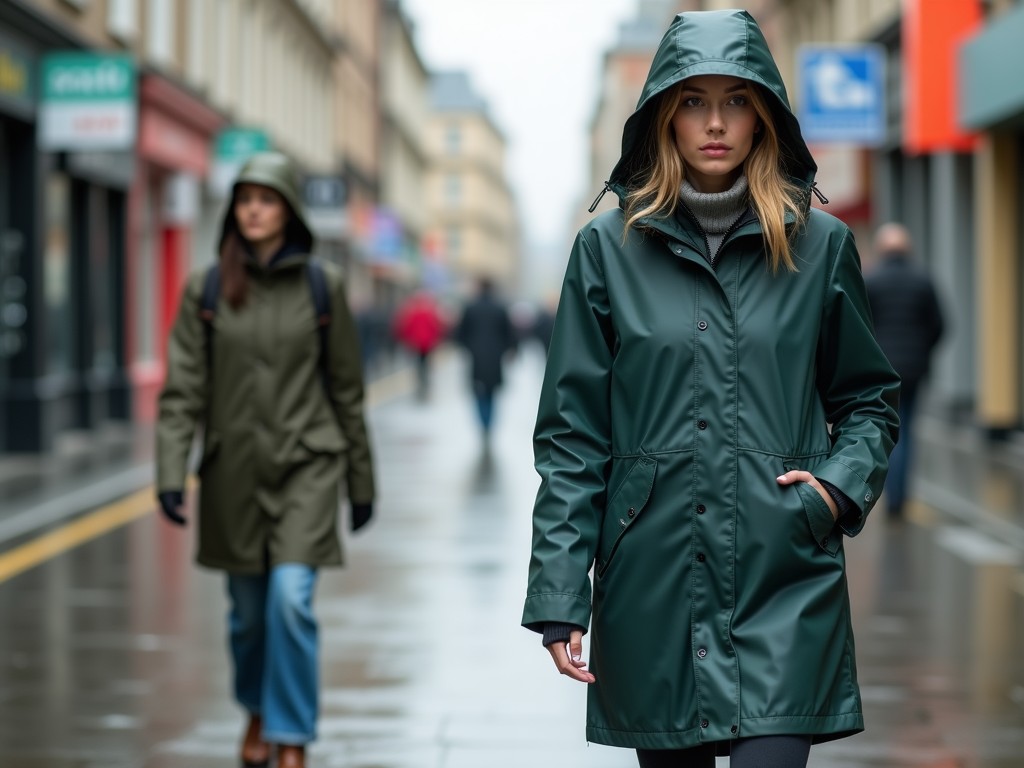
Oem Womens Outdoor Walking Coat
OEM Women's Outdoor Walking Coat
This product page details the technical specifications, material options, and design considerations for OEM women's outdoor walking coats intended for light to moderate activity in variable weather conditions. The focus is on functional performance, manufacturability, and suitability for bulk procurement by brands, distributors, and outdoor equipment specialists.
Understanding the balance between weather protection, breathability, and mobility is essential when specifying outerwear for walking applications. Each design element—from fabric construction to seam sealing—directly impacts user comfort and product longevity in real-world use.
Core Functional Requirements
An effective walking coat must manage moisture vapor transmission while resisting light precipitation and wind. Key performance indicators include:
- Water resistance: Minimum 5,000 mm hydrostatic head (HH) for the outer shell fabric to withstand light rain and drizzle.
- Breathability: Minimum 5,000 g/m²/24h moisture vapor transmission rate (MVTR) to prevent internal condensation during sustained activity.
- Wind resistance: Air permeability below 5.0 cfm (cubic feet per minute) under standard test conditions to minimize convective heat loss.
- Weight: Target fabric weight between 120–180 g/m² for the shell layer to ensure packability and ease of movement.
These values represent typical benchmarks for three-layer softshell or coated nylon constructions used in active walking coats. Actual performance depends on fabric choice, coating type, and laminate structure.
Material Options and Construction
Shell fabrics are selected based on abrasion resistance, flexibility, and compatibility with waterproof breathable membranes or durable water repellent (DWR) finishes. Common options include:
| Material Type | Typical Weight (g/m²) | Key Characteristics |
|---|---|---|
| Nylon taslan | 130–160 | Soft hand, good drape, excellent DWR retention, moderate abrasion resistance |
| Polyester mini-ripstop | 110–140 | High tear strength, UV stability, low moisture absorption, cost-effective |
| Polyester fleece-backed softshell | 200–250 | Integrated wind resistance and thermal regulation, stretch recovery, quiet operation |
Laminates typically use polyurethane (PU) or thermoplastic polyurethane (TPU) membranes with MVTR ratings ranging from 3,000 to 10,000 g/m²/24h depending on pore structure and hydrophilicity. DWR finishes are applied as fluorocarbon-free (C0) or long-chain (C6) treatments, with reapplication recommended after 15–20 wash cycles to maintain surface beading.
Design Features for Walking Applications
Pattern engineering prioritizes unrestricted arm swing and torso rotation. Key design elements include:
- Articulated elbows with gusseted underarms to prevent binding during stride extension.
- Adjustable hem with hidden drawcord and cordlocks to seal against drafts without adding bulk.
- Two-way front zipper with storm flap and chin guard to allow ventilation while maintaining neck protection.
- Zippered hand pockets positioned above hip belt level for accessibility when wearing a pack.
- Adjustable cuffs with hook-and-loop tabs to accommodate gloves and prevent sleeve ride-up.
Ventilation options such as pit zips or back panels are optional but recommended for aerobic walking in temperate climates. Reflective trims are available for low-visibility conditions and must meet EN 13356 or ANSI/ISEA 107 standards if used for safety compliance.
Customization and OEM Considerations
OEM production allows full control over specifications to align with brand performance targets and aesthetic requirements. Customizable parameters include:
- Fabric weight, composition, and finish (e.g., brushed back, anti-pilling treatment)
- Membrane type and lamination method (2-layer, 2.5-layer, 3-layer)
- Color matching via Pantone or custom dye lots (minimum quantities apply)
- Trim details: zipper brand/type, cord color, logo placement, reflective tape width
- Length options: regular, tall, or petite sizing blocks
- Packaging: individual poly bags, bulk cartons, or custom hangtags
Tooling and pattern development typically require 2–3 weeks after tech pack approval. Sample lead time is 7–10 business days for proto samples and 14–21 days for pre-production samples. Bulk production lead time averages 45–60 days from deposit receipt, depending on fabric availability and order complexity.
Quality Control and Testing
Quality assurance follows AATCC, ASTM, and ISO standards relevant to outdoor apparel. Critical inspection points include:
| Test Parameter | Standard Method | Acceptance Criteria |
|---|---|---|
| Hydrostatic head | AATCC 127 | ≥ 5,000 mm (shell fabric) |
| Moisture vapor transmission | ASTM E96 BW | ≥ 5,000 g/m²/24h |
| Seam strength | ASTM D1683 | ≥ 18 N/mm (taped seams) |
| Colorfastness to washing | AATCC 61 | Grade 4 or better after 5 cycles |
| Dimensional stability | AATCC 135 | ≤ 3% skew, ≤ 2% twist after washing |
Final audit includes 100% visual inspection for stitching defects, zipper function, and trim alignment. Random sampling (AQL 2.5) is applied for dimensional checks and performance testing. All test reports are available upon request for customer verification.
Applications and End-Use Scenarios
This coat is designed for recreational walking on paved paths, gravel trails, and light terrain in temperatures ranging from 5°C to 15°C (41°F to 59°F). It serves as an outer layer over base and mid-layers, providing protection against wind chill and light precipitation without causing overheating during sustained activity.
Typical users include urban commuters, trail walkers, and outdoor tourism participants who require a balance of weather resistance, packability, and freedom of movement. The garment is not intended for alpine mountaineering or prolonged exposure to heavy rain, where higher performance shells with taped seams and hydrostatic heads exceeding 10,000 mm are required.
For technical inquiries, custom quotes, or sample requests, please contact our OEM team.
Request OEM Specifications