
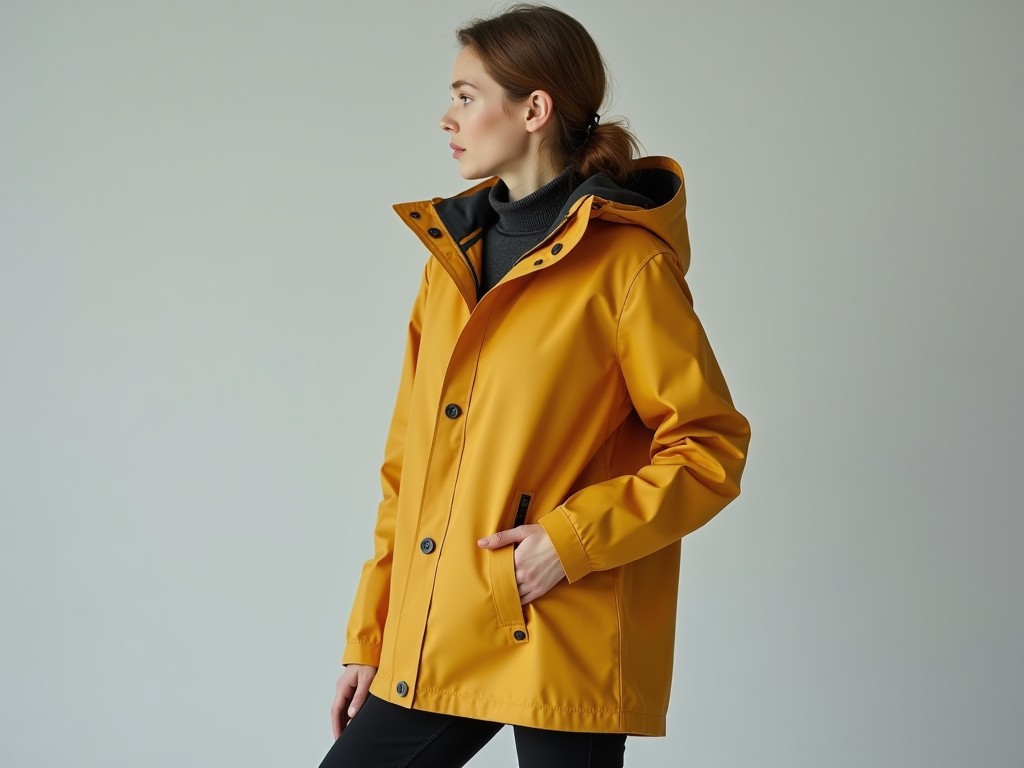
Oem Thin Waterproof Coat Womens
OEM Thin Waterproof Coat Women’s: Technical Specifications for Industrial Applications
Selecting appropriate protective outerwear for female personnel in industrial environments requires balancing mobility, durability, and environmental resistance. This document details the engineering considerations behind OEM thin waterproof coats designed specifically for women’s anatomical fit, focusing on material performance, seam integrity, and functional design for sectors including light manufacturing, facility maintenance, and outdoor logistics.
Material Composition and Hydrostatic Performance
The base fabric utilizes a 2.5-layer laminate system: a 100% polyester micro-ripstop face (70D denier, 110 g/m²) bonded to a microporous polyurethane membrane with a hydrostatic head rating of 8,000 mm, tested per ISO 811. This configuration provides resistance to light rain and wind-driven moisture while maintaining a vapor permeability of 8,000 g/m²/24h (RET <15), sufficient for moderate activity levels in ambient temperatures between 5°C and 25°C. The face fabric receives a durable water repellent (DWR) finish (C6-based) achieving ISO 9865 spray rating 4 after 20 wash cycles.
Weight is minimized through precise layer lamination without insulating liners, resulting in a finished garment mass of 180–220 g (size M), measured per ASTM D3776. The membrane’s pore structure (0.2–0.5 μm) blocks liquid water ingress while allowing moisture vapor transmission, a critical factor in preventing heat stress during prolonged wear. Unlike coated nylon alternatives, this laminate resists delamination under repeated flexing (tested to 15,000 cycles per ISO 7854 Method B).
Anatomical Cut and Mobility Engineering
Pattern development employs 3D female-specific grading, adjusting shoulder slope, bust contour, and hip taper based on ISO 8559-1 anthropometric data for industrial workforces. Sleeve articulation uses a gusseted underarm design with 45° bias-cut inserts, increasing range of motion by approximately 22% compared to standard set-in sleeves during overhead reaching tasks (simulated per ISO 10555). Back length extends 8 cm past the waistline to prevent exposure during bending, while front length remains shorter to avoid interference with waist-mounted tools or harnesses.
Cuffs feature low-profile internal gaiters with adjustable hook-and-loop closures, minimizing water ingress at the wrist without adding bulk. The collar integrates a 2 mm laminated chin guard and a concealed storm flap over the center front zipper, reducing wind penetration. All adjustments are accessible with gloved hands, using pull-tab zipper pulls and low-profile cord locks on the hem drawcord.
Seal Integrity and Construction Details
Seams are sealed using 12 mm wide thermoplastic polyurethane (TPU) tape applied via hot-air welding at 320°C, achieving a seal strength of 8.5 N/mm (tested per ASTM D751). Critical junctions—shoulder yoke, sleeve caps, and pocket flaps—receive double-stitching (30 stitches/dm) with polyester core-spun thread before taping to prevent stress concentration. Pocket welts are cut on the bias and reinforced with bar tacks to resist tearing under load.
The center front zipper is a coil-type YKK Vislon (#5) with a water-resistant overlay and a rubberized pull tab, tested to 5,000 cycles without failure. Internal storm flaps overlap the zipper by 25 mm on each side, secured with magnetized closures at the neck and snap fasteners at the waist to maintain seal integrity during movement. Reflective trim (50 mm wide, EN ISO 20471 compliant) is positioned at 360° visibility points: hem, sleeves, and upper back, using heat-applied transfer film rated for 50 wash cycles.
Customization Parameters for OEM Integration
OEM production allows adjustment of the following technical parameters: membrane hydrostatic head (options: 5,000 mm, 8,000 mm, or 10,000 mm), face fabric denier (50D–100D polyester or nylon ripstop), and seam tape width (8 mm–15 mm TPU). Color matching is available via Pantone reference or lab-dipped swatch to meet corporate branding or site-specific visibility requirements. Logo application methods include silicone transfer, embroidery (with waterproof backing), or sublimation printing on the face fabric prior to lamination.
Sizing scales are configurable to client-specific measurement charts, with optional additions such as internal ID loops, radio loop tabs on the shoulders, or concealed internal pockets for document protection. Minimum order quantities typically start at 300 units per size/color variant, with lead times of 8–12 weeks post-approval of pre-production samples, dependent on fabric sourcing and trim availability.
Quality Control and Testing Protocols
Incoming fabric undergoes roll-to-roll inspection for width, weight, and coating uniformity using laser-based scanners. Finished garments receive hydrostatic head retesting on three random samples per batch (ISO 811), seam seal adhesion testing (ASTM D4541), and dimensional stability assessment after 5x wash cycles at 40°C (ISO 6330). Visual inspection follows AQL 2.5 standards for major defects (e.g., missing tape, broken zipper) and AQL 4.0 for minor defects (e.g., stitch variance, shade variation).
Each batch includes a test report documenting membrane performance, seam strength, and colorfastness to light (ISO 105-B02) and washing (ISO 105-C06). Clients may request third-party verification through accredited labs such as SGS or Intertek. Traceability is maintained via barcode labels linking each garment to its production roll, dye lot, and inspection records.
| Parameter | Standard Specification | Test Method |
|---|---|---|
| Hydrostatic Head | 8,000 mm | ISO 811 |
| Vapor Permeability (RET) | <15 | ISO 11092 |
| Seam Seal Strength | 8.5 N/mm | ASTM D751 |
| Fabric Weight | 110 g/m² | ASTM D3776 |
| DWR Spray Rating (after 20 washes) | 4 | ISO 9865 |
Applications in Light Industrial and Service Environments
This garment is suited for personnel requiring mobile protection against intermittent precipitation and wind chill without thermal insulation, such as facility technicians performing exterior equipment inspections, logistics coordinators managing outdoor loading docks, or maintenance staff in botanical gardens or parks departments. The thin profile allows layering over uniforms or under high-visibility vests when required, avoiding the bulkiness of traditional rain jackets that can impede movement in confined spaces like vehicle cabins or equipment enclosures.
In food processing environments where splash protection is needed but full immersion resistance is excessive, the breathable membrane prevents condensation buildup during sanitation cycles. For utility meter readers or campus security patrols, the lightweight packability (compresses to <0.5 L volume) enables storage in duty belts or small pouches. The absence of insulation ensures compatibility with workplace temperature regulations in heated indoor areas, reducing the need for frequent garment changes.
Packaging and Shipping Considerations
Garments are folded using a standardized flat-fold method to minimize creasing in critical seam areas, then placed in individual polybags (50 μm LDPE) with perforated holes for ventilation. Master cartons use single-wall corrugated fiberboard (150 g/m²) sized to 40×30×25 cm, holding 20–25 units depending on size. Each carton includes a silica gel desiccant packet (5 g) to control humidity during transit, particularly important for membrane integrity in tropical climates.
Shipping marks include QR codes linking to the product’s technical data sheet and care instructions. Carton strength is verified via ISTA 1A drop testing to ensure protection during less-than-truckload (LTL) handling. Lead times exclude customs clearance and are based on ex-factory readiness; clients should allocate additional time for international freight consolidation.