
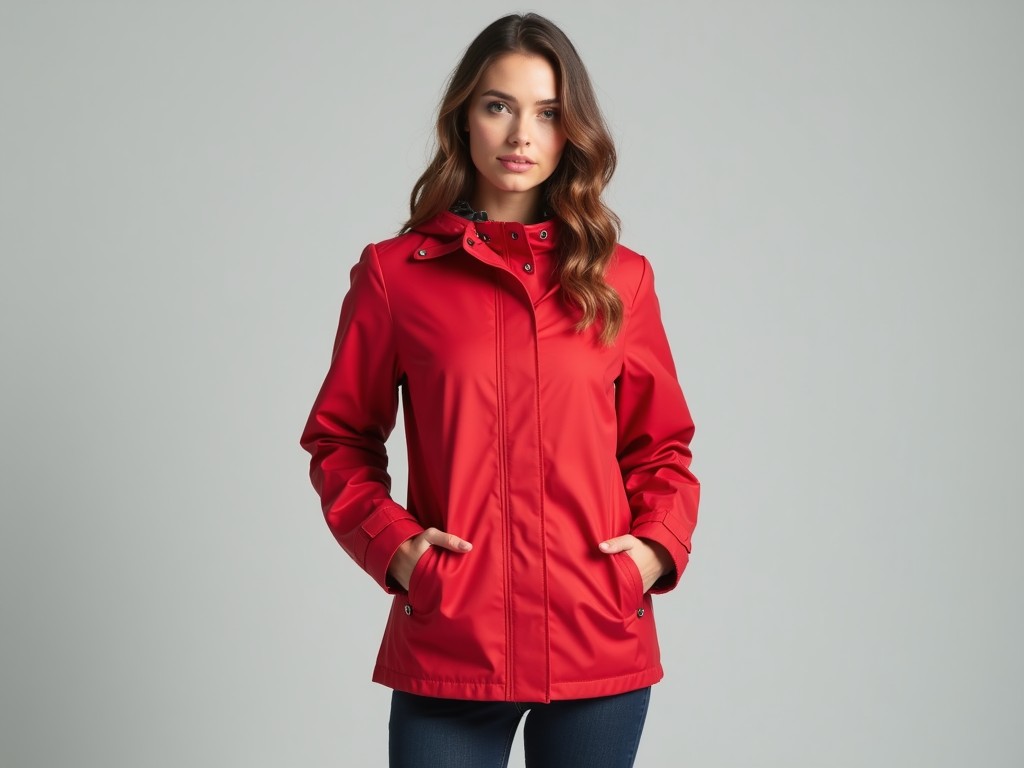
Oem Rain Coat Price For Women
OEM Rain Coat Price for Women
Understanding the cost structure of OEM rain coats for women requires analyzing material specifications, construction methods, and volume-dependent pricing factors. This page explains how technical choices influence unit price, helping procurement teams evaluate quotations accurately and avoid unexpected cost drivers during sourcing.
Material Selection and Cost Implications
The primary cost determinant in women’s OEM rain coats is the outer shell fabric. Common options include polyurethane-coated polyester (PU/PES), thermoplastic polyurethane (TPU) laminate, and polyvinyl chloride (PVC) blends. PU/PES typically ranges from $1.80 to $3.20 per square meter, offering balanced waterproofing (≥5,000 mm hydrostatic head) and flexibility. TPU laminate, while more expensive at $4.50–$7.00/m², provides superior durability (>100,000 Martindale abrasion cycles) and resistance to oils and UV degradation. PVC-coated fabrics are the most economical ($1.20–$2.00/m²) but exhibit reduced breathability and become brittle below -10°C, limiting suitability for colder climates.
Lining materials also affect pricing. Mesh polyester linings add $0.30–$0.60/m², while brushed tricot or fleece linings increase costs by $0.80–$1.50/m² due to additional processing and yarn density. Seam sealing tape, applied via heat-bonding, contributes $0.15–$0.25 per linear meter of sealed seam. Fully taped seams (standard for waterproof integrity) can add $1.20–$1.80 to the garment cost depending on seam count and tape width (typically 20mm).
Design Complexity and Labor Factors
Garment design directly influences labor time and material waste. Simple A-line silhouettes with minimal seams and no adjustable features typically require 1.2–1.5 hours of labor per unit. In contrast, designs with articulated elbows, adjustable hoods with drawcords and toggles, storm flaps over zippers, and multiple pockets increase labor time to 2.0–2.8 hours due to additional stitching, component attachment, and quality checks.
Pattern efficiency also impacts cost. Complex curves and asymmetrical cuts increase fabric waste by 15–25% compared to blocky, rectangular layouts. Marker optimization software can reduce waste to 8–12%, but this requires upfront investment in CAD systems and skilled pattern makers. For OEM runs under 500 units, waste factors are often higher due to limited ability to nest patterns efficiently across multiple sizes.
Hardware selection introduces further cost variation. YKK-branded zippers (water-resistant, coated) range from $0.80–$1.50 per unit depending on length and slider type. Generic alternatives may reduce cost by 30–40% but carry higher risk of corrosion or slider failure after 20–30 wash cycles. Adjustable cuffs with hook-and-loop closures add $0.15–$0.25, while snap-adjustable hems cost $0.20–$0.35 per unit.
Volume-Based Pricing Tiers
OEM pricing for women’s rain coats follows a nonlinear volume discount curve due to fixed setup costs and economies of scale in material procurement. Below 300 units, prices remain high due to amortized pattern development, sample approval costs, and minimum fabric purchase requirements (often 200–300 linear meters per color).
| Order Quantity | Typical Price Range (FOB, USD/unit) | Cost Drivers |
|---|---|---|
| 100–299 units | $18.50–$28.00 | High per-unit setup, limited fabric negotiation, basic seam sealing |
| 300–999 units | $14.20–$21.50 | Optimized material yield, standard labor rates, mid-tier hardware |
| 1,000–4,999 units | $11.00–$16.80 | Bulk fabric discounts, automated cutting, volume-based zipper pricing |
| 5,000+ units | $8.50–$13.00 | Full automation eligibility, negotiated trim contracts, reduced QC sampling |
Note: Prices assume standard PU/PES outer shell, mesh lining, taped critical seams, YKK zippers, and no custom branding. Custom colors, logos, or specialized finishes (e.g., antimicrobial, reflective trim) add 15–35% to base cost. FOB pricing excludes freight, insurance, and import duties.
Customization and Additional Cost Considerations
Beyond baseline specifications, several customization options significantly affect final pricing. Custom Pantone color matching requires laboratory dip testing and minimum fabric purchase of 600 linear meters per shade, adding $0.50–$1.20/m² to fabric cost. Screen printing or heat-transfer logos on the left chest or back increase unit cost by $0.60–$1.80 depending on size, color count, and placement complexity. Embroidery, while durable, adds $1.20–$2.50 per logo due to stitch count and machine time.
Functional enhancements also incur measurable cost increases. Adding a removable insulated liner (typically 120g polyester fleece) raises material and labor costs by $3.00–$4.50 per unit. Integrating a two-way zipper with storm flap and chin guard adds $0.70–$1.10. Reflective tape compliant with EN ISO 20471 standards costs $0.40–$0.60 per linear meter when applied to arms, shoulders, and back.
Packaging choices influence landed cost. Individual polybagging adds $0.08–$0.12 per unit. Inserting hangtags, care labels, and barcode stickers increases cost by $0.15–$0.25. Master cartons (typically 24–30 units per carton) add $1.20–$1.80 per carton depending on corrugate thickness and printing requirements. For export shipments, moisture-desiccant packs and pallet stabilization straps are recommended, adding $0.30–$0.50 per pallet.
Quality Control and Testing Impact on Price
Quality assurance protocols directly affect production efficiency and thus unit cost. Standard AQL 2.5 inspection for major defects (e.g., open seams, missing components) requires sampling 20 units per 1,000, adding minimal overhead. However, stricter standards like AQL 1.0 or customer-specific test protocols (e.g., repeated spray testing, flex resistance after washing) increase inspection time and may require 100% seam verification, raising labor costs by 8–15%.
Third-party testing for certification (e.g., ISO 13688 for rainwear performance, REACH compliance) incurs fees of $200–$500 per test report, typically amortized across the order volume. For orders under 1,000 units, this can add $0.20–$0.50 per unit. Factories with in-house testing capabilities for hydrostatic head, breathability (RET), and pH reduction may absorb these costs more efficiently, offering better price stability for repeat orders.
Suppliers offering traceable material batches and documented process controls (e.g., ISO 9001) may command a 5–10% price premium but reduce risk of batch rejection or rework. For OEM buyers, this premium often pays off through fewer delays and consistent product performance across seasons.
Requesting Accurate Quotations
To receive a precise OEM rain coat price for women, provide suppliers with a complete technical package: detailed CAD sketches or tech packs with measurements, specified fabric performance requirements (e.g., minimum hydrostatic head, breathability rating), seam sealing extent, hardware brands, labeling details, packaging instructions, and target order quantity. Including size breakdown (e.g., S–3XL ratio) ensures accurate fabric consumption calculation. Clearly stating whether samples are required for approval helps avoid misaligned expectations.
Avoid requesting pricing based solely on generic descriptions like “waterproof jacket” or “ladies’ raincoat.” Such vagueness leads to inconsistent quotations and hidden cost adjustments later. Instead, reference specific test methods (e.g., ISO 811 for water resistance, ISO 105-E04 for colorfastness) and define acceptance criteria. This enables suppliers to quote based on equivalent technical specifications rather than assumptions.
For technical consultation or to submit your specification package for a formal quotation, visit our inquiry page.
Request OEM Rain Coat Quotation