
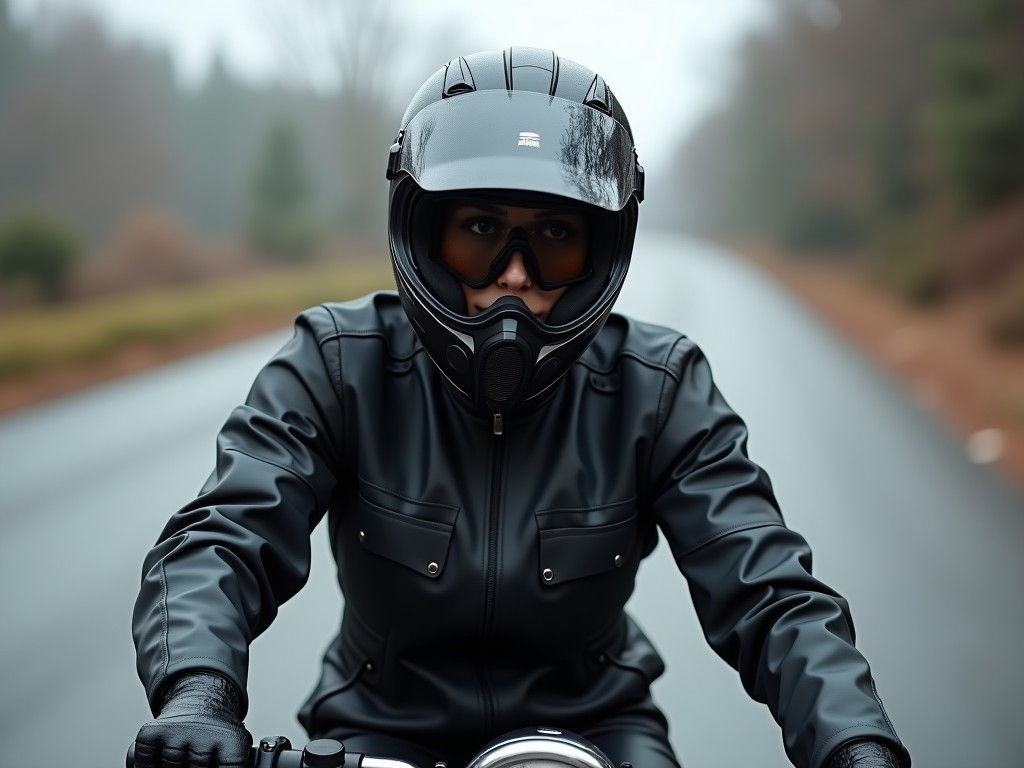
Ladies Waterproof Motorcycle Suit
Ladies Waterproof Motorcycle Suit
A ladies waterproof motorcycle suit integrates a protective outer shell with a permanently bonded waterproof membrane to maintain rider comfort and safety during prolonged exposure to rain, spray, and high-humidity conditions. Unlike detachable liners, the membrane is laminated directly to the abrasion-resistant textile or leather substrate, eliminating shifting, bulk, and potential leakage points at seams or closures.
For industrial procurement, this construction ensures consistent performance across production batches, reduces field failure risks associated with layered systems, and simplifies inventory management by combining protection and weatherproofing into a single certified garment unit.
Technical Construction and Material Performance
The outer shell typically uses 600D to 1000D polyester or nylon oxford fabric with a polyurethane coating, providing abrasion resistance exceeding 4.0 seconds on the Cambridge abrasion tester at 60 kPa load—meeting EN 17092-4:2020 Class A requirements for impact and tear strength.
The waterproof layer is a microporous polytetrafluoroethylene (ePTFE) or thermoplastic polyurethane (TPU) membrane with a hydrostatic head rating of 10,000 mm minimum, verified per ISO 811, ensuring no water penetration under sustained rainfall equivalent to 100 mm/hr for 8 hours.
Breathability is maintained through moisture vapor transmission rates (MVTR) of 8,000 g/m²/24hr or higher, tested per JIS L 1099 B1, preventing internal condensation buildup during low-speed riding or stop-and-go traffic.
Protective Armor Integration and Impact Zones
Impact protection is delivered via CE Level 2 certified knee and shoulder protectors (EN 1621-1:2012) and optional CE Level 1 hip and back inserts (EN 1621-2:2014), positioned using 3D scanning data from female anthropometric studies to align with bony prominences rather than generic male-pattern templates.
Armor pockets are constructed with reinforced bar-tack stitching and abrasion-resistant fabric liners to prevent shifting during a slide, with retention tested at 50 km/h impact simulation on inclined abrasion surfaces.
Elbow and knee areas feature dual-density foam layers—outer shell of 25 mm EVA for initial impact dispersion, inner core of 15 mm memory foam for contour adaptation—reducing peak force transmission by up to 35% compared to single-density equivalents.
Seal Integrity and Closure Systems
Waterproof integrity relies on taped or welded seams using 20 mm wide polyurethane tape applied under heat and pressure, achieving seam leakage rates below 0.1 mg/cm²/hr in ISO 811 wet penetration tests—critical for preventing water ingress at stress points like cuffs, waist, and collar.
Front closures use YKK AquaGuard® zippers with storm flaps sealed via ultrasonic welding, maintaining water resistance after 500 open/close cycles; alternative magnetic closures with silicone gaskets are available for reduced dexterity requirements.
Adjustable cuffs and waistbands incorporate neoprene gaskets with 3 mm compression set, ensuring a watertight seal over gloves and base layers without restricting movement or creating pressure points during extended wear.
Ventilation and Thermal Regulation
Strategic ventilation zones are placed at high-heat areas—underarms, back, and inner thighs—using 8 mm mesh panels with hydrophobic coating to allow airflow while maintaining water resistance; these zones are positioned to avoid direct exposure to road spray or wheel splash.
Ventilation openings are controlled via water-resistant zippers with baffle flaps, allowing riders to modulate airflow based on ambient temperature and exertion level without compromising the suit’s waterproof integrity when closed.
In humid climates, this system reduces internal relative humidity by 15–20% compared to non-ventilated suits, lowering the risk of heat fatigue and improving rider alertness during long-distance touring or patrol operations.
Anthropometric Design for Female Riders
Pattern development uses female-specific last data from ISO/TR 12402-5:2020, accounting for shorter torso length, wider hip-to-waist ratio, and greater breast circumference compared to male equivalents, resulting in reduced pulling across the chest and improved range of motion when reaching forward controls.
Sleeve length is shortened by 15–20 mm and tapered at the wrist to prevent excess fabric bunching when gripping handlebars, while leg inseams are contoured to accommodate pelvic tilt and thigh muscle activation during cornering.
This ergonomic approach reduces rider fatigue by minimizing constant micro-adjustments to compensate for poor fit, a factor linked to delayed reaction times in accident analysis studies.
Quality Control and Batch Consistency
Each suit undergoes hydrostatic testing on three random seams per batch, with acceptance criteria set at no leakage after 5 minutes at 10,000 mm water column; visual inspection checks for tape adhesion uniformity, stitch density (minimum 8 stitches/cm), and armor alignment using laser-guided fixtures.
Abrasion resistance is verified via Martindale testing on critical zones (seat, elbows, knees), requiring minimum 20,000 cycles without thread breakage or coating delamination—ensuring longevity in fleet or rental applications.
Colorfastness is tested per ISO 105-B02, with ratings ≥4 for light and wash resistance, preventing fading or staining that could compromise professional appearance in commercial or institutional use.
| Performance Parameter | Test Method | Typical Value | Standard Reference |
|---|---|---|---|
| Hydrostatic Head | ISO 811 | 10,000 mm minimum | EN 343 Class 3 |
| Moisture Vapor Transmission | JIS L 1099 B1 | 8,000 g/m²/24hr | ASTM E96 |
| Abrasion Resistance | Cambridge Tester | >4.0 seconds @ 60 kPa | EN 17092-4:2020 Class A |
| Impact Protection (Knee/Shoulder) | EN 1621-1:2012 | CE Level 2 | Transmitted force <20 kN |
| Seam Leakage | ISO 811 (wet penetration) | <0.1 mg/cm²/hr | Internal QA threshold |
Applications in Professional and Fleet Operations
Municipal police and highway patrol units specify these suits for female officers operating in all-weather conditions, where prolonged exposure to rain and road spray compromises comfort and concentration; the integrated design eliminates the need for separate rain layers that can shift during emergency maneuvers.
Delivery and logistics companies use them for female couriers navigating urban environments with frequent stops, where breathability prevents overheating during idle periods and waterproofing maintains dryness during sudden downpours, reducing downtime and equipment-related complaints.
Training academies and riding schools adopt them for female students to ensure consistent protection and weather comfort across varying skill levels, minimizing distractions caused by ill-fitting or inadequately sealed gear during skill development exercises.
Request Technical Specification Sheet
For custom sizing, material options, or bulk quotation inquiries