
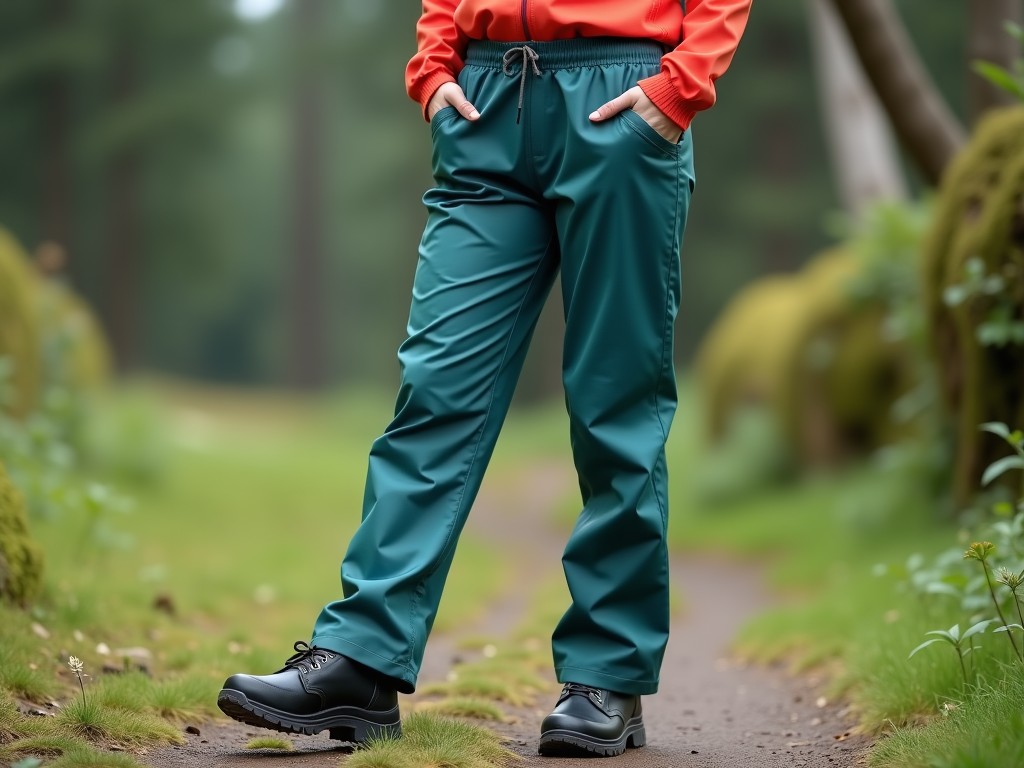
Factory Direct Womens Rain Pants For Hiking
Factory Direct Women's Rain Pants for Hiking
Designed for technical outdoor performance, these women's hiking rain pants provide reliable protection against precipitation while maintaining mobility and comfort during extended trail use. Constructed with a 3-layer laminate system, the pants feature a 10,000 mm waterproof rating and 8,000 g/m²/24h breathability to manage moisture buildup from exertion. The fabric incorporates a durable water repellent (DWR) finish on the outer shell to enhance surface runoff without compromising breathability. Seams are fully taped with polyurethane tape to prevent leakage at stitch points, a critical detail for prolonged exposure to heavy rain. An articulated knee design and gusseted crotch allow unrestricted movement during steep ascents or scrambling over obstacles. The waistband features a partial elastic insert with adjustable hook-and-loop tabs for a secure, personalized fit over base layers or midlayers. Ankle cuffs include adjustable snap closures to accommodate hiking boots or trail shoes while preventing water ingress. These pants are sourced directly from the manufacturing facility, eliminating intermediary markup and enabling consistent quality control from material sourcing to final inspection.
Technical Specifications
| Specification | Value |
|---|---|
| Fabric Construction | 3-layer laminate: nylon face, PTFE membrane, polyester backing |
| Waterproof Rating | 10,000 mm hydrostatic head (JIS L 1092) |
| Breathability | 8,000 g/m²/24h (JIS L 1099 B-1) |
| Seam Sealing | 100% polyurethane tape on all seams |
| Weight (Size M) | 280 grams |
| Packed Size | 10 x 15 x 3 cm (stuff sack included) |
| Available Sizes | XS–XXL (inseam: 76–84 cm, adjustable) |
| Color Options | Black, Navy, Forest Green (custom colors available upon request) |
Material Selection Rationale
The face fabric uses 40D nylon ripstop for abrasion resistance against brush and rock contact, with a tear strength exceeding 25 N in both warp and weft directions (ASTM D5034). The intermediate layer is a microporous PTFE membrane with pore size optimized to block liquid water while permitting vapor transmission, a balance validated via sweat guard testing. The backing layer consists of 15D polyester tricot to protect the membrane from internal abrasion and improve next-to-skin comfort. The DWR treatment is a C6-based fluoropolymer, chosen for its balance of performance and environmental compliance with current ZDHC MRSL limits. All materials are bluesign® approved, ensuring traceability from raw chemical inputs to finished textile. The polyurethane seam tape exhibits a peel strength of 8 N/cm after 5 wash cycles, maintaining integrity under repeated flexing.
Weight optimization was achieved through precise denier selection in each layer, avoiding unnecessary bulk while preserving durability. The membrane’s moisture vapor transfer rate (MVTR) was tested under controlled conditions (35°C, 80% RH) to confirm suitability for high-output activities like hiking. Unlike non-microporous coatings, the PTFE layer does not delaminate after prolonged UV exposure or flex testing (10,000 cycles, ISO 7854 Method B). The nylon face fabric retains 90% of its original tear strength after 50 hours of simulated sunlight exposure (Xenon arc, AATCC TM169). These material choices collectively reduce the risk of performance degradation during multi-day trips in variable weather.
Design Features for Hiking Applications
The articulated knee construction uses a 3D-patterned seam placement that follows the natural flexion line of the leg, reducing strain during prolonged bent-knee postures such as traversing scree or navigating switchbacks. This design eliminates the need for excess fabric behind the knee, minimizing bulk and preventing snagging on vegetation. A gusseted crotch panel, shaped as a diamond insert, increases mobility in the hip region by allowing lateral leg movement without tension on the inseam seam—a common failure point in standard patterns during high-step maneuvers.
Ankle cuffs feature a dual-adjustment system: an internal elastic drawcord for fine-tuning and an external snap tab for secure fastening over boot laces. This prevents the cuff from riding up during descent while maintaining a seal against snow or rain ingress. The waistband incorporates a 40mm elastic core covered by nylon tape, providing consistent tension without pressure points. Adjustable tab closures on either side allow fine-tuning over varying base layer thicknesses, critical for layering systems in changing conditions. Front hip pockets are positioned above the harness line of a backpack, accessible even with a waistbelt worn, and feature water-resistant zippers with storm flaps to prevent leakage.
Reinforcement patches at the inner cuff and hem use 60D nylon to resist abrasion from boot contact and crampon points, extending service life in alpine environments. The pants pack into an internal stuff sack weighing 15 grams, minimizing added weight when stored. All zippers are YKK® AquaGuard® rated for water resistance, tested to withstand 5 minutes of direct spray without penetration. Reflective logos on the lower leg enhance visibility in low-light conditions without adding bulk.
Quality Control and Testing
Each batch undergoes hydrostatic head testing on a representative sample to verify the 10,000 mm waterproof claim, conducted per ISO 811 standard with a controlled water pressure increase rate. Breathability is assessed using an inverted cup method (ASTM E96) to measure moisture vapor transmission under standardized temperature and humidity gradients. Seam integrity is validated via a dynamic spray test where pants are subjected to 20 minutes of angled rainfall while undergoing torso twisting motions to simulate movement.
Abrasion resistance of the face fabric is checked using a Martindale tester (ISO 12947-2), targeting a minimum of 20,000 cycles before noticeable wear. Colorfastness to light, washing, and rubbing is evaluated per AATCC standards to ensure no fading or bleeding that could affect appearance or indicate material degradation. DWR retention is measured after 5 wash cycles using a spray rating test (AATCC TM22), with a minimum score of 4 (90% surface wettability) required for approval. Final inspection includes dimensional stability checks after laundering to ensure size consistency across production lots.
Functional testing includes wear trials with hikers on multi-day treks in temperate and alpine climates, focusing on comfort, mobility, and leak points. Feedback from these trials informs pattern adjustments and material tweaks before full-scale production. The factory maintains ISO 9001 certification for quality management, with traceability records linking each garment to its material lot, cutting batch, and sewing operator.
Applications in Outdoor Environments
These pants are optimized for technical hiking in environments where precipitation is frequent and temperatures range from 5°C to 20°C—conditions common in coastal mountain ranges, Pacific Northwest trails, and alpine zones during shoulder seasons. The breathability rating prevents overheating during sustained ascents, while the waterproofing protects against persistent drizzle and wind-driven rain encountered in exposed ridgelines. The packable design allows storage in a daypack’s side pocket, making them practical for sudden weather changes without adding significant burden.
In colder climates below 5°C, the pants function effectively as an outer shell over insulated base layers, with the ankle adjustments preventing snow ingress when used with gaiters. For high-altitude treks above 2,500 meters, the UV-stable face fabric resists degradation from increased solar radiation, and the DWR coating maintains performance despite lower atmospheric pressure affecting condensation dynamics. The pants are also suitable for approach hikes to climbing routes, where mobility over rocky terrain and protection from sudden storms are both critical.
Trail runners and fastpackers benefit from the low weight and articulated cut, which minimizes energy expenditure during prolonged movement. The pants are less suited for sustained downhill skiing or snowboarding due to the lack of reinforced scuff guards at the ankle and absence of insulation, but they perform well for winter hiking or snowshoeing where aerobic output remains high. Their direct factory sourcing ensures consistent performance across units, reducing variability that could compromise group outings where gear reliability impacts safety.
Customization and Ordering Information
Standard production includes the sizes, colors, and features outlined above. Customization options are available for clients requiring specific adjustments: inseam length can be modified in 2 cm increments, waistband elasticity can be tuned for different layering systems, and pocket placement can be repositioned for harness compatibility. Alternative membrane types (e.g., PU-coated polyester for cost-sensitive applications) or face fabric deniers (e.g., 70D for increased durability) can be substituted based on end-use requirements.
Logo placement is possible via heat transfer or screen printing on the left thigh or rear pocket, with artwork specifications required in vector format. Packaging can be customized to include individual polybags, bulk cartons, or retail-ready hangtags with barcode labels. All custom requests are evaluated for technical feasibility—changes affecting waterproofing or breathability require retesting before approval.
Minimum order quantities vary by customization level: standard styles require 50 units, while material or pattern changes typically start at 200 units. Lead times range from 3–4 weeks for stock items to 6–8 weeks for fully customized orders, depending on material availability and factory capacity. Samples are available upon request, with shipping costs borne by the requester; sample fees are credited toward subsequent orders.
For technical inquiries, customization requests, or to request a sample, contact our industrial sales team.
Request Information