
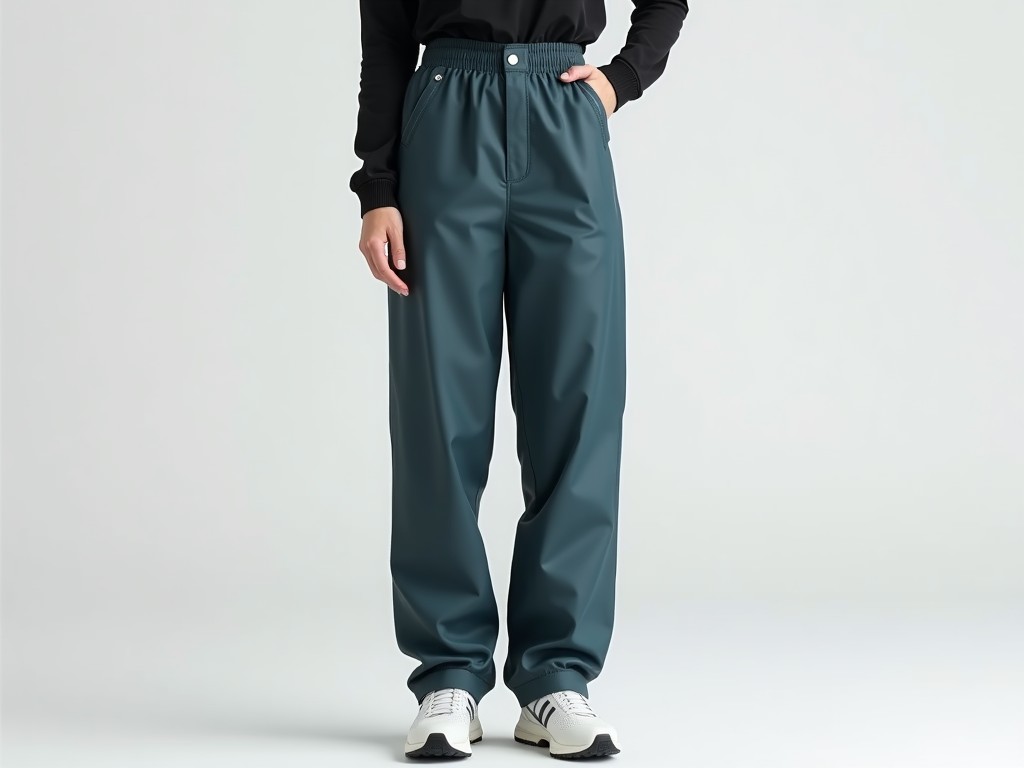
Factory Direct Womens Golf Rain Pants
Factory Direct Women's Golf Rain Pants
Women's golf rain pants from factory direct sources are engineered for performance in wet conditions without compromising mobility or comfort during play. These garments address the specific physiological and biomechanical demands of the golf swing while providing reliable waterproof protection. Understanding their technical construction helps buyers evaluate suitability for sustained outdoor use in variable weather.
Unlike general-purpose rainwear, golf-specific designs prioritize articulated patterning, breathable membrane technologies, and strategic seam placement to maintain swing mechanics. Factory direct procurement eliminates intermediary markups while allowing direct specification of materials, trims, and quality tolerances. This approach supports consistent product performance across production batches.
Material Composition and Waterproofing Systems
The outer shell typically uses a 2.5-layer or 3-layer laminate construction with a polyester or nylon face fabric bonded to a microporous polyurethane (PU) or polytetrafluoroethylene (PTFE) membrane. Face fabric denier ranges from 70D to 150D, balancing abrasion resistance with lightweight drape. Membrane pore size is engineered to be smaller than liquid water droplets (approximately 20,000mm hydrostatic head) while allowing water vapor transmission (typically 10,000–20,000g/m²/24hr MVTR).
Durable water repellent (DWR) finish is applied to the outer surface to prevent surface wetting, which could otherwise reduce breathability by blocking membrane pores. This finish requires periodic reactivation through low-heat tumbling or ironing per manufacturer care instructions. Seams are fully sealed with thermoplastic polyurethane (TPU) tape applied via heat bonding to prevent leakage at stitch points.
Ergonomic Design for Golf Swing Mechanics
Patterning incorporates articulated knees with 3D contouring and gusseted crotches to accommodate the full range of motion required during backswing, downswing, and follow-through. Inseam gussets are typically diamond-shaped or curved to prevent binding during hip rotation. Outseams often feature forward-shifted seams to reduce bulk where the arms interact with the torso during the swing.
Waistband construction uses internal silicone grip strips or adjustable internal drawcords to maintain position without external belt loops that could interfere with shirt tucking. Ankle openings incorporate adjustable hook-and-loop tabs or zippered vents with internal storm flaps to accommodate golf shoes while preventing water ingress. These design elements collectively preserve swing kinematics under precipitation.
Typical Performance Specifications
| Parameter | Typical Range | Test Standard |
|---|---|---|
| Hydrostatic Head | 15,000–25,000 mm | ISO 811 |
| Moisture Vapor Transmission Rate (MVTR) | 10,000–20,000 g/m²/24hr | ASTM E96 BW |
| Face Fabric Abrasion Resistance | 300–500 cycles (Martindale) | ISO 12947-2 |
| Seam Strength | ≥14 N/mm | ISO 13935-2 |
Values represent typical production tolerances; actual performance depends on specific material selection and construction details. Custom specifications available upon request.
Customization Options for Brand and Team Requirements
Factory direct engagement enables specification of custom color palettes matched to corporate or team branding using Pantone references or lab-dipped samples. Logo application methods include silicone ink printing for flexibility, thermoplastic polyurethane (TPU) transfers for durability, or embroidery with water-resistant backing for premium placement on the left thigh or back yoke.
Trim customization includes selection of zipper brands (YKK, SBS, or equivalent), puller styles, and cordlock types for adjustable features. Pocket configurations can be modified—such as adding water-resistant zippered hand pockets or eliminating rear pockets to reduce bulk—based on user feedback. All modifications are subject to minimum order quantities and tooling considerations.
Quality Control and Production Consistency
Incoming fabric inspection includes hydrostatic head testing, MVTR measurement, and dimensional stability checks after simulated washing cycles. During production, inline monitoring verifies seam tape adhesion strength, stitch density (typically 10–12 stitches per inch), and alignment of patterned pieces to prevent torque-induced distortion. Final audit includes 100% visual inspection for defects and random functional testing of waterproof integrity.
Batch-to-batch consistency is maintained through controlled fabric lot usage and documented machine parameters for sealing and stitching operations. Traceability systems link raw material lot numbers to finished goods, enabling root cause analysis if field performance issues arise. These procedures support reliable performance in repeated use across seasons.
Applications Beyond the Golf Course
While designed for golf, the combination of articulated patterning, lightweight waterproof breathability, and low-profile design makes these pants suitable for other precision-motion outdoor activities. Examples include archery, where unrestricted torso rotation is critical, or competitive shooting sports requiring prone to standing transitions. The minimal bulk also benefits walking/hiking guides who require rain protection without overheating during extended low-intensity movement.
Industrial buyers specifying these garments for corporate wellness programs or hospitality staff uniforms value the professional appearance combined with functional performance. The absence of overtly technical aesthetics allows integration into environments where subtlety is preferred over sport-specific styling. This versatility increases utility across diverse end-user scenarios.
For detailed specifications, customization inquiries, or sample requests, contact our technical team to discuss your specific requirements.
Request Technical Specification Sheet