
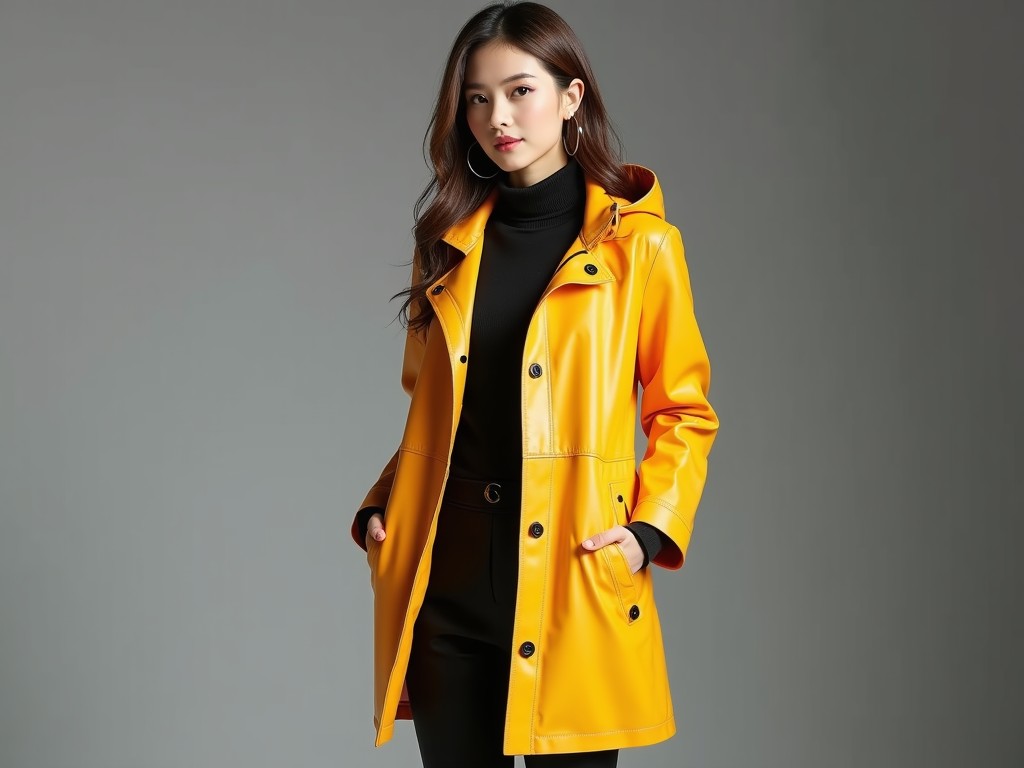
China Stylish Raincoats For Ladies
China Stylish Raincoats for Ladies
Rain protection for women requires garments that balance weather resistance with aesthetic design and functional comfort. These raincoats are engineered for urban and light outdoor use, combining waterproof materials with tailored silhouettes to meet both practical and stylistic expectations. The focus is on providing reliable defense against precipitation while maintaining a contemporary appearance suitable for professional and casual environments.
Material Composition and Waterproofing Technology
The outer layer typically uses a polyurethane-coated polyester or nylon fabric with a hydrostatic head rating of 5,000 mm to 10,000 mm, ensuring resistance to moderate rainfall without immediate saturation. This coating is applied through a laminating process that bonds the polymer to the textile substrate, creating a continuous barrier against water penetration while allowing limited vapor transmission to reduce interior condensation. Seam sealing is performed using heat-activated tape or ultrasonic welding to eliminate leakage points at stitch lines, a critical detail often overlooked in fashion-focused designs.
Inner linings may include brushed polyester or lightweight mesh to enhance comfort against the skin and facilitate moisture wicking. Some variants incorporate a removable thermal liner made of polyester fleece, allowing adaptation to cooler temperatures without compromising the raincoat’s primary waterproof function. All materials are selected for durability under repeated flexing and exposure to UV light, with colorfastness tested to maintain appearance after multiple wash cycles.
Design Features for Functional Wearability
Stylish raincoats for ladies integrate ergonomic patterning to allow freedom of movement while maintaining a fitted silhouette. Key design elements include adjustable hoods with drawcords or toggle systems, storm flaps over zippers to prevent water ingress, and articulated sleeves that accommodate layering without restricting arm motion. Ventilation is addressed through underarm grommets or back vents with protective flaps, promoting airflow without compromising waterproof integrity.
Pocket placement is optimized for accessibility and security, featuring zippered or flap-covered compartments positioned to avoid interference with bags or belts. Reflective trims may be incorporated along seams or hems for low-visibility conditions, adding a safety feature without detracting from the aesthetic. Length options typically range from hip-length to mid-thigh, balancing coverage with mobility for urban commuting or light outdoor activity.
Customization Options for Brand and Market Adaptation
Manufacturers offer flexibility in material selection, color matching, and trim detailing to align with brand identity or regional preferences. Common customizable aspects include fabric weight (from 180 gsm to 280 gsm), coating type (PU, PVC-free TPU, or recycled alternatives), and closure systems (YKK zippers, magnetic snaps, or hidden Velcro). Hoods can be designed as fixed, detachable, or storable within the collar, depending on user needs and style direction.
Color palettes are developed using Pantone or textile-specific references to ensure consistency across production batches. Custom branding options include embroidered logos, silicone patches, or heat-transfer appliqués on the chest, sleeve, or back. Lining patterns and trims can also be tailored to create limited-edition variations or seasonal collections, supporting marketing strategies without altering core protective performance.
Quality Control and Production Consistency
Each raincoat undergoes multiple inspection points during production, including fabric testing for water resistance and adhesion strength, seam integrity checks using pressurized water tests, and dimensional verification against size charts. Final random inspections assess stitching quality, hardware functionality, and overall appearance under standardized lighting. AQL (Acceptable Quality Level) standards are typically applied, with common thresholds of 2.5 for major defects and 4.0 for minor defects in export-oriented production.
Manufacturers maintain traceability through batch numbering and material certificates, enabling tracking of raw materials and process parameters. Colorfastness, pilling resistance, and flexural endurance are evaluated using standardized test methods such as ISO 105-B02, ISO 12945-2, and ISO 7854. These procedures ensure that stylistic elements do not compromise the garment’s ability to perform reliably under expected use conditions.
Applications in Urban and Lifestyle Markets
These raincoats serve professionals, students, and urban residents who require dependable rain protection without sacrificing personal style. They are commonly used in cities with frequent light to moderate rainfall, where users transition between public transit, walking, and indoor environments throughout the day. The design prioritizes ease of wear over bulky outdoor gear, making them suitable for office settings, campuses, and social engagements where appearance matters.
Beyond individual consumers, these products are sourced by retailers, corporate uniform programs, and hospitality providers seeking branded outerwear for staff in guest-facing roles. Their adaptability to customization allows integration into seasonal collections or promotional campaigns, particularly in regions with defined rainy seasons. The combination of technical performance and aesthetic flexibility supports sustained demand across diverse market segments.
Comparison of Common Materials and Treatments
| Material/Treatment | Water Resistance (mm) | Breathability | Typical Use Case |
|---|---|---|---|
| Polyester with PU coating | 5,000–10,000 | Moderate | Urban commuting, daily wear |
| Nylon with TPU coating | 8,000–12,000 | Higher | Active use, variable climates |
| Recycled PET with PVC-free coating | 4,000–8,000 | Moderate | Eco-conscious brands, retail |
| Polyester with waxed finish | 2,000–4,000 | Low | Fashion-focused, light drizzle |
Note: Values represent typical ranges; actual performance depends on coating thickness, substrate density, and post-treatment processes. Custom specifications are available upon request.
Packaging and Logistics Considerations
Raincoats are typically folded using standardized techniques to minimize creasing and packed in individual polybags with moisture barriers to prevent damage during transit. Carton configurations are optimized for pallet stability, with common quantities ranging from 20 to 50 units per carton depending on garment weight and volume. Each carton includes a packing list and label with barcode, size breakdown, and destination information for efficient warehouse handling.
For export shipments, cartons are secured with strapping and corner protectors to withstand handling stresses. Optional packaging upgrades include recycled cardboard boxes, hangers for retail-ready presentation, or custom-printed bags for brand enhancement. Lead times vary based on material availability and customization complexity, typically ranging from 25 to 45 days after sample approval and deposit receipt.
For technical specifications, customization requests, or sample inquiries, please contact our team to discuss your specific requirements.
Submit Inquiry