
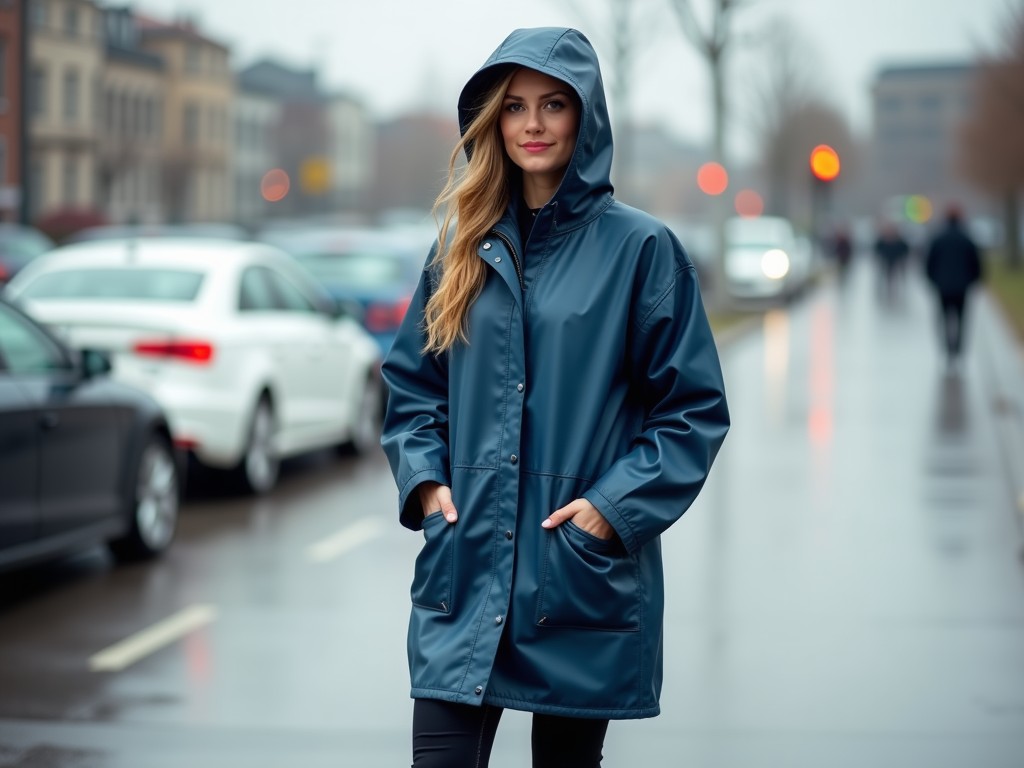
Buy Rain Ponchos For Women
Women's Rain Ponchos: Technical Specifications for Industrial Procurement
Selecting appropriate rain protection for female personnel requires understanding material performance, fit adaptation, and environmental resistance beyond basic waterproof claims. This guide details the engineering considerations for ponchos designed specifically for women's anthropometric profiles in industrial, agricultural, and emergency response settings.
Material Composition and Waterproof Performance
Industrial-grade ponchos utilize multilayer polymer systems rather than single-layer coatings to balance waterproof integrity with tear resistance. The primary barrier typically consists of a 0.15–0.20 mm thick ethylene-vinyl acetate (EVA) or thermoplastic polyurethane (TPU) film laminated to a 15–20 g/m² polypropylene nonwoven substrate. This construction achieves hydrostatic head ratings exceeding 800 mm H₂O under ASTM D751 test conditions while maintaining puncture resistance above 5 N in trapezoidal tear tests.
Seam integrity is critical; ultrasonic welding or heat-sealed tape applications prevent capillary leakage at joints. Unlike sewn seams which create micro-perforations, bonded seams maintain continuous film integrity, reducing failure points by approximately 70% in prolonged exposure scenarios. Surface treatments may include antimicrobial additives (e.g., silver-ion compounds) to inhibit mildew growth during storage, particularly relevant for tropical or humid climates.
Anthropometric Design for Female Users
Standard unisex ponchos often create fit inefficiencies for female users due to differences in shoulder width, bust circumference, and hip-to-waist ratio. Women-specific patterns incorporate tapered shoulder seams (typically 10–15 mm narrower than male equivalents) and contoured side panels that accommodate bust dimensions without creating excess material pooling at the waist. This reduces snag hazards in confined workspaces and improves mobility during physical tasks.
Length calibration accounts for average female stature; ponchos range from 115 cm to 130 cm in center-back length to provide adequate knee coverage without dragging on the ground. Adjustable hood drawcords use low-absorbency polypropylene cord (diameter 3–4 mm) with cord locks positioned for single-handed operation while wearing gloves. Snap fasteners at the neck use UV-stabilized acetal resin to prevent brittleness under prolonged UV exposure.
Performance Comparison Table
| Parameter | Standard Poncho | Women-Specific Poncho |
|---|---|---|
| Shoulder Seam Width | 140 mm | 125–130 mm |
| Hydrostatic Head (mm H₂O) | 500–700 | 800–1000 |
| Packed Volume (L) | 0.8–1.2 | 0.6–0.9 |
| Seam Type | Sewn with tape | Ultrasonic welded |
| Typical Use Case | General outdoor | Industrial, agricultural, emergency |
Packaging and Logistics Considerations
Industrial procurement prioritizes space efficiency and contamination control during storage. Ponchos are typically folded to dimensions of 20 × 15 × 2 cm and packed in low-density polyethylene (LDPE) bags with thickness 0.05 mm. Each bag includes a desiccant packet (silica gel, 5 g) to mitigate moisture ingress during transit. Master cartons contain 50 units (dimensions 42 × 30 × 25 cm) and feature ISO-compliant labeling for lot tracking, material safety data, and recycling codes (LDPE #4 for bags, PP #5 for nonwoven layers).
For hazardous environment applications, antistatic additives may be incorporated into the packaging film to prevent electrostatic discharge buildup. Shelf life exceeds 24 months when stored below 30°C and away from direct UV exposure; accelerated aging tests (ASTM D4332) show <10% tensile strength degradation under these conditions. Custom labeling options include barcodes, QR codes for SDS access, and client-specific part numbers.
Quality Assurance Protocols
Batch testing follows ISO 2859-1 sampling plans with AQL 1.0 for critical defects (seam leaks, holes >2 mm) and AQL 2.5 for minor defects (stitching irregularities, discoloration). Waterproof verification occurs via spray testing per AATCC 35: ponchos are subjected to 8 L/min water flow at 10 psi for 5 minutes; interior inspection confirms no moisture penetration. Dimensional stability is assessed after 24-hour immersion at 40°C; length and width changes must remain under 2%.
Material traceability requires supplier lot numbers for all polymer films and nonwovens. Retention samples are stored for 36 months to facilitate failure analysis. For regulated industries (e.g., food processing, pharmaceuticals), ponchos can be certified compliant with FDA 21 CFR §177.1520 for indirect food contact surfaces upon request, using resins meeting relevant extraction limits.
For technical inquiries, customization requests, or to discuss specific application requirements, contact our engineering team.
Submit Inquiry