
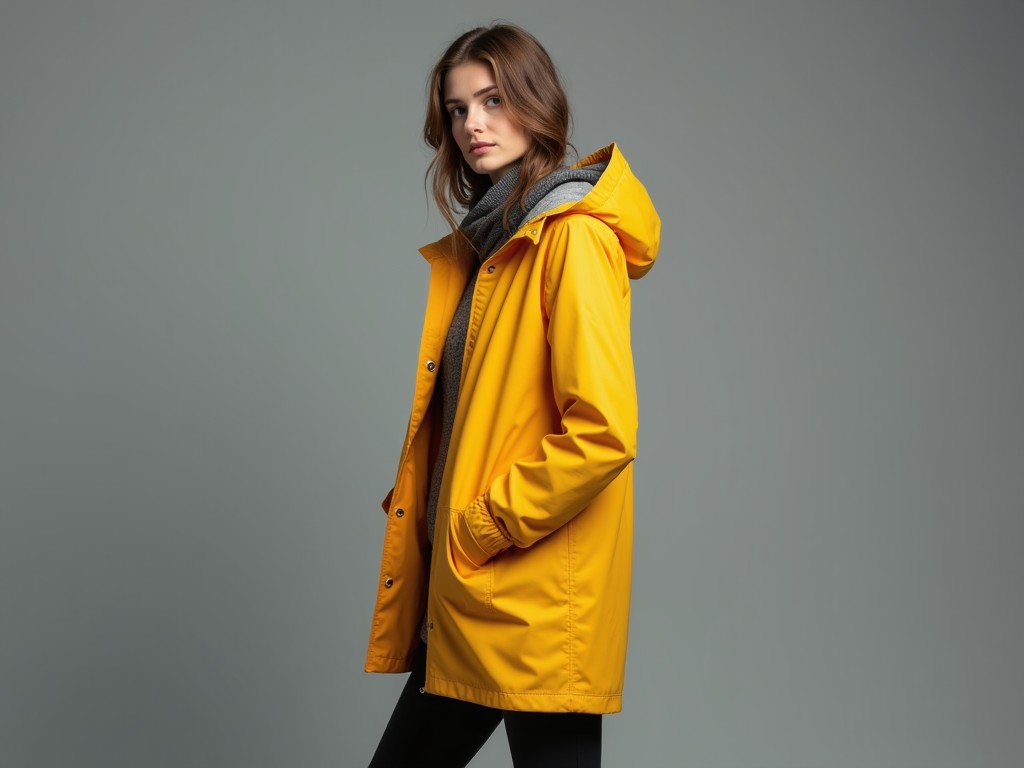
B2B Raincoat Price For Women
B2B Raincoat Price for Women: Technical Specifications and Procurement Guide
Material Composition and Performance Characteristics
Industrial raincoats for women in B2B procurement are typically constructed from multi-layer laminated fabrics designed to balance waterproofing, breathability, and durability. The outer layer commonly uses polyester or nylon with a denier range of 150D to 300D, providing abrasion resistance suitable for outdoor work environments. A middle layer of polyurethane (PU) or thermoplastic polyurethane (TPU) film delivers hydrostatic head ratings between 5,000mm and 10,000mm, measured under standardized ISO 811 testing conditions. The inner layer often features a moisture-wicking tricot or mesh lining to enhance wearer comfort during extended use. Seam sealing is critical; fully taped seams using heat-activated tape prevent leakage at stitch points, a requirement for Category 3 PPE compliance in wet weather operations.
Design Features Impacting Cost and Usability
Several design elements directly influence both the functional performance and price point of women's raincoats in industrial settings. Adjustable storm flaps with hook-and-loop or snap closures over zippers prevent water ingress at the front closure, a feature that adds 15–25% to base material cost but significantly improves weather protection. Ventilation systems, such as underarm zippers with storm covers or back vents, increase manufacturing complexity but reduce internal condensation, improving wear time in high-humidity conditions. Ergonomic patterning accounts for female anatomy, including tapered waists, articulated elbows, and longer rear hems, which require additional fabric and precision cutting—increasing material utilization by 10–18% compared to unisex designs. Reflective trim compliant with EN ISO 20471 standards is often integrated for low-visibility work, adding incremental cost based on width and placement.
Price Determinants in B2B Procurement
The unit price of women's raincoats in B2B transactions varies based on measurable technical and logistical factors, not generic quality claims. Fabric laminate cost ranges from $2.50 to $6.00 per square meter depending on denier, coating thickness, and whether recycled content is used—recycled PET laminates typically add 10–15% to material cost. Labor rates for cutting, sewing, and seam sealing vary by region, with Southeast Asian production averaging $0.80–$1.50 per garment versus $2.00–$3.50 in Eastern Europe. Minimum order quantities (MOQs) affect pricing: orders below 500 units often incur setup fees of $50–$150, while volumes over 5,000 units may reduce per-unit cost by 20–30% through optimized material nesting and batch processing. Custom color matching requires Pantone-specific dye lots, adding $0.30–$0.70 per unit for small batches due to minimum dye run requirements.
Typical Price Ranges by Specification Tier
To assist in budget planning, the following table outlines typical FOB price ranges for women's industrial raincoats based on defined technical tiers. These values represent common market observations for standard specifications and are subject to change based on raw material fluctuations, freight costs, and order volume. All prices assume FOB origin port, standard packaging, and no value-added services such as private labeling or third-party testing.
| Specification Tier | Key Technical Features | Typical FOB Price Range (USD/unit) |
|---|---|---|
| Entry-Level | 150D polyester, 5,000mm PU coating, basic snap front, unlined | $8.50 – $12.00 |
| Mid-Range | 200D nylon, 8,000mm TPU laminate, storm flap, adjustable hood, mesh lining | $14.00 – $20.00 |
| High-Performance | 300D nylon, 10,000mm TPU, fully taped seams, vented, reflective trim, articulated fit | $22.00 – $30.00 |
Customization Options and Associated Cost Impacts
Beyond standard specifications, industrial buyers often require modifications that affect both functionality and pricing. Logo application via screen printing or heat transfer adds $0.40–$1.20 per unit depending on size, color count, and placement—left chest logos are typically lowest cost, while full-back prints increase expense due to larger ink coverage and alignment complexity. Custom pocket configurations, such as internal radio flaps or waterproof zippered compartments, require pattern changes and additional seam sealing, adding $0.75–$1.50 per feature. Extended sizes (e.g., XXL–4XLR) increase fabric consumption by 12–20% per size increment, directly impacting material cost. Private labeling with custom neck and hem tags adds $0.20–$0.40 per unit for label production and sewing, assuming standard woven or printed labels.
Quality Control and Compliance Considerations
Procurement decisions should factor in verification methods that ensure product consistency and regulatory alignment. Hydrostatic head testing is commonly performed on random samples from each batch using a sealed hydrostatic tester, with acceptance criteria typically set at 90% of the rated value (e.g., 4,500mm minimum for a 5,000mm-rated fabric). Seam seal integrity is verified via visual inspection and water spray testing per AATCC 35. Colorfastness to washing, light, and perspiration is assessed using ISO 105 standards, with Grade 3 or higher generally required for industrial use. Dimensional stability after washing is checked to ensure minimal shrinkage (<3%) and torque (<5%), critical for maintaining fit and protective coverage over the garment lifecycle. Documentation such as test reports, material safety data sheets (MSDS), and compliance declarations are typically available upon request.
Procurement Recommendations for Technical Buyers
To minimize risk and ensure long-term value, industrial buyers should specify technical requirements clearly in RFQs rather than relying on descriptive terms. Include required hydrostatic head rating, fabric denier, seam sealing method, lining type, and any compliance standards (e.g., EN 343, ANSI/ISEA 101). Request batch-specific test reports and confirm whether fabric is sourced from certified suppliers with traceable lot numbers. Consider total cost of ownership: a higher upfront price for a 10,000mm-rated coat with superior breathability may reduce replacement frequency and improve worker compliance in prolonged wet conditions. Engage suppliers early in the design phase to optimize patterning for female users and avoid costly revisions post-sample approval.
Next Steps for Quotation and Sampling
When ready to proceed, provide suppliers with a detailed technical pack including: size breakdown (e.g., S–3XL ratio), preferred fabric construction, required performance levels, logo artwork in vector format, and target delivery date. Specify packaging preferences—individual polybags, bulk packing in cartons, or custom labeling—as this affects handling costs. Request pre-production samples (PPS) to validate fit, seam quality, and functional features before full production. Typical lead times range from 45–75 days after PPS approval, depending on fabric availability and factory capacity. For accurate pricing, share annual volume forecasts to enable tiered pricing discussions.