
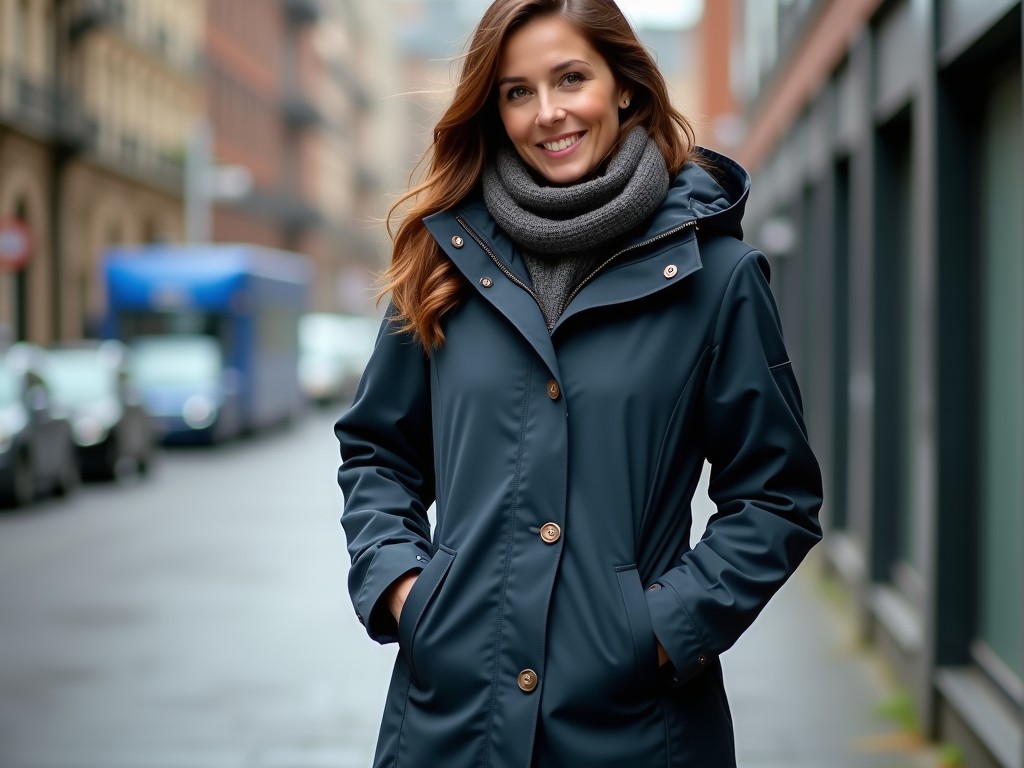
B2B Ladies Warm Waterproof Coat
B2B Ladies Warm Waterproof Coat
Designed for professional use in cold, wet environments, this coat combines thermal insulation with a fully sealed waterproof barrier. It addresses the specific needs of female personnel in outdoor operations, field services, and industrial maintenance where exposure to precipitation and low temperatures is routine.
The garment’s performance is defined by measurable engineering parameters rather than subjective claims. Key specifications include a minimum hydrostatic head rating of 10,000 mm, breathability of 8,000 g/m²/24h, and thermal retention rated to -15°C under standard wind conditions. These values are verified through standardized textile testing (ISO 811, ISO 11092).
Construction follows a three-layer system: an outer abrasion-resistant nylon shell with DWR finish, a microporous polyurethane membrane for waterproofing, and a synthetic insulation layer optimized for moisture management. Seams are thermally welded or taped to prevent water ingress at stitch points—a critical failure point in lesser designs.
Technical Specifications
Performance metrics are determined through laboratory testing under controlled conditions. Real-world effectiveness depends on proper fit, layering, and maintenance of the DWR coating. Buyers should validate specifications against their operational exposure levels.
| Parameter | Value | Test Standard |
|---|---|---|
| Hydrostatic Head | 10,000 mm minimum | ISO 811 |
| Breathability (MVTR) | 8,000 g/m²/24h | ISO 11092 |
| Thermal Resistance (TOG) | 3.5 (rated to -15°C) | ISO 11092 |
| Outer Shell Material | 200D nylon ripstop | ASTM D5034 |
| Insulation Type | 100g polyester fleece | Internal lab |
| Seam Treatment | Thermo-taped | Visual inspection |
Design Considerations for Female Users
Fit is not a scaled version of men’s patterns. The coat uses anthropometric data specific to female torso proportions, including shoulder width, bust-to-waist ratio, and hip contour. This ensures mobility without excess bulk or restriction during tool handling or climbing.
Sleeve length and articulation are adjusted for typical female arm span and elbow placement. The hem features a slight drop at the back to maintain coverage when bending or sitting, a common posture in field inspections or vehicle operation.
Adjustable elements include a concealed hood with drawcord, internal cuff gauntlets with hook-and-loop closure, and a two-way front zipper with storm flap. These allow rapid adaptation to changing conditions without removing gloves or compromising seal integrity.
Material Selection Rationale
The outer shell uses 200D nylon ripstop for its balance of tear strength (minimum 25N warp/weft) and abrasion resistance (over 20,000 cycles Martindale). Heavier fabrics increase weight without proportional gain in durability for this application.
The waterproof membrane is a microporous PU film, selected over coatings for long-term durability. Unlike PU coatings that degrade with flexing and UV exposure, membranes maintain performance over 100+ wash cycles when cared for per guidelines.
Insulation is synthetic polyester fleece, chosen for its ability to retain 80% of thermal efficiency when wet—critical in environments where sweat or external moisture is unavoidable. Down alternatives lose loft and insulating value rapidly under damp conditions.
Applications in Industrial Environments
This coat is specified for outdoor utility work where personnel face prolonged exposure to rain, snow, and wind chill. Examples include telecom line maintenance in northern climates, wind farm technician access, and municipal water infrastructure inspections during winter months.
In logistics and freight handling, it protects workers during loading/unloading operations in open yards or rail terminals. The breathability prevents overheating during physical exertion, while the waterproof layer stops saturation from melting snow or ice accumulation on cargo.
Field service teams in oil and gas, renewable energy, and telecommunications rely on this garment for compliance with PPE standards requiring protection against environmental stressors. It integrates with high-visibility vests and hard hats without interference.
Customization Options
Standard configurations are available in sizes XS to 3XL, with length variations (regular and tall) to accommodate different statures. Color options include navy, black, and charcoal—selected for low visibility of dirt and compatibility with corporate branding.
For bulk orders, logo placement is possible via embroidery or heat transfer on the left chest or sleeve. Reflective piping can be added along seams for low-light visibility, meeting EN ISO 20471 requirements when combined with certified accessories.
Alternative insulation weights (50g or 150g) are available upon request for milder or harsher climates. Shell fabric can be upgraded to a 4-way stretch variant for increased mobility in specialized roles, though this may affect tear resistance.
Quality Control and Testing
Each production lot undergoes random sampling for hydrostatic head and breathability. AQL standards are set at 2.5% for major defects (e.g., membrane delamination, seam leakage) and 4.0% for minor defects (e.g., stitching irregularities, color variance).
Seam integrity is verified using a water column test on sealed seams, with a minimum pass threshold of 8,000 mm. Thermal performance is assessed via guarded hot plate method on insulated swatches to confirm consistency across batches.
DWR durability is evaluated after 5 wash cycles per AATCC 135. Reapplication is recommended after 20–30 washes or when water no longer beads on the surface—guidance is included in the care label.
Care and Maintenance
To preserve waterproofing, machine wash cold on gentle cycle with liquid detergent (no fabric softener). Tumble dry low or line dry. Avoid dry cleaning, as solvents can degrade the membrane.
Reactivate DWR by applying a spray-on fluoropolymer-free treatment after washing. Inspect seals and zippers monthly for debris or wear. Replace if delamination or stiffening is observed.
Store in a cool, dry place away from direct sunlight. Long-term UV exposure breaks down polymer coatings and reduces tensile strength. Use a breathable garment bag for seasonal storage.
For technical datasheets, sample requests, or volume pricing inquiries, contact our industrial sales team.
Request Specification Sheet