
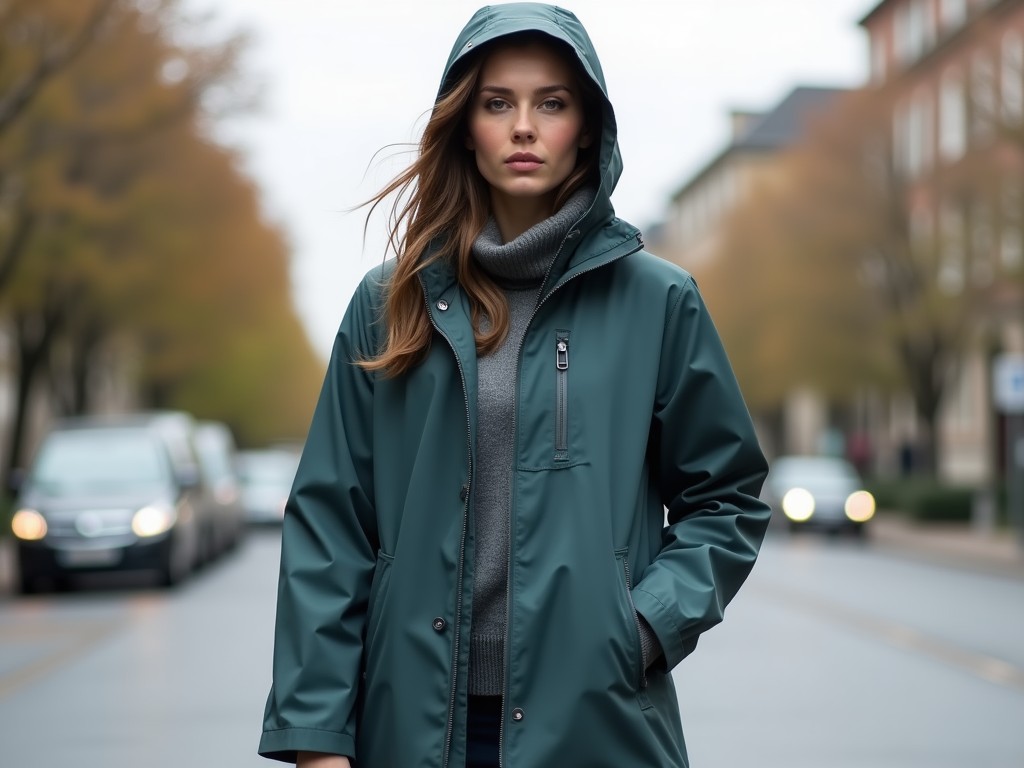
B2B Ladies Rain Jackets On Sale
B2B Ladies Rain Jackets on Sale – Technical Specifications and Industrial Applications
Industrial procurement of ladies’ rain jackets requires evaluation beyond aesthetic considerations. Performance in variable weather conditions, material durability under repeated use, and compliance with workplace safety or uniform standards are critical factors. This page details the technical attributes of current sale offerings to support informed purchasing decisions.
Each jacket model listed is engineered for specific operational environments, from light outdoor transit to sustained exposure in industrial peripheries. Understanding construction methods, seam integrity, and material breathability helps reduce long-term replacement costs and ensures worker comfort.
The following sections break down material composition, seam sealing techniques, fit engineering, and applicable industry use cases. All specifications reflect standard production tolerances unless noted as customizable.
Material Composition and Performance Characteristics
The primary fabric in these rain jackets is a 100% polyester microfiber base with a polyurethane (PU) coating applied via lamination. This construction achieves a hydrostatic head rating of 3,000 mm, indicating resistance to moderate rainfall and wind-driven moisture without immediate saturation.
The PU layer is uniformly applied at 0.15 mm thickness, providing flexibility while maintaining barrier integrity. Unlike PVC alternatives, this coating does not become brittle in temperatures as low as -10°C, preserving performance in cold-weather operations.
Breathability is rated at 3,000 g/m²/24hr via moisture vapor transmission (MVTR), allowing limited perspiration escape during light activity. For high-exertion roles, venting options (see Customization) are recommended to prevent internal condensation buildup.
Seam Construction and Water Ingress Protection
All seams are sealed using 15mm-wide thermoplastic polyurethane (TPU) tape applied via heat bonding at 140°C. This method creates a continuous barrier that prevents needle-hole leakage, a common failure point in stitched-only garments.
Seal integrity is validated through ASTM D3393 standard testing, with peel strength averaging 8.5 N/cm. Tape adhesion remains effective after 20 wash cycles at 40°C, meeting industrial laundering requirements for reusable workwear.
Critical zones—shoulders, underarms, and hood attachments—receive double-taped reinforcement. This design mitigates stress-induced delamination in areas subjected to frequent movement or pack strap abrasion.
Fit Engineering and Ergonomic Design
Jackets are cut using a female-specific block pattern with 5cm of ease in the bust and 4cm in the hips, accommodating base layers without restricting mobility. Sleeve length follows ANSI/ASSE A10.11 guidelines for arm raise coverage, ensuring wrist protection during overhead tasks.
The hem features a 25mm adjustable drawcord with barrel locks, allowing tension adjustment without exposing metal components to corrosion. Cuffs utilize semi-elasticized polyester inserts (15% spandex blend) to maintain seal integrity while enabling glove overlap.
Hood depth is 22cm from crown to chin, designed to accommodate hard hats or bump caps. Peripheral vision is maintained through a curved brim profile that deflects rain without creating tunnel vision.
Applicable Industrial Use Cases
These jackets are suited for personnel in facility management, outdoor logistics, and perimeter security roles where exposure to intermittent rain is expected but full environmental protection (e.g., chemical resistance) is not required. They serve as effective outer layers over high-visibility vests or flame-resistant base layers when sized appropriately.
In transportation hubs, they protect staff during loading/unloading operations in open bays. For utility workers conducting meter readings or line inspections, the lightweight profile (approximately 280g in size M) reduces fatigue during prolonged wear compared to heavier rubberized alternatives.
They are not intended for continuous immersion, high-pressure washdown, or environments with hydrocarbon exposure. For such conditions, consult technical specialists regarding barrier fabrics with higher chemical resistance ratings.
Customization Options and Ordering Parameters
Standard sale inventory includes sizes XS through 3XL in navy, charcoal, and safety yellow. Custom color matching is available for orders exceeding 50 units, subject to Pantone reference and minimum dye lot requirements.
Optional features include removable fleece liners (100g polyester), reinforced chest pockets with waterproof zippers, and ID badge loops made from UV-stabilized nylon. Reflective trim compliance with EN ISO 20471 Class 2 can be integrated upon request.
Lead time for stock items is 3–5 business days. Custom orders require 14–18 weeks for approval, sampling, and production. All units undergo final inspection for seam completeness, dimensional stability (≤3% shrinkage after washing), and colorfastness (Grade 4+ under ISO 105-B02).
| Specification | Typical Value | Customizable? |
|---|---|---|
| Hydrostatic Head | 3,000 mm | Yes (up to 5,000 mm) |
| MVTR (Breathability) | 3,000 g/m²/24hr | Yes (with venting options) |
| Seam Tape Width | 15 mm | No (standard seal) |
| Fabric Weight | 140 g/m² | Yes (lightweight/heavyweight variants) |
| Available Sizes | XS–3XL | Yes (extended sizes upon request) |
| Standard Colors | Navy, Charcoal, Safety Yellow | Yes (Pantone matching) |
For technical inquiries, sample requests, or bulk order quotations, contact our industrial sales team. Provide intended use case, expected exposure conditions, and required quantities to receive a tailored specification sheet and pricing.