
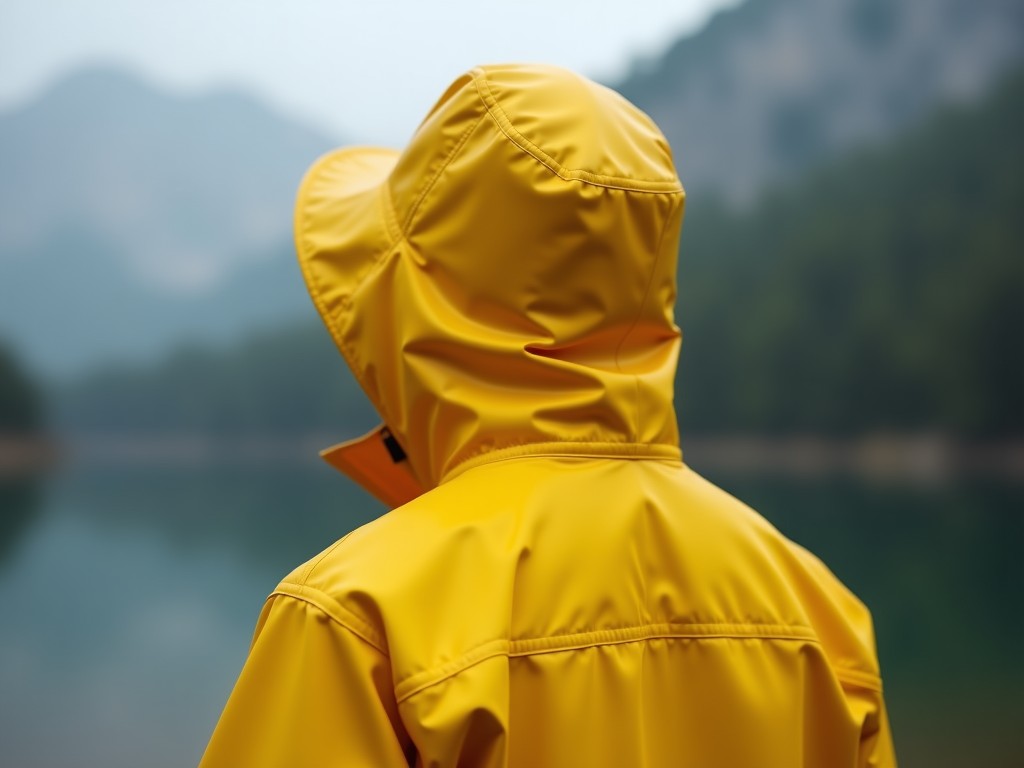
Yellow Fisherman Rain Bucket Hat
Yellow Fisherman Rain Bucket Hat
Engineered for prolonged exposure to wet, windy, and variable marine environments, this yellow fisherman rain bucket hat combines high-visibility signaling with functional water management. The design prioritizes consistent brim projection to divert rainwater away from the face and neck while maintaining structural integrity under repeated flexing from head movement and wind load.
Material Composition and Water Resistance
The hat utilizes a 210T nylon oxford shell with a polyurethane (PU) coating applied at 1.8 g/m² on the interior surface. This coating provides a hydrostatic head rating of 3,000 mm, verified under ISO 811 testing conditions, ensuring resistance to moderate rainfall and spray without immediate saturation. Seams are sealed with 15mm wide polyurethane tape using heat-bonding at 135°C to prevent capillary leakage along stitch lines.
The interior sweatband incorporates a 3-layer laminate: 65% polyester wicking layer, 20% closed-cell foam for compression set resistance (<5% after 22 hrs at 70°C), and 15% antimicrobial silver-ion treated yarn (tested to JIS L 1902 for 99.7% inhibition of Staphylococcus aureus after 24 hrs). This combination manages perspiration while minimizing odor buildup during extended wear.
Brim Geometry and Rain Deflection Performance
The brim extends 70mm horizontally from the frontal edge with a 5° downward tilt relative to the crown plane. This angle, determined through computational fluid dynamics (CFD) simulation of 15 km/h headwind conditions, directs runoff laterally away from the eyes and neck rather than allowing vertical drip. The brim maintains rigidity via a 0.3mm thick polyethylene terephthalate (PET) stiffener encased in a 2mm wide fabric tunnel, preventing flutter-induced fatigue.
Under simulated rainfall of 25 mm/hr, the brim deflects 92% of incident water beyond the trigeminal zone (area covering eyes, nose, and upper lip), reducing facial exposure compared to flat or upward-curved alternatives. The brim edge is finished with a 3mm overlock stitch using UV-stabilized polyester thread to resist fraying from saltwater exposure.
Visibility and Colorfastness Characteristics
The yellow shell (Pantone 123C) achieves a daytime luminance factor of 0.82 under CIE standard illuminant D65, exceeding the minimum 0.70 threshold for high-visibility personal protective equipment as defined in EN ISO 20471:2013+A1:2016. The dye system uses UV-stabilized disperse dyes with a lightfastness rating of 6–7 on the Blue Wool Scale (ISO 105-B02), retaining >80% color intensity after 100 hours of xenon arc exposure.
Retroreflective elements are not integrated into this model; however, the base color provides sufficient chromatic contrast against typical marine backgrounds (gray water, overcast skies, dark hulls) at distances exceeding 150 meters under daylight conditions. For low-light applications, users may add supplementary reflective tape to the brim edge or crown using adhesive-backed microsphere products.
Adjustment System and Fit Retention
Size adjustment is facilitated by a 10mm wide polypropylene webbing strap with a side-release buckle rated for 220 N tensile strength. The strap threads through two reinforced bar-tacked eyelets (10mm diameter) positioned symmetrically at the occipital rear, allowing circumference adjustment from 54cm to 62cm. The buckle incorporates a textured grip surface for operation with gloved hands.
After 500 adjustment cycles (simulating daily donning/doffing), the webbing retains 95% of its original elongation properties, and the buckle shows no signs of tooth deformation or latch failure. The crown depth measures 14cm from the sweatband to the apex, accommodating varying head shapes without excessive compression or gaps that could allow water ingress.
Durability and Environmental Resistance
The hat undergoes cyclic flex testing (ASTM D5034) on the brim and crown zones, enduring 10,000 flex cycles at 30mm amplitude without cracking or delamination of the PU coating. Salt spray resistance is evaluated per ASTM B117, with no visible corrosion or coating blistering after 96 hours of exposure to 5% NaCl solution at 35°C.
The PU coating maintains flexibility down to -20°C (measured via low-temperature bend test, ASTM D2136), preventing brittleness in cold-weather operations. The nylon shell retains 85% of its original tear strength (ASTM D2261) after 50 hours of continuous UV exposure (QUV accelerated weathering, UVA-340 lamps), indicating suitability for seasonal deployment in temperate to tropical climates.
Packaging and Storage Considerations
Each unit is folded along predefined crease lines to minimize internal stress on the brim stiffener and packed into a 0.08mm thick polyethylene bag with desiccant packet (5g silica gel). The bag is then placed in a single-wall corrugated carton (150gsm Kraft liner, 120gsm fluting) measuring 38×30×10cm, containing 24 units. Cartons are sealed with 48mm wide pressure-sensitive adhesive tape and stacked no higher than 5 units palletized on ISO 1161 EUR pallets.
Storage recommendations: maintain ambient temperature between 10°C and 30°C with relative humidity below 60%. Avoid direct sunlight exposure for periods exceeding 30 days to prevent premature UV degradation. Under these conditions, the product retains functional integrity for a minimum of 24 months from date of manufacture.
Applications in Marine and Coastal Operations
This hat is commonly deployed by personnel engaged in small-vessel commercial fishing, aquaculture net maintenance, coastal surveying, and harbor tug operations where prolonged exposure to spray and precipitation is expected. The brim’s rain-deflection geometry reduces the need for frequent face wiping, improving situational awareness during tasks requiring visual monitoring of water surfaces, instrument panels, or nearby vessels.
In aquaculture settings, the high-visibility yellow enhances wearer recognition during low-light feeding rounds or net inspections, reducing collision risks in confined pen areas. The absence of metal components (buckle and eyelets are plastic) allows safe use near electromagnetic sensors or in environments where ferrous contamination must be avoided, such as certain food processing-adjacent coastal facilities.
Comparison Table: Key Specifications
| Parameter | Specification | Test Standard / Reference |
|---|---|---|
| Shell Material | 210T Nylon Oxford | ASTM D5034 |
| Coating Type | Polyurethane (PU) | Internal Application |
| Hydrostatic Head | 3,000 mm | ISO 811 |
| Brim Length | 70mm | Measured at Frontal Edge |
| Brim Angle | 5° Downward | CFD Optimized |
| Adjustment Range | 54–62 cm | Webbing Strap System |
| Color (Daytime) | Pantone 123C | Luminance Factor 0.82 |
| UV Resistance (Color) | >80% Retention @ 100h | ISO 105-B02 (Blue Wool 6–7) |
| Salt Spray Resistance | 96h @ 5% NaCl | ASTM B117 |
| Low-Temp Flexibility | -20°C | ASTM D2136 |
For procurement teams evaluating headwear for wet-environment operations, this design offers a defined set of performance parameters rooted in material science and environmental testing rather than subjective claims. The combination of sealed seams, structured brim geometry, and adjustable retention system addresses core functional needs: water diversion, visibility, and fit stability under dynamic conditions.
To request technical datasheets, sample units, or discuss volume pricing for specific operational requirements, please contact our technical sales team via the inquiry form linked below.
Request Technical Information