
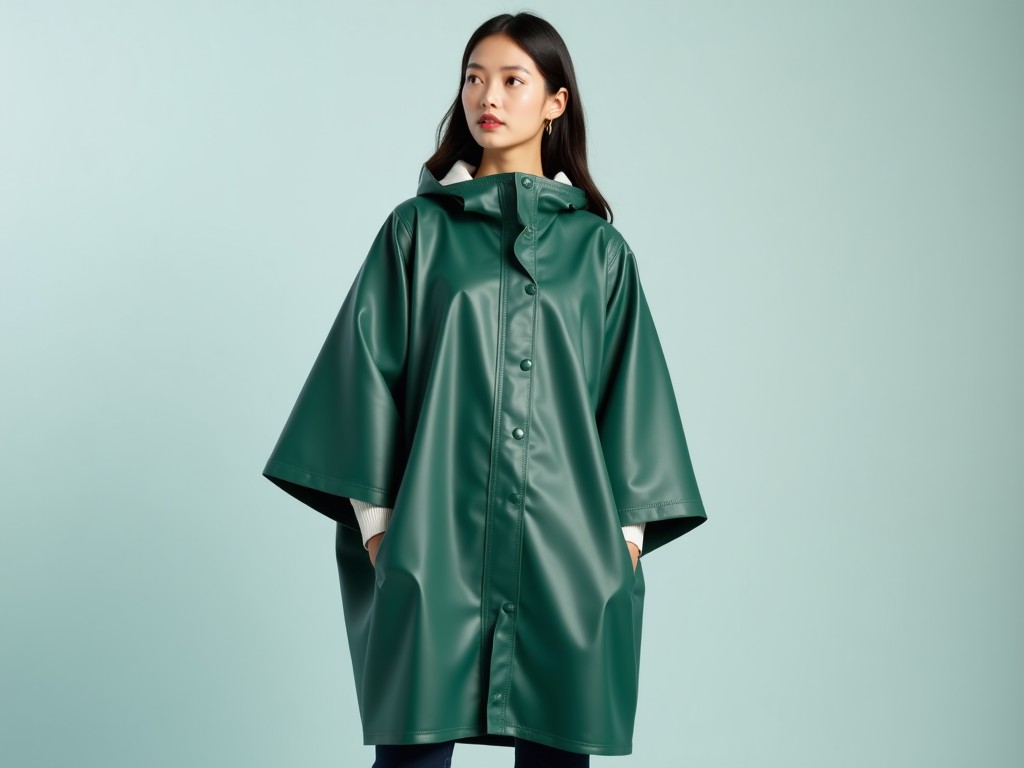
Rain Poncho Wholesale Suppliers Factory
Rain Poncho Wholesale Suppliers Factory: Technical Specifications for Industrial Procurement
Industrial buyers seeking bulk rain ponchos require clear technical data to evaluate suitability for workforce protection, emergency stockpiling, or distribution channels. This page details material properties, construction standards, and customization parameters relevant to procurement decisions.
Material Composition and Performance Characteristics
Standard rain ponchos for wholesale supply are manufactured from polyethylene (PE) or polyvinyl chloride (PVC) films, selected based on required durability, flexibility, and cost. PE variants typically range from 0.015 mm to 0.03 mm thickness, offering lightweight performance with tensile strength between 15–30 MPa. PVC options, at 0.2–0.35 mm thickness, provide higher abrasion resistance and tear strength (40–60 MPa) but reduced flexibility below 5°C. Both materials are inherently waterproof, with hydrostatic head ratings exceeding 1,000 mm, ensuring no penetration under sustained rainfall.
Additives such as UV stabilizers (typically 0.5–2% by weight) extend service life in outdoor storage, preventing embrittlement from sun exposure. Anti-static agents may be incorporated for environments requiring electrostatic discharge (ESD) control. Color is achieved through masterbatch pellets, with common options including high-visibility yellow (Pantone 803C), orange (Pantone 1655C), and transparent variants for internal visibility. All materials comply with REACH and RoHS restrictions on phthalates and heavy metals.
Construction Design and Seam Integrity
Poncho patterns are die-cut from continuous film rolls using hydraulic presses, ensuring dimensional consistency across batches. Standard sizes range from 120 cm × 150 cm (user height up to 170 cm) to 140 cm × 180 cm (up to 190 cm), with tolerance ±2 cm. The poncho features a centered hood with drawcord adjustment, side snap fasteners (typically 4–6 per side), and optional reinforced grommets at corners for anchoring. Seams are thermally welded using impulse sealers operating at 180–220°C, creating bonds with shear strength matching or exceeding the base film.
Seam weld width averages 8–12 mm, with visual inspection confirming absence of pinholes or incomplete fusion. Quality control includes burst testing per ASTM D3786, where seams must withstand minimum 140 kPa pressure without leakage. Edge finishing involves hot-knife trimming to prevent fraying, critical for maintaining barrier integrity during repeated donning and doffing cycles in industrial settings.
Customization Parameters for Bulk Orders
Wholesale suppliers offer scalable customization based on order volume. Minimum order quantities (MOQ) typically start at 1,000 units for standard colors and sizes, reducing to 500 units for custom dimensions or printed logos. Film thickness can be adjusted in 0.005 mm increments for PE and 0.05 mm for PVC, allowing optimization between cost and durability. Logo printing uses flexographic or screen printing methods with solvent-based inks, achieving adhesion strength of 3–5 N/cm after 24-hour cure, validated via cross-hatch test (ASTM D3359).
Packaging options include individual polybagging (50–100 μm thickness), bulk packing in corrugated cartons (3-ply, 150 g/m²), or palletization with stretch wrap. Carton dimensions are calculated to maximize container utilization—e.g., 500 units per carton (40 × 30 × 25 cm) for standard ponchos, yielding 20 cartons per pallet. Custom labeling, including barcodes and country-of-origin marks, is applied per customer specification. Lead times range from 15–30 days for stock items and 30–45 days for customized orders, subject to raw material availability.
Applications in Industrial and Emergency Contexts
Rain ponchos are selected over jackets or suits in scenarios requiring rapid deployment, universal sizing, and low storage volume. In construction, they protect workers during sudden downpours without restricting movement around scaffolding or machinery. Utilities deploy them for storm response crews needing immediate, disposable protection during flood recovery. Event management teams use high-visibility variants for crowd control staff in open-air venues, where identification and weather resistance are both critical.
Emergency preparedness programs stock ponchos in disaster kits due to their compact folded size (approximately 10 × 15 × 3 cm per unit) and shelf life exceeding 24 months when stored below 30°C and away from direct sunlight. Unlike reusable garments, ponchos eliminate laundering logistics and contamination risks in hazardous environments. Their single-use nature ensures consistent barrier performance, avoiding degradation from repeated washing or UV exposure that affects fabric-based alternatives.
Quality Control and Inspection Protocols
Incoming film rolls are inspected for thickness variation (±10% tolerance), gel content, and optical clarity using transmissiometers. During production, inline systems monitor seal temperature and pressure, rejecting welds outside ±5°C or 0.1 MPa parameters. Finished goods undergo random sampling per AQL 2.5 for major defects (holes, incomplete seams, incorrect sizing) and AQL 4.0 for minor defects (surface blemishes, misaligned fasteners). Each batch includes a test report documenting tensile strength, elongation at break, and hydrostatic resistance.
Documentation provided with shipments includes material safety data sheets (MSDS), compliance certificates (REACH, RoHS), and packing lists. Traceability is maintained via lot numbers linking to raw material suppliers and production shifts. Third-party audits (e.g., ISO 9001) verify process consistency, though certification status should be confirmed directly with the supplier. Buyers are advised to request pre-shipment samples for validation of thickness, seam strength, and color accuracy against Pantone references.
| Parameter | Typical Range (PE) | Typical Range (PVC) |
|---|---|---|
| Film Thickness | 0.015–0.03 mm | 0.20–0.35 mm |
| Tensile Strength | 15–30 MPa | 40–60 MPa |
| Tear Resistance | 20–40 N | 50–80 N |
| Hydrostatic Head | >1,000 mm | >1,500 mm |
| Operating Temp. Range | -20°C to 50°C | -5°C to 60°C |
| UV Stability (Typical) | 6–12 months | 12–24 months |
Procurement teams should evaluate total cost of ownership, not just unit price. Thicker films reduce replacement frequency in harsh environments, while UV-stabilized grades minimize waste from premature degradation. Custom sizing improves user compliance by minimizing excess material that can snag on equipment. Transparent ponchos, though less common, allow visibility of safety vests or identification badges underneath—a consideration for regulated industries.
For technical consultation, sample requests, or detailed quotation based on specific thickness, size, color, or packaging requirements, contact the supplier directly. Provide anticipated annual volume, preferred material (PE or PVC), and any regulatory constraints to receive accurate lead times and pricing tiers.
Request Technical Specifications and Quotation