
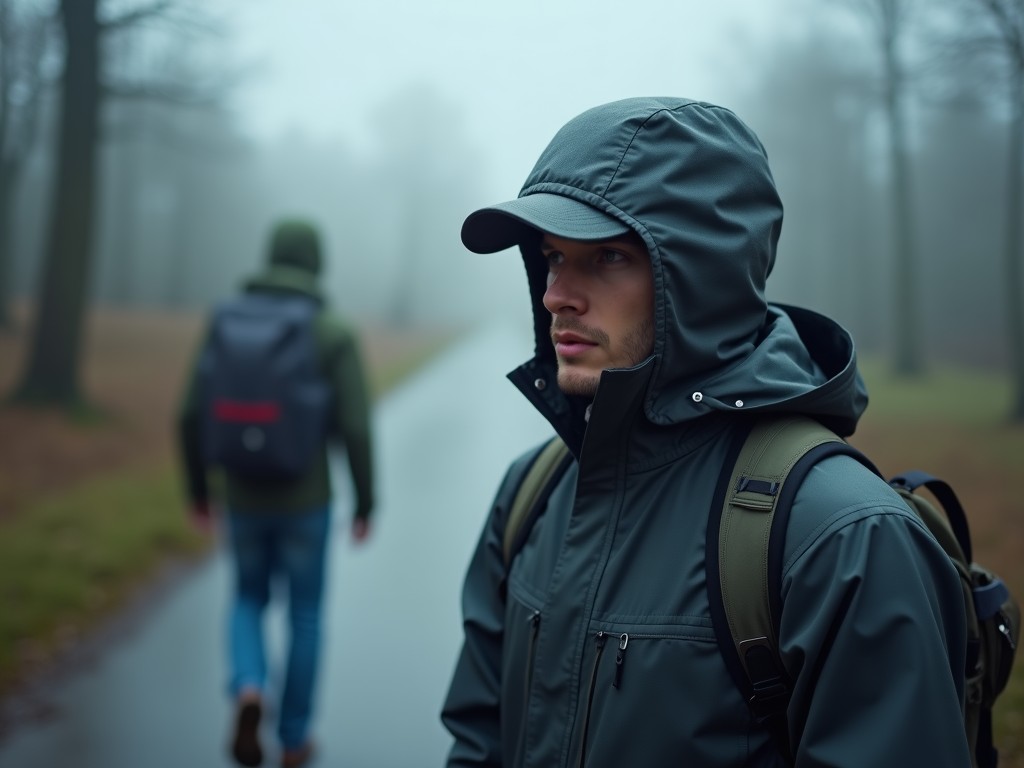
Mens Waterproof Hats For Walking
Mens Waterproof Hats for Walking
Selecting appropriate headwear for walking in wet conditions requires understanding how material properties, construction details, and environmental factors interact to maintain comfort and protection. This page explains the technical considerations behind waterproof hats designed for pedestrian use, focusing on measurable performance characteristics rather than subjective claims.
Material Composition and Waterproofing Mechanisms
Effective waterproofing in walking hats relies on either laminated membranes or surface treatments applied to base fabrics. Microporous membranes (e.g., ePTFE) block liquid water while allowing vapor transmission, measured by Moisture Vapor Transmission Rate (MVTR) in g/m²/24h. Hydrophilic coatings absorb and disperse sweat through chemical diffusion, with performance dependent on fabric thickness and coating uniformity. Common base fabrics include nylon taslan (denier 70D-210D) or polyester ripstop, chosen for tear strength (ASTM D5034) and abrasion resistance (Martindale cycles >20,000).
Durable Water Repellent (DWR) finishes reduce surface wettability by lowering contact angle below 90°, but degrade with abrasion and require reactivation via low-heat tumble drying. Long-term waterproof integrity depends on seam sealing—typically polyurethane tape applied over stitched joints—to prevent capillary leakage. Hydrostatic head ratings (mm H₂O) indicate pressure resistance; values above 1,500 mm withstand moderate rain, while 5,000+ mm is typical for prolonged exposure.
Design Features for Pedestrian Use
Brim geometry affects both rain deflection and forward visibility. A horizontal brim width of 60-75mm provides adequate runoff without obstructing downward sightlines critical for uneven terrain. Curved or pre-formed brims use memory wire (e.g., spring steel encased in TPU) to retain shape after packing, with bend radius tolerance ±5mm to prevent permanent deformation. Crown ventilation—often laser-drilled holes or mesh panels—must balance airflow (measured in CFM) with water ingress resistance; typical designs limit openings to <2mm diameter to maintain hydrostatic performance.
Adjustment systems influence fit stability during movement. Elasticized sweatbands with silicone grip strips (shore hardness 40A) reduce slippage without pressure points. Rear closures using hook-and-loop or cord locks allow circumferential adjustment ranges of 54cm-62cm to accommodate headwear layers. Chin straps, when present, use breakaway buckles rated for 15-20N release force to prevent entanglement hazards while maintaining security in wind.
Performance Comparison: Key Specifications
| Parameter | Typical Range | Test Method / Notes |
|---|---|---|
| Hydrostatic Head | 1,500 – 10,000 mm H₂O | ISO 811; higher = better rain resistance |
| MVTR | 5,000 – 15,000 g/m²/24h | ASTM E96; higher = better breathability |
| Brim Width | 60 – 75 mm | Measured from crown edge; balances runoff vs. vision |
| Weight | 80 – 150 g | Includes all components; affects neck fatigue |
| Packed Volume | <100 cm³ | Typical when folded; important for carry convenience |
Application-Specific Considerations for Walking
Walking differs from high-intensity activities in sweat production and movement patterns. Lower metabolic rates (typically 2-3 METs for leisure walking) reduce internal moisture load, allowing prioritization of waterproofing over extreme breathability. However, prolonged exposure in drizzle or fog demands consistent surface performance—DWR effectiveness must persist beyond initial use. Fabrics with higher denier counts (e.g., 210D nylon) offer improved snag resistance when brushing against vegetation, though at a slight weight penalty.
Thermal insulation is generally unnecessary in walking hats unless used in sub-zero conditions; instead, focus shifts to managing evaporative cooling from wet fabric. Linings, if present, should wick moisture (e.g., polyester grid fleece) rather than retain heat. UV protection becomes relevant in prolonged exposure; UPF ratings above 30 are achievable through tight weaves or titanium dioxide treatments without compromising waterproof layers.
Quality Control and Manufacturing Factors
Consistency in waterproof performance depends on precise lamination temperature and pressure during membrane bonding—typically 135-145°C at 3-5 bar for polyurethane-based films. Deviations cause delamination or reduced MVTR. Seam sealing requires controlled tape width (usually 12-15mm) and adhesive activation temperature to ensure full coverage without stiffness. Visual inspection under 10x magnification checks for pinholes in coatings, while hydrostatic testing validates batch integrity.
Dimensional stability after washing is critical for maintaining fit. Fabrics should exhibit <2% shrinkage in both warp and weft after 5 cycles at 40°C (ISO 6330). Colorfastness to light (ISO 105-B02) and rubbing (ISO 105-X12) ensures appearance retention during outdoor use. Batch traceability via lot numbers links raw material suppliers to final product, supporting recall management if material defects emerge post-distribution.
For further details on specifications, customization options, or to discuss application requirements, please contact our technical team.