
Kids Pu Rain Socks Supplier Wholesale
Kids PU Rain Socks Supplier Wholesale
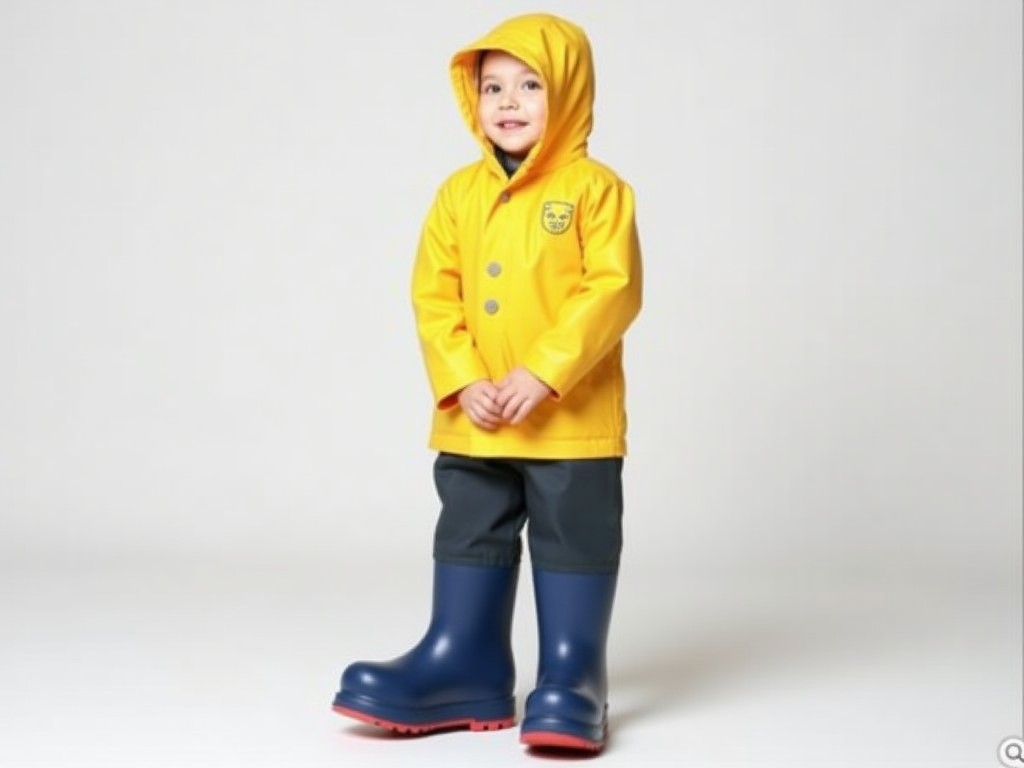
Kids PU rain socks are specialized waterproof footwear covers designed to protect children's shoes and lower legs during wet weather. Constructed from thermoplastic polyurethane (PU) film laminated to a breathable knit or non-woven backing, these socks provide a barrier against rain, mud, and puddles while allowing moisture vapor to escape. Unlike disposable shoe covers, they are reusable, lightweight, and engineered for repeated donning and doffing by children aged 3–12 years. The primary function is to maintain dryness and hygiene in school uniforms, outdoor play, or commuting scenarios without restricting movement.
The material structure typically consists of a 0.08–0.12 mm thick PU layer with a tensile strength of 20–30 MPa and elongation at break of 400–600%, bonded to a 15–20 gsm polypropylene spunbond layer for abrasion resistance and skin comfort. Seams are sealed using ultrasonic welding or heat taping to prevent water ingress at stitch points. Elasticized openings at the ankle and calf, usually made from latex-free polyester-spandex blend (15% spandex), ensure a secure fit over various shoe sizes without slipping. The design prioritizes low bulk—packed thickness under 2 mm when folded—to facilitate storage in backpacks or lockers.
Technical Specifications and Performance Characteristics
| Parameter | Typical Value | Test Standard |
|---|---|---|
| Water Resistance (Hydrostatic Head) | ≥ 5,000 mm | ISO 811 |
| Breathability (MVTR) | ≥ 2,000 g/m²/24h | ASTM E96 |
| Abrasion Resistance (Cycles to Wear) | ≥ 500 cycles | ASTM D3884 |
| Elastic Recovery (Ankle/Cuff) | ≥ 85% after 1,000 cycles | ASTM D4964 |
| Operating Temperature Range | -20°C to +40°C | Internal |
The PU film exhibits excellent flexibility at low temperatures, remaining pliable down to -20°C without cracking, which is critical for winter use in temperate climates. Breathability is achieved through the inherent microporous structure of the PU membrane, allowing sweat vapor transmission while blocking liquid water penetration. Abrasion resistance is enhanced by the spunbond backing, which protects the PU layer from wear during contact with rough surfaces like asphalt or gravel. Elastic components are selected for fatigue resistance, maintaining tension over hundreds of stretch cycles to prevent sagging or gaps that compromise waterproofing. All materials are phthalate-free and comply with REACH and CPSIA regulations for children's products.
Applications in Educational and Recreational Settings
These rain socks are commonly used in elementary schools and preschools where outdoor play continues during light rain, reducing the need for full rain boots that are bulky and difficult to store. Teachers report fewer instances of tracked-in mud and wet socks, improving classroom hygiene and reducing laundry loads. In urban commuting scenarios, children wearing school shoes benefit from protection against puddles and wet pavements without the overheating associated with rubber boots. Sports teams and youth clubs use them during outdoor training sessions in damp conditions to keep footwear dry and maintain traction. Their slim profile allows them to be worn under regular socks, preserving the fit of athletic shoes.
Unlike traditional rain boots, PU rain socks do not alter gait or require sizing adjustments, making them suitable for children who resist wearing unfamiliar footwear. They are particularly useful in regions with intermittent rainfall where carrying full boots is impractical. Daycare centers utilize them during outdoor excursions to parks or playgrounds, where quick changes are needed. The product supports sustainability goals by replacing disposable plastic shoe covers with a reusable alternative that lasts 50+ uses under normal conditions. Reflective trim options are available for enhanced visibility during low-light conditions, addressing safety concerns for children walking near roads.
Customization Options for Wholesale Orders
Wholesale suppliers offer size ranges calibrated to standard children's shoe sizes: Small (shoe size 10–12 toddler / 13–1 youth), Medium (1–3 youth), and Large (4–6 youth). Custom sizing is available based on foot length and circumference measurements provided by the buyer. Color options extend beyond basic transparent or solid hues to include printed patterns (e.g., animal motifs, geometric designs) using eco-friendly water-based inks that do not compromise PU integrity. Branding opportunities exist through screen printing or heat transfer logos on the cuff or ankle band, with minimum order quantities typically starting at 500 pairs per design.
Additional customizations include adjustable strap systems (hook-and-loop or toggle) for children with limited dexterity, antimicrobial treatments applied to the inner backing to reduce odor buildup, and reinforced toe and heel patches for high-wear environments. Packaging can be tailored to retail-ready hanging kits, bulk polybags of 10 or 25 pairs, or customized cardboard boxes with insert cards. Lead times for standard orders are 2–3 weeks; customized orders with logo printing or special materials may extend to 4–6 weeks. Sample development is available upon request, with shipping costs typically borne by the requester.
Quality Control and Manufacturing Considerations
Production begins with raw material inspection of PU film rolls for thickness uniformity, tensile strength, and absence of defects like gels or pinholes. The spunbond backing is tested for basis weight and elongation to ensure consistent lamination. During assembly, seam integrity is verified via 100% visual inspection and random hydrostatic testing of finished units. Elastic components undergo load-retention testing to confirm they maintain 80% of initial tension after 500 stretch-relaxation cycles. Final inspection includes dimensional checks (length, width, opening diameter) and functional testing where each pair is submerged in water for 3 minutes to confirm no leakage.
Manufacturers adhere to ISO 9001 quality management systems, with documentation tracking material batches, process parameters, and test results. Factories conducting children's product manufacturing often undergo additional audits for compliance with ASTM F963 (toy safety) or EN 71, even though rain socks are not classified as toys, due to their contact with children. Waste reduction strategies include recycling PU scrap from cutting operations and using water-based adhesives in assembly. Continuous improvement is driven by field feedback from wholesale buyers regarding durability in specific climates or usage patterns, informing material adjustments or design refinements.