
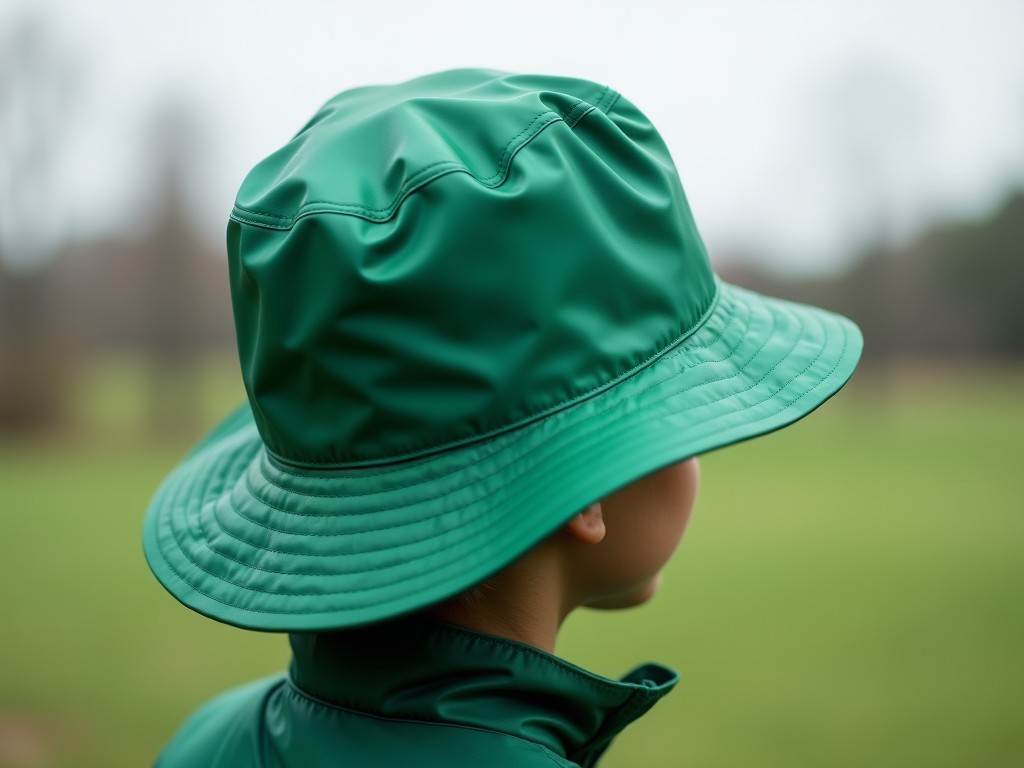
Bulk Golf Bucket Hat Waterproof
Bulk Golf Bucket Hat Waterproof
Golf bucket hats designed for bulk procurement must balance water resistance, breathability, and structural stability under repeated outdoor use. This product page details the technical specifications, material properties, and manufacturing considerations relevant to industrial buyers specifying headwear for golf course staff, tournament volunteers, or promotional distribution in wet climates.
Material Composition and Waterproofing Mechanism
The hat’s shell uses a 100% polyester plain weave with a hydrostatic head rating of 5,000 mm, achieved through a polyurethane (PU) laminate applied to the interior surface. This laminate forms a continuous barrier that resists liquid water penetration while allowing water vapor transmission at a rate of approximately 3,000 g/m²/24hr under standard testing conditions (JIS L 1099 B1). The brim incorporates a flexible polyethylene foam core (2mm thickness) encased in the same laminated fabric to maintain shape without absorbing water.
Seams are sealed with 15mm-wide thermoplastic polyurethane (TPU) tape applied via hot-air welding, creating a flexible, durable bond that prevents leakage at stitch points. Unlike solvent-based adhesives, TPU tape maintains elasticity across temperature ranges from -20°C to 60°C, reducing cracking risk during seasonal storage or use. The sweatband is constructed from recycled polyester mesh with a hydrophilic finish, wicking moisture at a rate of 0.8 mm/s to enhance wearer comfort during prolonged activity.
Structural Design and Dimensional Stability
The bucket hat features a 6-panel crown with a depth of 110mm and a brim width of 65mm, providing consistent sun and rain protection across sizes. The crown height is maintained through a single-layer buckram interfacing (polyester-cotton blend, 120gsm) heat-bonded to the inner shell, avoiding the bulkiness of traditional stiffeners that retain moisture. This construction ensures the hat retains its shape after 50+ wash cycles at 40°C without brim warping or crown sagging.
An adjustable drawcord with barrel lock (polyester core, nylon sheath) runs through a 12mm tunnel in the crown base, allowing circumference adjustment from 54cm to 60cm. The cord ends are heat-sealed to prevent fraying, and the lock mechanism is rated for 10,000 actuation cycles without slippage. Ventilation is provided by four 2mm laser-drilled eyelets per side, positioned just above the sweatband to promote airflow without compromising water resistance.
Quality Control and Batch Consistency
Each production lot undergoes hydrostatic head testing on three randomly selected units per 1,000 pieces, with acceptance criteria set at a minimum of 4,500 mm to account for minor variations in laminate adhesion. Seam integrity is verified using a water jet test at 100 kPa for 3 minutes, requiring zero leakage at sealed joints. Dimensional checks include brim curvature radius (measured via optical comparator) and crown height variance, both held within ±3mm tolerance across the batch.
Colorfastness is assessed per AATCC 61 (2A laundering) and AATCC 16.3 (light exposure), with ratings of 4 or better required for both fading and staining. UV resistance of the fabric is evaluated using ISO 105-B02, targeting a minimum of 4 blue wool scale after 40 hours of xenon arc exposure. These tests ensure that bulk orders maintain uniform appearance and performance, critical for team uniforms or branded merchandise where visual consistency matters.
Applications in Golf Operations and Event Management
Golf course maintenance crews benefit from the hat’s water resistance during early morning dew clearance or light rain, where prolonged exposure to moisture would saturate conventional cotton hats, increasing weight and reducing comfort. The quick-dry polyester shell and mesh sweatband reduce evaporative cooling loss, helping maintain core temperature during extended shifts. For tournament staff, the hat’s low profile and neutral color options (available in navy, black, khaki, and olive) allow easy integration with existing uniforms without visual distraction.
Promotional bulk orders for corporate outings or charity events often prioritize washability and logo retention. The fabric’s surface energy is optimized for screen printing and heat transfer vinyl (HTV) applications, with adhesion tested per ASTM D3359 Method B (tape test) achieving 4B-5B ratings after 20 wash cycles. Unlike untreated polyester, the PU laminate does not interfere with ink curing or HTV bonding, ensuring logos remain legible and intact through repeated use — a key consideration for distributors supplying branded merchandise to golf resorts or equipment manufacturers.
Customization and Procurement Flexibility
Minimum order quantities start at 100 units per colorway, with volume pricing tiers at 500, 1,000, and 2,500 pieces. Customization options include embroidered logos (max 8,000 stitches), woven labels, or hangtags, all applied post-production to avoid compromising the waterproof laminate. Lead times average 14–18 weeks for FOB shipment from certified mills in Vietnam or Bangladesh, depending on fabric dye lot availability and trim sourcing.
Packaging is standardized as 25 units per polybag (50µm LDPE), 4 bags per carton (0.028 CBM), with carton markings including PO number, size breakdown, and country of origin. Optional individual polybagging or recycled cardboard sleeves are available upon request. Buyers requiring specific test reports (e.g., ISO 811, ISO 9073-2) or third-party inspection (SGS, BV) should specify these during RFQ to ensure documentation aligns with import compliance needs.
Comparison with Alternative Materials
| Property | PU-Laminated Polyester (This Product) | PVC-Coated Polyester | Waxed Cotton Canvas |
|---|---|---|---|
| Hydrostatic Head (mm) | 5,000 | 8,000 | 300–500 |
| MVTR (g/m²/24hr) | 3,000 | < 500 | 1,200 |
| Weight (gsm) | 180 | 220 | 320 |
| Flex Resistance (cycles) | 15,000 | 8,000 | 5,000 |
| Low-Temp Flexibility (°C) | -20 | -5 | -10 |
Compared to PVC-coated alternatives, this PU-laminated polyester offers superior breathability and flexibility at low temperatures, reducing heat stress and stiffening risks in variable climates. While PVC achieves higher hydrostatic head, its lower MVTR and poor cold-weather performance make it less suitable for active use. Waxed cotton, though breathable, lacks sufficient water resistance for prolonged rain exposure and requires frequent re-treatment. The data above reflects typical values; actual performance may vary based on specific laminate thickness and finishing processes.