
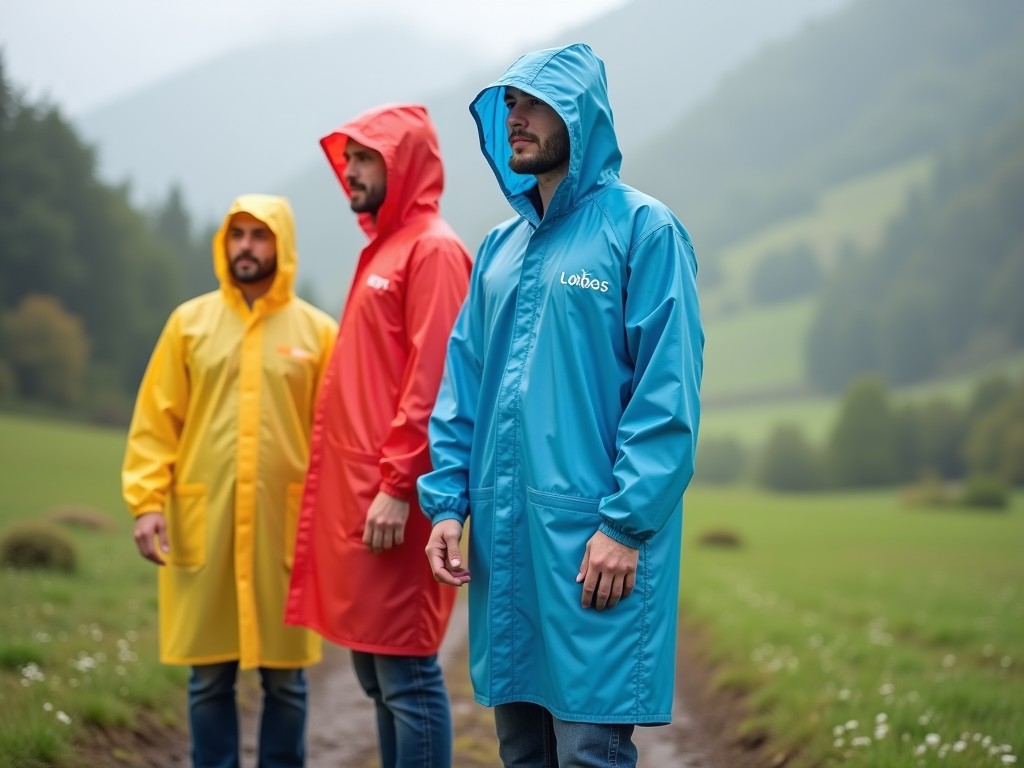
Bulk Buy Rain Ponchos Top Supplier
Bulk Buy Rain Ponchos: Technical Specifications for Industrial Procurement
Industrial operations require protective gear that balances cost efficiency with consistent performance in wet environments. Rain ponchos procured in bulk volumes must meet specific technical criteria to ensure worker safety, regulatory compliance, and supply chain reliability. This document outlines the engineering considerations, material properties, and procurement parameters relevant to bulk purchasing decisions for disposable and reusable rain ponchos used in construction, utilities, event management, and industrial maintenance.
The following sections detail measurable characteristics that influence functionality, durability, and total cost of ownership—avoiding subjective claims in favor of quantifiable specifications that support informed vendor evaluation.
Material Construction and Performance Parameters
The primary material determinant of poncho performance is the base polymer film, typically polyethylene (PE) or polypropylene (PP) for disposable variants, and coated nylon or PVC for reusable models. Disposable ponchos commonly use low-density polyethylene (LDPE) with thicknesses ranging from 12 to 25 microns, measured via micrometer per ASTM D374. Thickness directly correlates with tear resistance and hydrostatic head rating—the pressure in millimeters of water the material withstands before leakage occurs.
For industrial applications requiring extended wear, ponchos may incorporate laminated layers: a PE outer shell for water resistance bonded to a nonwoven polypropylene inner layer for comfort and moisture wicking. Seam construction is critical; ultrasonic welding or heat sealing creates bonds stronger than the base material, whereas stitched seams require tape sealing to maintain waterproof integrity. Hydrostatic head ratings for compliant industrial ponchos typically exceed 800mm, validated through ISO 811 testing.
Additives such as UV stabilizers (hindered amine light solvents) and anti-static agents are incorporated based on exposure conditions—UV stabilizers extend service life in outdoor storage, while anti-static treatments reduce cling and dust attraction in electronics or powder handling environments. These modifications are specified in parts per million (ppm) and documented in material safety data sheets (MSDS).
Dimensional Standards and Ergonomic Design
Poncho dimensions are defined by three key measurements: chest width (flat, unstretched), length from shoulder to hem, and sleeve length (if applicable). Standard industrial sizing uses a chest width of 140–160 cm and length of 110–130 cm to accommodate layered clothing and safety harnesses. These dimensions follow ANSI/ISEA 107-2020 guidelines for high-visibility safety apparel when combined with reflective tape.
Ergonomic features include a mounted hood with drawcord adjustment (typically 2.5–3.0 mm polypropylene cord), snap or button closures at the neck, and side snaps or vents for mobility. Hood depth averages 25–30 cm to ensure full head coverage without obstructing peripheral vision. Sleeve designs vary: open sleeves allow arm freedom but increase water ingress risk; elastic or snap cuffs reduce leakage at the wrist while maintaining dexterity.
Packaging efficiency is influenced by folding methodology. Ponchos are typically folded into rectangles or triangles using automated systems, with folded dimensions averaging 10×15×2 cm for disposable units. This affects case packing density—standard cartons hold 100–200 ponchos, optimizing pallet utilization for bulk shipments. Custom folding patterns are available upon request to integrate with specific dispensing systems or vending equipment.
Quality Control and Batch Consistency
Bulk procurement demands statistical process control to ensure batch-to-batch uniformity. Critical quality attributes include thickness variance (±2 microns), tensile strength (minimum 15 MPa in MD and TD per ASTM D882), elongation at break (>400%), and seam strength (>80% of base material strength). Sampling protocols follow ANSI/ASQ Z1.4 (ISO 2859-1) with inspection levels II for general products and III for critical applications.
Visual inspections detect defects such as pinholes, gels, streaks, or incomplete seals using 10x magnification under standardized lighting (500 lux, D65). Functional testing includes hydrostatic head tests on random samples and liquid penetration tests using ASTM F903 surrogate fluids. Documentation includes batch-specific certificates of analysis (CoA) detailing test methods, sample sizes, and pass/fail criteria against agreed-upon specifications.
Traceability is maintained via lot numbers linked to raw material suppliers, extrusion dates, and conversion parameters. This enables rapid root-cause analysis in the event of field failures. Suppliers should provide access to quality management system (QMS) documentation, including ISO 9001 certification scope and internal audit frequency, to verify process capability.
Customization Options for Industrial Integration
Beyond standard configurations, industrial buyers often require tailored specifications to align with operational workflows or branding protocols. Common customizations include color matching to corporate or safety standards (Pantone or RAL references), addition of logo printing via flexographic or screen printing (ink adhesion tested per ASTM D3359), and integration of specialized features such as tool loops, badge holders, or reinforced stress points.
Material modifications may involve co-extrusion of metallocene PE for improved clarity and toughness, or incorporation of flame-retardant additives (e.g., aluminum trihydrate) to meet UL 94 or ISO 3795 standards for specific hazardous environments. Antimicrobial treatments using silver-ion or quaternary ammonium compounds are available for healthcare or food processing applications, with efficacy validated per ISO 22196.
Packaging customization includes custom-printed cartons, barcoded labels for warehouse scanning, or inner polybags with desiccant packs for humidity control. Lead times for custom orders typically range from 2–4 weeks after artwork approval, depending on complexity and raw material availability. Minimum order quantities (MOQs) for customized runs are generally higher than stock items due to setup and changeover costs.
Environmental and Regulatory Considerations
End-of-life management is an increasing factor in procurement decisions. Disposable PE ponchos are recyclable in streams accepting LDPE (recycling code 4), though contamination from use may limit recyclability. Some suppliers offer ponchos with oxo-biodegradable additives (though efficacy is debated under ASTM D6954) or bio-based PE derived from sugarcane ethanol, reducing carbon footprint by approximately 15–20% compared to fossil-based equivalents.
Reusable ponchos extend service life through multiple use cycles, reducing waste generation. Their environmental benefit depends on laundering practices and replacement frequency. Suppliers should provide guidance on recommended wash cycles (typically 30–40°C, mild detergent) and expected lifespan (e.g., 10–15 washes before performance degradation). Compliance with REACH, RoHS, and PFAS restrictions is verifiable through material declarations and third-party test reports.
For international shipments, documentation includes fumigation certificates for wooden pallets (ISPM 15), country of origin markings, and safety data sheets aligned with GHS standards. Buyers should confirm whether the supplier provides automated customs documentation (e.g., AES filing support) to reduce clearance delays.
Typical Specification Table for Bulk Rain Ponchos
| Parameter | Typical Range (Disposable) | Typical Range (Reusable) | Test Method / Standard |
|---|---|---|---|
| Material Thickness | 12–25 microns | 0.15–0.30 mm (coated fabric) | ASTM D374 / Micrometer |
| Hydrostatic Head | ≥800 mm | ≥1500 mm | ISO 811 |
| Tensile Strength (MD) | ≥15 MPa | ≥30 MPa | ASTM D882 |
| Chest Width (Flat) | 140–160 cm | 140–160 cm | Direct Measurement |
| Length (Shoulder to Hem) | 110–130 cm | 110–130 cm | Direct Measurement |
| Seam Type | Heat Seal / Ultrasonic Weld | Sewn + Tape Seal | Visual / ASTM D751 |
| Folded Dimensions | 10×15×2 cm | 15×20×3 cm | Caliper Measurement |
| Standard Pack Quantity | 100–200 pcs/carton | 25–50 pcs/carton | Carton Count |
*Typical values provided for reference. Actual specifications are customizable according to project requirements and validated through batch testing.
Procurement Recommendations for Bulk Orders
When evaluating suppliers for bulk rain poncho procurement, prioritize those who provide transparent access to material data sheets, quality control protocols, and sample evaluation programs. Request pre-production samples for wear testing under actual conditions—assess comfort, mobility, and water resistance over extended periods (e.g., 4–8 hour simulations). Confirm that the supplier’s minimum order quantities align with your consumption rates to avoid excess inventory or stockouts.
Negotiate lead times based on your safety stock levels and reorder points. For critical operations, consider dual-sourcing strategies or vendor-managed inventory (VMI) arrangements to mitigate supply disruptions. Ensure that pricing includes all relevant costs: material, customization, packaging, labeling, and freight terms (clearly defined Incoterms®).
Establish clear acceptance criteria in the purchase order, referencing specific test methods and sample sizes. Include clauses for corrective action in case of non-conforming batches, such as replacement at supplier cost or negotiated credit. Regular performance reviews—quarterly for high-volume buyers—help maintain alignment and drive continuous improvement in product consistency and service responsiveness.
For technical consultation, sample requests, or detailed quotation preparation based on your operational specifications, contact our industrial solutions team.
Request Technical Specifications & Quotation