
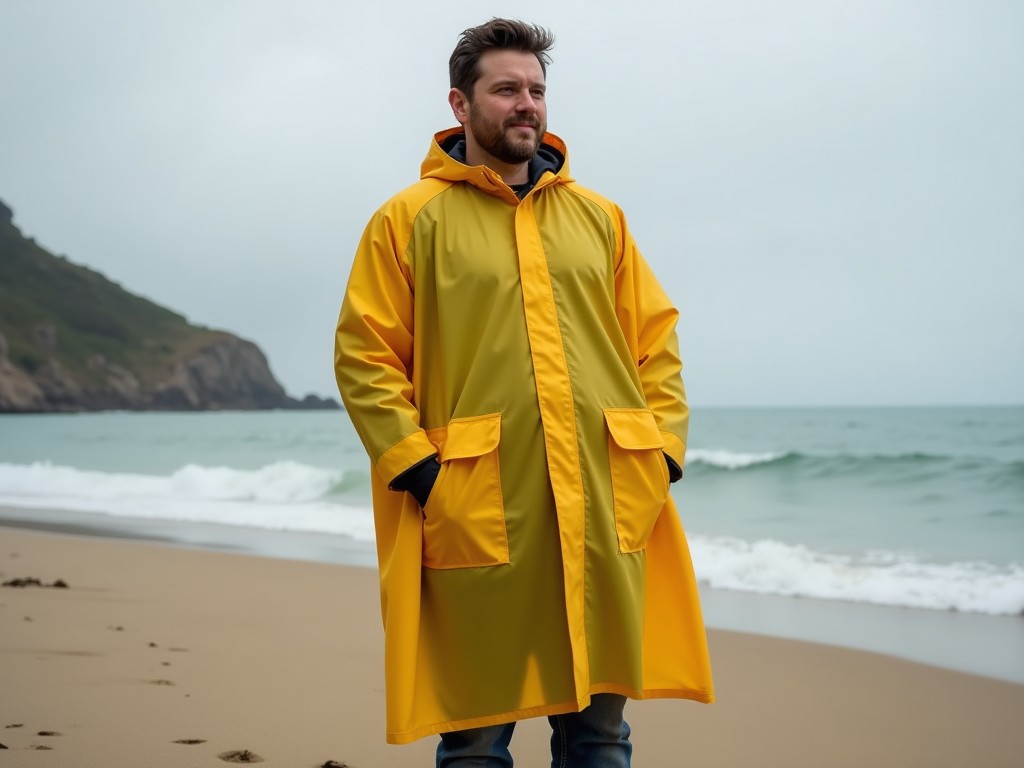
Big And Tall Rain Poncho Top Supplier
Big and Tall Rain Poncho Top Supplier: Technical Specifications and Selection Guide
Industrial buyers seeking rain protection for personnel in demanding environments require garments engineered for fit, durability, and functionality. Standard poncho designs often fail to accommodate larger body types, leading to restricted movement, inadequate coverage, and premature wear. This guide explains the technical considerations for selecting a big and tall rain poncho top, focusing on material properties, dimensional specifications, and performance criteria relevant to procurement decisions.
Material Composition and Performance Characteristics
The effectiveness of a rain poncho top depends on the barrier properties and mechanical strength of its base fabric. Common materials include PVC-coated polyester, TPU-laminated nylon, and multi-layer polyurethane systems. PVC coatings provide excellent waterproofing (hydrostatic head >10,000 mm) and chemical resistance but may become stiff at low temperatures. TPU laminates offer flexibility down to -30°C and superior tear propagation resistance, critical for snag-prone environments. Polyurethane systems balance breathability (MVTR 5,000–8,000 g/m²/24h) with waterproofing, suitable for active wear in variable climates.
Fabric weight directly influences durability and user comfort. Lightweight options (150–180 g/m²) suffice for intermittent use in mild conditions, while heavy-duty variants (250–350 g/m²) resist abrasion from tools, equipment, and rough surfaces. Reinforcement at stress points—such as the shoulders, neck opening, and hem—uses double-layer fabric or nylon webbing to prevent tearing under load. Seam construction employs heat-sealing or ultrasonic welding to maintain waterproof integrity, with seam strength typically exceeding 20 N/mm.
Dimensional Specifications for Big and Tall Fit
Standard poncho sizing fails to accommodate individuals with chest circumferences over 130 cm or heights above 190 cm, resulting in inadequate sleeve length, torso coverage, and head opening clearance. Big and tall variants address these limitations through proportional scaling, not simple lengthening. Key dimensions include:
- Chest width: 160–200 cm (measured flat, underarm to underarm)
- Garment length: 140–160 cm (from shoulder seam to hem)
- Sleeve length: 65–75 cm (from shoulder seam to cuff)
- Head opening diameter: 60–70 cm (to accommodate hard hats or helmets)
These measurements ensure unrestricted arm movement, full torso coverage without excessive fabric pooling, and compatibility with headwear. Custom length adjustments are available in 5 cm increments for specific applications, such as welding or forestry, where extended lower-body protection is required.
Design Features for Industrial Use
Beyond basic waterproofing, functional design elements determine suitability for specific work environments. Snap-front closures with storm flaps provide adjustable ventilation and prevent water ingress at the front opening. Adjustable cuffs with hook-and-loop fasteners seal against sleeves, reducing water runoff into gloves. Integrated hoods feature drawcord adjustments and reinforced brims to maintain visibility and shed water away from the face.
Pocket placement considers usability with gloves or tools. Chest pockets with flap covers and drainage grommets allow storage of small items without water retention. Some models include internal mesh pockets for moisture-sensitive equipment. Reflective trim, compliant with EN ISO 20471 standards, is available in silver or fluorescent configurations for low-light visibility, positioned on the shoulders, chest, and back for 360-degree conspicuity.
Quality Control and Testing Protocols
Consistent performance requires rigorous validation beyond visual inspection. Hydrostatic head testing (ISO 811) confirms waterproof resistance under pressure, with batch testing ensuring no fabric falls below 8,000 mm. Tear strength (ASTM D2261) and tensile strength (ASTM D5034) are measured on both warp and weft directions to detect anisotropy. Colorfastness to light (ISO 105-B02) and washing (ISO 105-C06) verifies durability of reflective elements and coatings.
Dimensional stability is assessed after repeated wash cycles (ISO 6330) to ensure shrinkage remains under 3%. Functional testing includes wear trials with articulated mannequins to evaluate range of motion and coverage integrity. Suppliers should provide test reports upon request, detailing sample size, test conditions, and pass/fail criteria for each parameter.
Applications Across Industrial Sectors
The selection of a big and tall rain poncho top aligns with specific operational hazards and environmental conditions. In construction, where workers frequently move between indoor and outdoor spaces, ponchos with quick-release snaps and breathable membranes prevent overheating during intermittent use. Forestry and logging applications prioritize tear-resistant fabrics and high-visibility trim to mitigate snag hazards and ensure visibility in dense foliage.
Utilities and maintenance crews working at height or near electrical equipment benefit from non-conductive materials (PVC or TPU) and flame-retardant treatments where required. Transportation and logistics personnel require ponchos that pack compactly for storage in vehicle cabs yet deploy rapidly during sudden weather changes. Customization options—such as company logos, color-coding for team identification, or specialized reinforcements—allow integration into existing safety protocols.
Comparison of Material Options
No single material universally outperforms others; selection depends on the dominant environmental stressors. The following table summarizes typical performance characteristics to aid in preliminary evaluation:
| Property | PVC-Coated Polyester | TPU-Laminated Nylon | Polyurethane System |
|---|---|---|---|
| Hydrostatic Head (mm) | 10,000–15,000 | 8,000–12,000 | 5,000–10,000 |
| Tear Strength (N) | 25–35 (warp), 20–30 (weft) | 40–50 (warp), 35–45 (weft) | 30–40 (warp), 25–35 (weft) |
| Flexibility at -20°C | Stiff | Flexible | Moderate |
| Breathability (MVTR g/m²/24h) | <2,000 | 3,000–5,000 | 5,000–8,000 |
| Chemical Resistance | High (oils, acids) | Moderate | Low to Moderate |
| Typical Weight (g/m²) | 200–300 | 180–250 | 150–220 |
Values represent typical ranges; actual performance varies with formulation and thickness. Chemical resistance ratings are based on immersion testing per ASTM D543. Breathability metrics indicate moisture vapor transmission rate under standard conditions (38°C, 90% RH).
Customization and Procurement Considerations
Industrial buyers often require adaptations beyond standard catalog offerings. Common customizations include:
- Extended length for lower-body protection (up to 180 cm total)
- Reinforced knee patches or seat panels for kneeling work
- Tool loops or D-rings for equipment attachment
- Ventilation grommets under arms or along sides
- FR-treated fabrics meeting ASTM F1506 or NFPA 70E
- Color-coding for department or hazard zone identification
Minimum order quantities typically start at 50 units for standard sizes, with scaled pricing for larger volumes. Lead times range from 2–4 weeks for stock fabrics to 6–8 weeks for custom coatings or laminates. Sample evaluation is recommended before bulk purchase; suppliers should provide size sets (e.g., XL, 2XL, 3XL) for wear testing by end users.
To initiate a technical inquiry, provide the following details: intended use environment, anticipated temperature range, exposure risks (chemicals, flames, abrasion), required visibility level, and estimated annual volume. This information enables accurate material recommendation and cost estimation.