
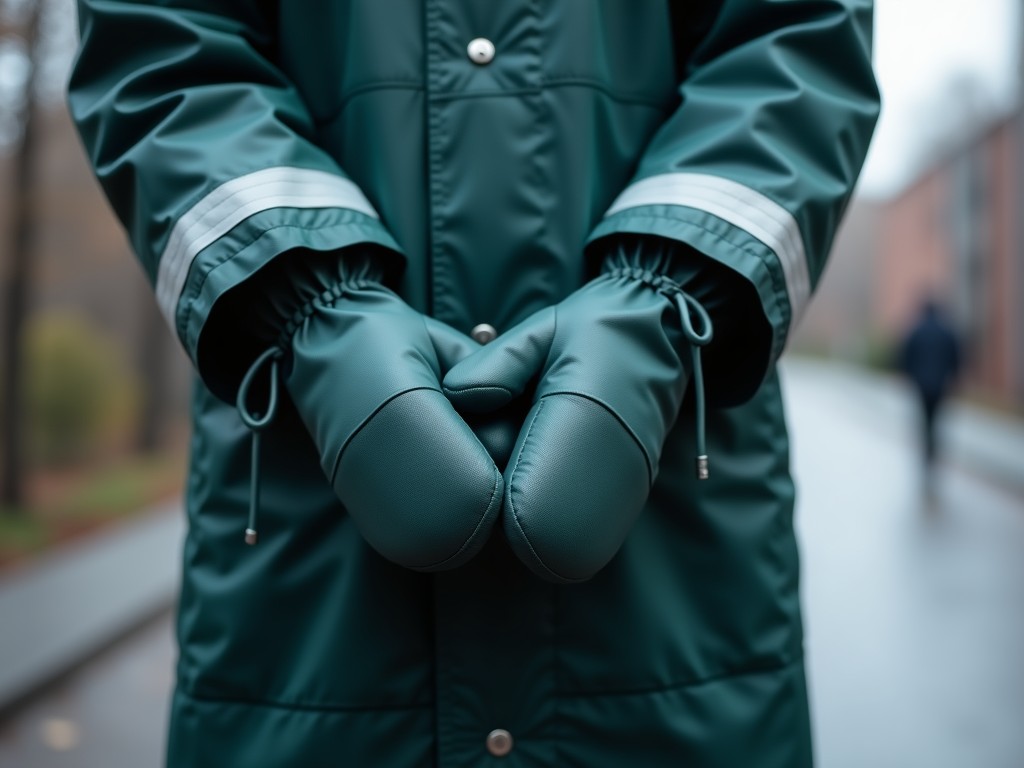
B2B Waterproof Mittens With String
B2B Waterproof Mittens with String
Industrial environments requiring hand protection in wet, cold, or chemically exposed conditions demand gear that maintains dexterity without compromising barrier integrity. Waterproof mittens with integrated retention strings address the specific failure points of standard gloves—cuff slippage, seam leakage, and premature degradation—by combining sealed construction with a mechanical retention system. This design ensures consistent fit during prolonged use, reducing exposure risks and the need for frequent readjustment.
Unlike conventional gloves that rely on elastic or knit cuffs prone to stretching or water ingress, these mittens use a welded or taped seam construction paired with an adjustable drawstring mechanism. The string is typically routed through reinforced eyelets or bonded channels at the wrist, allowing users to tighten the fit without removing the mitten. This feature is particularly valuable in applications where gloves may be worn for extended periods or where removal poses contamination or safety hazards.
Material selection focuses on multi-layer laminates that balance waterproofing, durability, and flexibility. Common configurations include a polyurethane-coated nylon outer shell for abrasion resistance, a microporous PTFE or similar breathable membrane for moisture vapor transmission, and a brushed polyester or fleece inner layer for thermal retention. Seams are sealed using heat-activated tape or ultrasonic welding to prevent capillary action, which is critical in maintaining protection during prolonged exposure to liquids.
The retention string is engineered for reliability under stress. It is typically made from nylon or polyester cord with a tensile strength exceeding 50 N, resistant to UV degradation, and designed to retain elasticity after repeated wet/dry cycles. Ends are often finished with cord locks or molded toggles that allow one-handed adjustment, even when wearing additional protective gear. This ensures the mitten remains securely positioned during dynamic tasks such as climbing, lifting, or operating machinery.
| Feature | Typical Specification | Functional Purpose |
|---|---|---|
| Outer Shell Material | PU-coated nylon 6,6 | Abrasion and puncture resistance |
| Waterproof Membrane | Microporous PTFE laminate | Blocks liquid water while allowing vapor transmission |
| Inner Lining | Brushed polyester fleece | Thermal insulation and moisture wicking |
| Seam Construction | Heat-taped or ultrasonically welded | Prevents liquid ingress at stitch points |
| Retention String | Nylon cord, 2.5mm diameter, >50N tensile strength | Secure, adjustable fit without slippage |
| Cuff Adjustment | Cord lock or toggle mechanism | One-handed tightening, glove-on operation |
Applications span industries where hand protection must persist despite environmental challenges. In offshore wind maintenance, technicians face constant spray and sub-zero wind chill; the mitten’s sealed construction prevents ice buildup from meltwater, while the string ensures the cuff stays sealed against the jacket sleeve. In cold-chain logistics, workers moving between freezing storage and ambient docks benefit from the mitten’s ability to resist condensation ingress during temperature transitions, a common failure point in standard gloves that absorb moisture and lose insulating value.
In marine construction or shipbuilding, where workers handle wet ropes, nets, or treated lumber, the mitten resists saltwater degradation and maintains grip through textured palm coatings—often a nitrile or polyurethane layer applied to the outer shell. The retention string becomes critical here, as loose cuffs can snag on equipment or allow contaminants to enter. Similarly, in arboriculture or utility line work during winter storms, the mitten’s ability to stay secure during repetitive reaching and gripping motions reduces fatigue and the likelihood of removing protection prematurely.
Customization options allow adaptation to specific operational needs. Shell thickness can be adjusted from 0.2mm for high dexterity to 0.4mm for enhanced abrasion resistance in rigging or demolition work. Membrane breathability ratings (measured in g/m²/24hr) can be selected based on activity level—higher values for active tasks like climbing, lower for static exposure like inspection. Palm coatings vary in texture and chemical resistance; for example, a sandy nitrile finish improves grip on wet metals, while a smooth polyurethane layer resists oils and solvents. String length and cord lock type can be tailored to jacket compatibility or gloved-hand ergonomics.
Quality control focuses on verifying barrier integrity and retention performance. Each batch undergoes hydrostatic head testing, typically targeting a minimum of 10,000mm water column height to confirm waterproofing under pressure. Seam strength is measured via strip tensile tests to ensure bonds exceed 8 N/cm. Cord retention is validated through cyclic pull tests—1,000 repetitions at 10N load—to confirm no slippage or breakage. Dimensional stability is assessed after 5 wash cycles at 40°C to ensure the string channels do not deform or compromise fit over time.
Packaging is designed for industrial supply chains. Mittens are typically packed in polybags of 5 or 10 pairs, then placed in cardboard cartons with moisture-resistant liners for export. Each carton includes a label with size, material code, batch number, and care instructions. For OEM clients, private labeling and custom packaging configurations are available upon request, including barcode labeling or kitting with other PPE components.
For technical specifications, customization requests, or sample evaluation, contact our engineering team to discuss your environmental exposure requirements, dexterity needs, and integration with existing protective systems.
Request Technical Details or Samples