
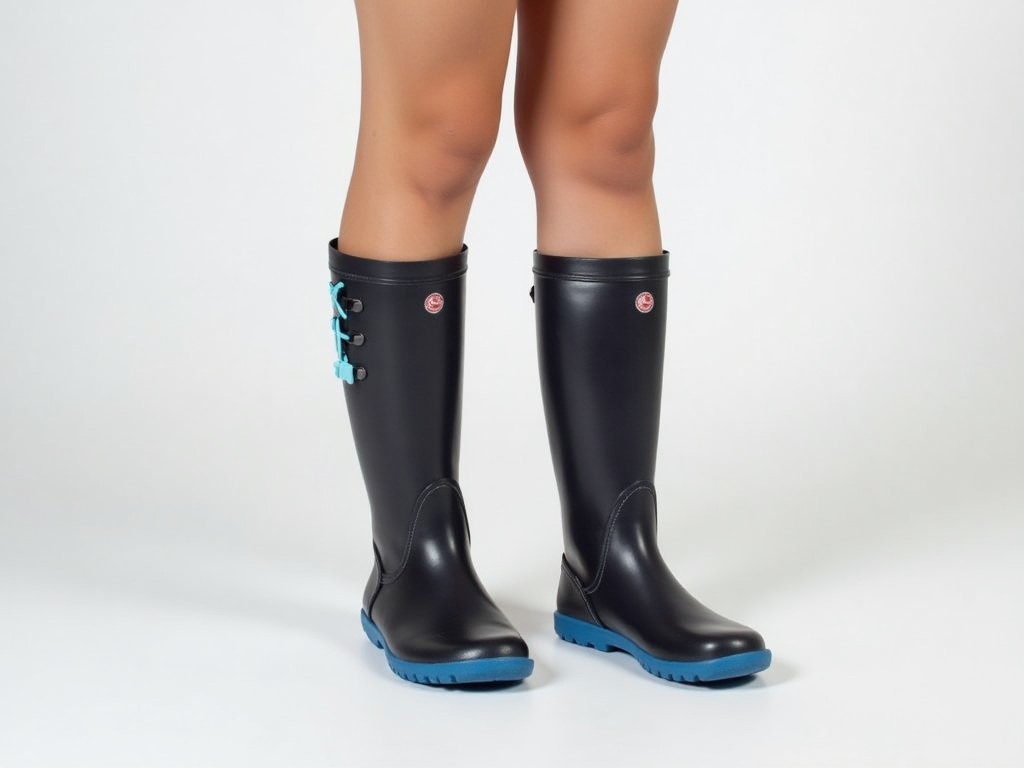
B2B Kids Pu Rain Socks Manufacturer Factory
B2B Kids PU Rain Socks Manufacturer Factory
Kids PU rain socks are specialized waterproof footwear accessories designed for children, combining a polyurethane (PU) coating with a knitted or woven textile base to provide barrier protection against moisture while maintaining flexibility and breathability. Unlike standard rain boots, these socks are worn over regular shoes or bare feet and sealed at the ankle to prevent water ingress during light rain, puddle jumping, or wet playground use. The PU layer is typically applied via lamination or coating processes to a substrate such as polyester, nylon, or cotton blend, creating a durable, flexible film that resists water penetration while allowing vapor transmission to reduce interior moisture buildup. Industrial production focuses on consistent thickness control of the PU layer (usually 0.1–0.3 mm), adhesion strength between coating and substrate (>1.5 N/mm peel strength), and seamless construction to eliminate leakage points. These products serve as a cost-effective, lightweight alternative to bulky rain gear in environments where full boot coverage is impractical or uncomfortable for active children.
Manufacturing begins with substrate preparation, where textile rolls are cleaned, tensioned, and pre-treated to enhance coating adhesion—commonly via corona or plasma treatment for synthetic fibers. The PU formulation, often a thermoplastic polyurethane (TPU) or water-based PU dispersion, is metered and applied using roll-to-roll coating equipment with precise gap control to achieve uniform thickness. After coating, the material passes through heated drying tunnels (typically 80–120°C) to cure the PU film, followed by cooling and winding. The coated fabric is then cut into sock patterns using die-cutters or laser systems, with attention to grain direction to ensure consistent stretch and recovery. Seams are formed using ultrasonic welding or heat sealing techniques rather than traditional stitching to maintain waterproof integrity, with seal strength tested to withstand hydrostatic pressure of at least 1,000 mmH₂O. Final assembly includes attaching elasticized cuffs (usually latex-free rubber or silicone-coated polyester) to ensure a snug, leak-resistant fit around the ankle or calf.
Key Technical Specifications
| Parameter | Typical Value / Range | Test Standard / Method |
|---|---|---|
| PU Coating Thickness | 0.15–0.25 mm | ISO 4593 (Micrometer) |
| Adhesion Strength (PU to Substrate) | ≥1.8 N/mm | ASTM D903 (Peel Test) |
| Hydrostatic Head Resistance | ≥1,500 mmH₂O | ISO 811 |
| Water Vapor Transmission Rate (WVTR) | 800–1,200 g/m²/24h | ASTM E96 (Desiccant Method) |
| Abrasion Resistance (Cycles to Wear Through) | ≥15,000 cycles | ISO 12947-2 (Martindale) |
| Elongation at Break (PU Film) | 300–500% | ISO 527-3 |
| Low-Temperature Flexibility | No cracking at –20°C | ISO 812 (Bending Test) |
Material Options and Customization
Substrate selection directly influences comfort, durability, and cost. Polyester knits offer high tensile strength (>45 MPa), low moisture absorption (<0.4%), and excellent dimensional stability, making them ideal for active use. Nylon blends provide superior abrasion resistance and softness but require careful PU formulation to prevent delamination under humidity. Cotton-rich substrates (60–70% cotton) enhance breathability and skin comfort but necessitate thicker PU coatings or antimicrobial treatments to counteract moisture retention. All substrates undergo pre-treatment to achieve surface energy >40 mN/m for reliable PU bonding. Customization extends to coating formulation: aliphatic PU resists yellowing under UV exposure (critical for bright colors), while aromatic PU offers higher hardness and lower cost for darker shades. Color matching is achieved via pigment dispersion in the PU layer, with Pantone references available for batch consistency. Reflective strips (3M™ Scotchlite™ or equivalent) can be laminated onto the outer surface using heat-activated adhesive for low-light visibility.
Sizing follows pediatric anthropometric data, with length graded from toddler (size 8–10 EUR) to youth (size 28–30 EUR), accounting for foot growth rates and shoe thickness. Ankle cuff elasticity is calibrated to deliver 15–25% radial compression to prevent slippage without restricting circulation. Seam placement avoids high-flex zones (e.g., metatarsal arch) to reduce fatigue. Optional features include antimicrobial silver-ion treatments in the substrate (effective against *S. aureus* and *E. coli*), scent-infused PU (e.g., mild citrus), and reinforced toe caps using thermoplastic rubber (TPR) overlays for drag resistance. All customizations are subject to minimum order quantities (typically 1,000 pairs per variant) and require validation via wear-testing protocols simulating 8 hours of daily use over 4 weeks.
Quality Control and Testing Protocol
Quality assurance begins at incoming material inspection, where substrate tensile strength, coating thickness (via beta gauge), and adhesion are sampled per ISO 2859-1 (AQL 1.0 for critical defects). In-line monitoring during coating includes real-time IR thickness gauges and UV lamp checks for pinholes. Post-coating, every roll undergoes hydrostatic head testing on a 100 mm² specimen at 60 psi air pressure; batches failing 1,500 mmH₂O are rejected. After cutting and sealing, 100% of finished socks receive a visual and tactile inspection for seam integrity, cuff tension, and surface defects. Random samples (AQL 2.5) undergo dynamic waterproofing tests: subjected to 1,000 flex cycles at 45° angle while immersed in water, with internal moisture gain measured via desiccant weight gain (<0.5 g accepted). Abrasion resistance is validated on heel and toe zones using Taber Abrader (CS-10 wheels, 500g load). Colorfastness to rubbing (ISO 105-X12) and washing (ISO 105-C06) is assessed for all dyed batches. Final inspection includes dimensional stability after 5 wash cycles at 40°C (ISO 6330), with length change limited to ±3%.
Documentation includes batch-specific test reports, material safety data sheets (MSDS) for PU formulations, and compliance certificates for REACH, OEKO-TEX® Standard 100 (Class IV for kids’ products), and CPSIA. Traceability is maintained via barcode-linked production logs tracking raw material lot, coating parameters, seal temperature, and final inspection results. Factories supplying B2B clients often support third-party audits (e.g., Sedex, BSCI) and provide factory audit reports upon request. All testing equipment is calibrated quarterly against NIST-traceable standards, with records retained for 36 months.
Applications in Childcare and Institutional Settings
In preschools and daycare centers, PU rain socks reduce reliance on bulky rain boots that are difficult for toddlers to don independently and often remain unused due to poor fit or discomfort. Their lightweight design allows storage in cubbies or backpacks, enabling quick deployment during sudden weather changes. Teachers report higher compliance rates compared to boots, as children perceive socks as less restrictive and more like regular footwear. The seamless, soft interior minimizes chafing during extended wear, critical for children with sensory sensitivities. In institutional laundering, the products withstand 50+ cycles at 40°C with non-ionic detergents without delamination or loss of waterproofing, reducing replacement frequency versus disposable alternatives.
Pediatric clinics and therapy centers use PU rain socks during outdoor physiotherapy sessions in wet conditions, where maintaining foot temperature and dryness supports mobility exercises. The non-slip sole variants (achieved via silicone-dotted PU coating) provide traction on wet tiles or grass without marking surfaces. Summer camps and outdoor education programs integrate them into standard gear lists for activities like stream exploration or rainy-day nature walks, valuing their compactness and quick-drying properties. Municipal recreation departments specify them for public playground attendants during monsoon seasons, citing reduced laundry burden and faster drying times compared to fabric-over-boot solutions. Unlike disposable shoe covers, reusable PU rain socks offer a lower lifetime cost per use when amortized over 100+ wears.
Packaging and Logistics
Standard packaging uses polybags (50–70 μm LDPE) with 5–10 pairs per bag, labeled with size, material composition, care instructions, and batch code. For institutional buyers, bulk packaging options include 100-pair cartons (300×200×150 mm) made from 70% recycled corrugated fiberboard, printed with water-based inks and sealed with hot-melt adhesive. Cartons feature corner protectors and edge crush resistance (ECT) ≥32 kN/m to withstand pallet stacking. Inner liners (PP non-woven) prevent abrasion during transit. For export, fumigated wooden pallets (ISPM 15 compliant) or plastic alternatives are used, with stretch wrap (LLDPE, 20 μm) applied at 50% pre-stretch to secure loads. Humidity indicators (cobalt-free) and desiccant packets (silica gel, 5g per carton) are included for shipments to high-humidity regions. All packaging meets ISTA 3A standards for packaged-products shipping, with drop testing from 762 mm on all faces and edges.
Lead times vary based on complexity: standard sizes and colors ship in 2–3 weeks after sample approval; custom colors or coatings require 4–6 weeks due to formulation validation and pilot runs. Minimum order quantities start at 500 pairs for stock items and 1,000 pairs for custom projects. Shipping terms are typically FOB factory or CIF port, with marine insurance available upon request. Documentation includes commercial invoice, packing list, certificate of origin, and optionally, a Declaration of Conformity for EU markets. Real-time production tracking is accessible via client portal for orders exceeding 5,000 pairs, showing coating line speed, cure oven temperature, and inspection pass rates in real time.
Comparison with Alternatives
| Feature | PU Rain Socks | Disposable Shoe Covers | Traditional Rain Boots |
|---|---|---|---|
| Reusability | 50–100+ cycles | Single use | 2–5 years |
| Weight (per pair) | 30–50 g | 8–15 g | 300–600 g |
| Donning Time | 5–10 seconds | 3–5 seconds | 15–30 seconds |
| Storage Volume | Low (flat fold) | Very low | High (bulky) |
| Breathability | Moderate (WVTR 800–1,200) | Low (non-breathable film) | Low (rubber/PVC) |
| Cost per Use (100 wears) | $0.02–$0.05 | $0.10–$0.20 | $0.01–$0.03 |
| Ankle Seal Integrity | Elastic cuff + seal | None (open top) | Built-in (boot shaft) |
For technical specifications, sample requests, or to discuss customization options for your institutional or retail supply chain, contact our engineering team.
Request a Quote or Sample