
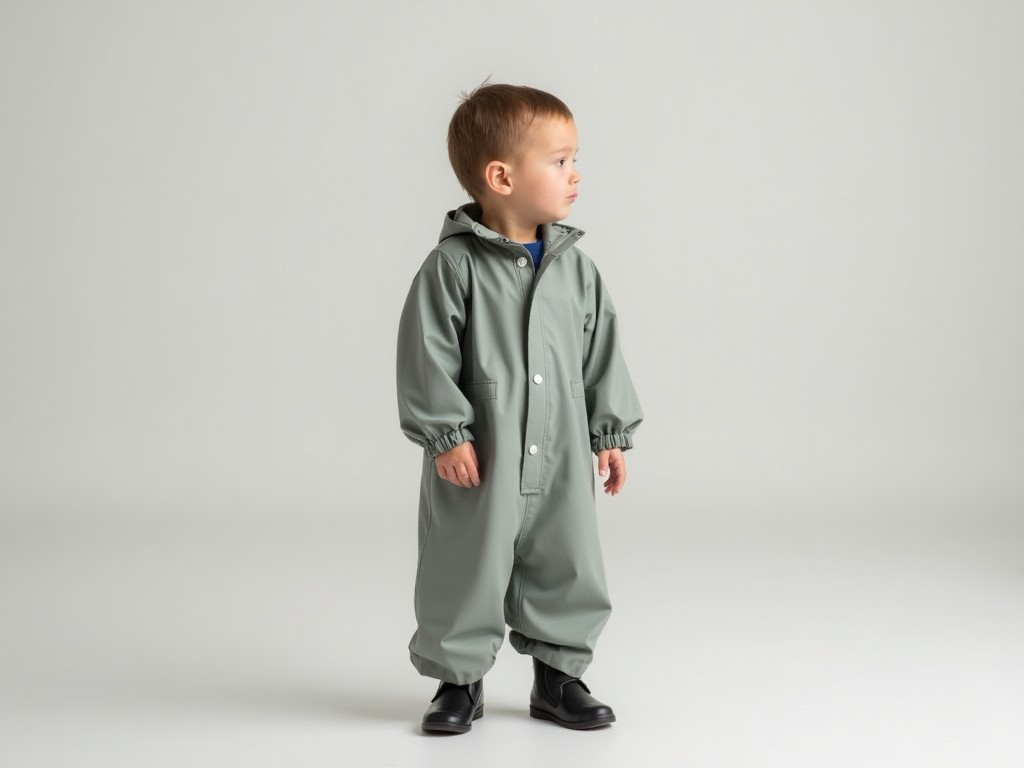
B2B Highchair Coverall Bib With Sleeves
B2B Highchair Coverall Bib with Sleeves
A highchair coverall bib with sleeves is a full-coverage feeding garment designed to protect clothing and skin during meals for toddlers and young children in commercial childcare environments. Unlike standard bibs, it combines torso coverage with integrated sleeves to prevent food spillage from reaching arms, shoulders, and upper garments. This design is particularly valuable in high-turnover settings such as daycare centers, preschools, and institutional cafeterias where hygiene, laundry efficiency, and child comfort are operational priorities.
Industrial procurement focuses on material durability, ease of cleaning, and resistance to repeated high-temperature washing cycles. The garment must maintain integrity after 50+ industrial wash cycles at 75°C or higher without seam degradation, color fading, or loss of water resistance. Buyers evaluate these products based on long-term cost per use, compliance with child safety regulations, and compatibility with automated sorting and folding systems used in large-scale laundry operations.
Material Composition and Performance Characteristics
The primary shell fabric is typically a 100% polyester microfiber with a polyurethane (PU) laminate backing, providing a waterproof barrier while maintaining flexibility. This construction resists penetration from common food substances including tomato-based sauces, oily residues, and pigmented liquids like fruit juices. The laminate layer adds minimal stiffness, preserving the garment’s drape and allowing unrestricted arm movement during feeding.
Sleeve and torso seams are constructed using flatlock or coverstitch techniques with polyester thread rated for UV and chemical resistance. Seam strength exceeds 25 N/mm in tensile testing, reducing the risk of failure at stress points during donning, doffing, or machine agitation. Elastic cuffs at the wrists and ankles use encapsulated rubber cores covered in nylon braid to prevent latex exposure and maintain recovery after repeated stretching.
Interior lining options include brushed polyester for thermal comfort in cooler environments or a smooth, hydrophilic-treated polyester layer that wicks moisture away from skin. The hydrophilic treatment increases surface energy to accelerate evaporation, reducing skin maceration risk during extended wear. All materials comply with Oeko-Tex Standard 100 Class I and are free from phthalates, formaldehyde, and heavy metals as verified by third-party testing.
Design Features for Institutional Use
The coverall features a rear overlap closure system with reinforced hook-and-loop fasteners positioned at the upper back, minimizing accessibility to the child while ensuring secure fit during active movement. Fastener straps are woven from polypropylene webbing with a minimum break strength of 180 N, tested per ASTM D5034. Adjustment points allow accommodation for chest circumferences ranging from 48 cm to 62 cm and sleeve lengths from 28 cm to 36 cm, covering 90% of children aged 12 to 36 months per CDC growth charts.
Leg openings are designed with a gentle taper and internal silicone grip strips (1.5 mm diameter) to prevent riding up during sitting or crawling, without causing skin irritation. The grip strips are embedded in a thermoplastic polyurethane (TPU) matrix and withstand >100 wash cycles. A reinforced front pocket, sewn with double-needle stitching, captures fallen food and is positioned to avoid interference with feeding trays or highchair harness systems.
The garment is cut with a 5 cm hem allowance at all edges to accommodate industrial overlock or safety stitch finishing, preventing fraying during high-speed tumble drying. Colorfastness is rated at minimum 4.0 on the Gray Scale after 30 AATCC 61A wash cycles, ensuring visual consistency across large batches used in facility-wide standardization programs.
Customization and Scalability Options
Standard sizing is available in three tiers (Small, Medium, Large) based on anthropometric data from NHANES III, but dimensional adjustments can be made to sleeve length, torso height, and closure placement without requiring new pattern development. These modifications are accommodated through modular grading rules in the CAD system, allowing OEMs to tailor products to specific age cohorts or facility demographics.
Closure types can be substituted with magnetic snaps (encased in ABS housing) or bar-tacked plastic buttons for facilities seeking to reduce hook-and-loop maintenance. Snap retention force is calibrated to 12–15 N per pair to prevent unintentional opening while allowing caregiver release with one hand. All closures are positioned to avoid pressure points when the child is seated in a highchair with a 5-point harness.
Branding or facility identification can be applied via water-based ink screen printing on the upper back or chest area, using inks certified for direct skin contact. Reflective trims (3M Scotchlite™ equivalent) are available for low-light environment safety compliance. Custom color matching to Pantone specifications is possible for dye-lot-controlled production runs exceeding 500 units.
Quality Control and Manufacturing Consistency
Each production lot undergoes 100% visual inspection for seam integrity, stitch density (minimum 8 stitches/cm), and fastener alignment. Critical control points include waterproof laminate adhesion (tested via hydrostatic pressure ≥10 kPa), elastic recovery (≥80% after 500 cycles), and dimensional stability (±2% after 5 industrial wash cycles). Batch traceability is maintained via barcode-linked records linking raw material lot numbers to finished goods.
Seam sealing is verified using capillary flow testing with dyed water simulate to detect micro-gaps in the laminate layer. Any lot exceeding 2% failure rate in this test is held for rework. Final packaging includes a desiccant packet and is performed in a Class 10,000 cleanroom environment to prevent particulate contamination prior to shipment.
Suppliers provide material safety data sheets (MSDS) and test reports for each shipment, including results from ISO 10993-5 cytotoxicity and ISO 10993-10 irritation/sensitization testing. These documents are available upon request and support compliance with FDA 21 CFR §177.2600 for food-contact surfaces and EU Regulation 10/2011 for plastic materials in contact with food.
Typical Applications in Commercial Childcare
In daycare centers serving 50+ children, the coverall bib reduces laundry load by consolidating protection that would otherwise require separate bibs, arm guards, and smocks. This decreases sorting labor and minimizes the risk of lost components. Facilities report a 30–40% reduction in garment replacement frequency compared to using layered single-purpose items, due to fewer points of failure and more uniform wear distribution.
Preschools with structured meal programs benefit from the garment’s consistency in appearance and fit, supporting uniform presentation standards. The smooth exterior surface resists lint accumulation and allows for efficient air drying or tunnel drying without snagging on conveyor systems. In after-school programs, the coverall’s quick-dry properties (typically <45 minutes in forced-air dryer at 60°C) enable same-day reuse.
Institutional cafeterias in hospitals or corporate childcare facilities use these garments to meet infection control protocols by providing a disposable-like barrier that is fully reusable. The impermeable layer prevents microbial strike-through from food contaminants, reducing cross-contamination risk during communal feeding. Staff training time is minimized due to the intuitive donning process — no overlapping layers or complex fastening sequences.
| Parameter | Typical Value | Test Standard / Reference |
|---|---|---|
| Fabric Weight (Shell) | 140–160 g/m² | ASTM D3776 |
| Waterproof Rating | ≥10 kPa hydrostatic pressure | AATCC 127 |
| Seam Strength | ≥25 N/mm | ASTM D1683 |
| Elastic Recovery (Cuffs) | ≥80% after 500 cycles | ASTM D4964 |
| Colorfastness to Washing | Gray Scale 4.0+ | AATCC 61A |
| Closure Retention Force | 12–15 N per pair | Internal test method |
| Recommended Wash Temp | 75°C max | ISO 6330 |
| Expected Lifespan | 50+ industrial cycles | Based on accelerated aging |
Procurement teams should specify exact dimensional tolerances, closure type, and lining preference during quotation to ensure alignment with existing laundry infrastructure and child demographics. Volume pricing typically applies at 200-unit increments, with lead times ranging from 3–6 weeks for standard configurations and 6–9 weeks for customized variants requiring new pattern grading or color dye-lot approval.
Requesting a pre-production sample is recommended for facilities implementing a new standard or transitioning from legacy systems. Samples allow evaluation of donning time, comfort during extended wear (30+ minutes), and compatibility with specific highchair models. Suppliers should provide sample return labels and clear feedback channels to accelerate the approval cycle.
For technical specifications, customization requests, or sample arrangements, contact our industrial sales team.
Request Quote or Sample