
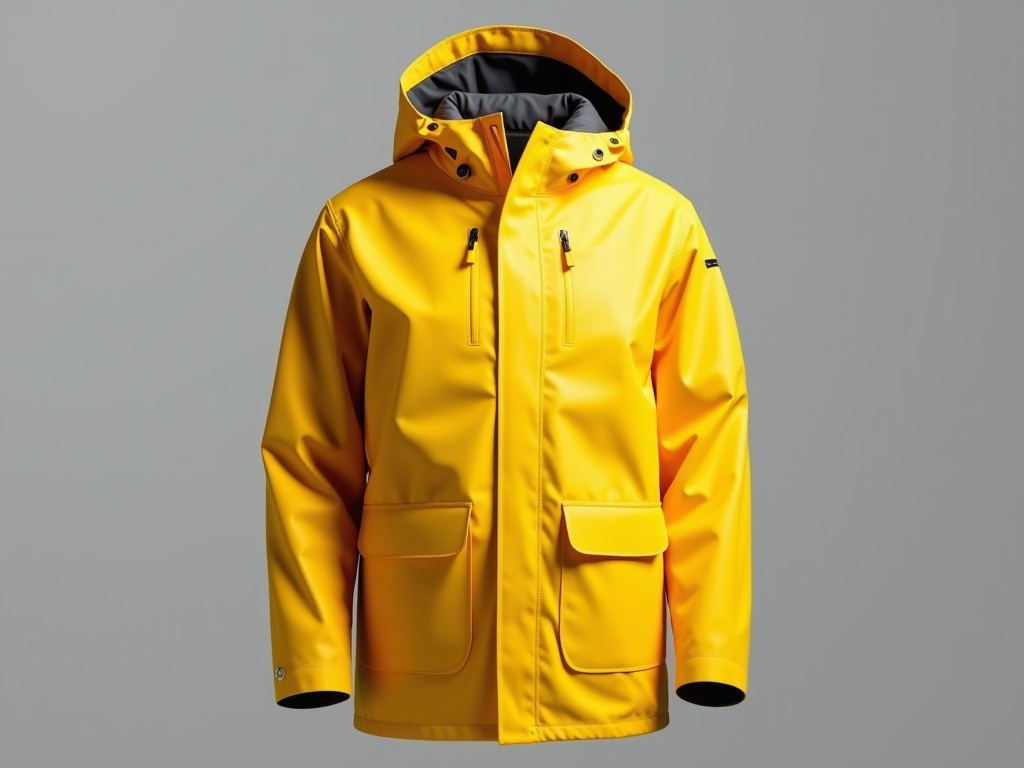
Yellow Mens Rain Coat Top Supplier
Yellow Men's Rain Coat: Technical Specifications for Industrial Use
Selecting appropriate outerwear for industrial environments requires evaluating material performance, visibility standards, and functional design. This guide details the engineering considerations for yellow men's rain coats supplied for professional use, focusing on measurable characteristics that impact safety, durability, and operational efficiency.
Unlike consumer-grade rainwear, industrial variants must withstand repeated exposure to chemicals, abrasion, and extreme weather while maintaining high visibility compliance. The following sections analyze key technical parameters that procurement teams should verify before specification.
Material Composition and Performance Metrics
The base fabric determines chemical resistance, tear strength, and breathability. Industrial yellow rain coats typically use PVC-coated polyester or polyurethane-laminated nylon, each offering distinct advantages depending on exposure conditions.
PVC-coated polyester provides superior resistance to oils, acids, and alkalis, with a typical tear strength of 45–60 N (warp) and 35–50 N (weft) per ISO 9073-4. Polyurethane laminates offer better flexibility at low temperatures (down to -30°C) and reduced stiffness, though with slightly lower chemical resistance.
Waterproofness is measured via hydrostatic head testing; industrial applications require a minimum of 5,000 mm, with premium variants exceeding 10,000 mm to withstand wind-driven rain and prolonged exposure.
Visibility Standards and Color Retention
High visibility is critical in low-light or high-traffic work zones. The yellow hue must meet specific chromaticity and luminance thresholds defined in ANSI/ISEA 107-2020 or EN ISO 20471 for Class 2 or 3 garments.
Colorfastness is evaluated under ISO 105-B02 (light exposure) and ISO 105-E04 (weathering). Industrial yellow rain coats should retain ≥80% of initial luminance after 100 hours of UV exposure and ≥70% after 5 wash cycles at 60°C to ensure ongoing compliance.
Retroreflective tape placement and width (typically 50 mm) must conform to standard patterns; verify that tape is thermally bonded or sewn with UV-resistant thread to prevent delamination after repeated flexing.
Seam Construction and Integrity
Seam failure is a common point of water ingress. Industrial rain coats use welded, taped, or sealed seams to maintain waterproof integrity under stress.
Ultrasonic welding or heat taping with polyurethane tape achieves seam strength matching the base fabric (typically >80% of material tensile strength). Sewn seams require seam sealing tape applied over needle holes; verify tape adhesion strength of ≥2.5 N/mm per ASTM D413.
Seam placement should avoid high-flex areas like elbows and shoulders where possible; look for ergonomic patterning that minimizes seam exposure to abrasion and repeated motion.
Design Features for Operational Use
Functional elements directly affect usability and safety in active work environments. Design choices should align with task-specific requirements.
- Storm flaps over zippers prevent water penetration at closure points; verify flap width ≥50 mm and secure fastening with snaps or Velcro®.
- Adjustable cuffs and hem draws (using elastic or toggle systems) maintain seal against wind and rain; check for corrosion-resistant hardware (e.g., nylon or coated metal).
- Ventilation options such as underarm grommets or back vents reduce moisture buildup from perspiration; ensure vents are covered with waterproof baffles.
- Pocket design should include water-resistant flaps or zippers; avoid large open pockets that compromise integrity or collect debris.
Hood design must allow for hard hat compatibility; look for adjustable depth and perimeter elasticity that maintains seal without restricting peripheral vision.
Sizing, Fit, and Layering Considerations
Proper fit ensures mobility without compromising protection. Industrial rain coats are designed to accommodate layered clothing underneath, such as fleece liners or work uniforms.
Chest and sleeve measurements should allow ≥10 cm of ease over base layers for unrestricted movement. Back length typically ranges from 80–90 cm (depending on height) to ensure coverage when bending or reaching.
Verify size charts include actual garment measurements (not body dimensions) and consider offering tall or extended sizes for workers requiring additional torso or sleeve length. Layering compatibility should be validated via wear trials with intended undergarments.
Quality Control and Testing Protocols
Consistent performance relies on rigorous incoming material inspection and in-process testing. Suppliers should provide traceable test reports for each batch.
Key inspections include: fabric weight (typically 180–250 g/m² for PVC-coated polyester), coating adhesion (≥3.0 N/mm peel strength per ASTM D903), and dimensional stability after washing (<5% shrinkage at 60°C).
Request third-party certification for visibility compliance (e.g., CE marking under EN ISO 20471) and chemical resistance data relevant to your facility’s exposure profile. Batch-to-batch color variance should be monitored using a spectrophotometer with ΔE < 3.0 tolerance.
Packaging and Logistics for Bulk Orders
Packaging methods affect handling efficiency and product integrity during transit. Industrial suppliers use standardized packing to support warehouse automation and just-in-time delivery.
Common practices include individual polybagging (50–70 µm thickness) followed by carton packing (typically 10–20 pieces per carton, depending on size). Cartons should display clear labeling: SKU, size, color, quantity, and country of origin.
For export shipments, verify use of moisture-barrier liners and corner protection to prevent damage from humidity or impact. Palletization should follow ISPM 15 standards for international shipments, with stretch wrapping to secure loads.
Comparison of Common Industrial Rain Coat Constructions
| Parameter | PVC-Coated Polyester | PU-Laminated Nylon |
|---|---|---|
| Typical Weight | 200–240 g/m² | 180–220 g/m² |
| Hydrostatic Head (min) | 5,000 mm | 3,000–5,000 mm |
| Low-Temp Flexibility | Down to -20°C | Down to -30°C |
| Chemical Resistance (Oils/Acids) | High | Moderate |
| Typical Use Case | Chemical plants, refineries | Cold storage, logistics |
*Note: Values represent typical ranges; actual performance depends on specific formulation and coating thickness. Confirm exact specifications with supplier test data.