
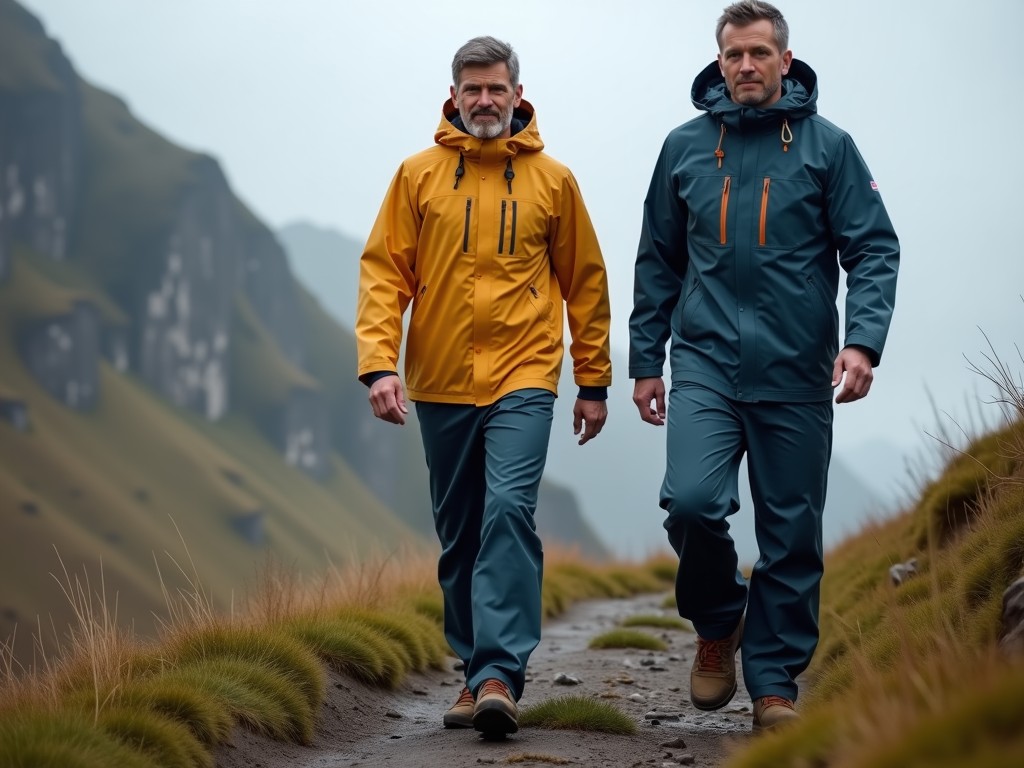
Waterproof Mens Hiking Pants
Waterproof Men’s Hiking Pants: Technical Specifications for Trail Performance
Waterproof men’s hiking pants are engineered to maintain thermal regulation and mobility in wet conditions by combining breathable membranes with durable face fabrics. These garments address the dual challenge of external precipitation and internal moisture buildup from exertion, which can compromise comfort and safety during extended backcountry use. Selection criteria for technical buyers focus on measurable performance thresholds rather than subjective comfort claims.
Key engineering parameters include hydrostatic head rating (mm H₂O), moisture vapor transmission rate (MVTR g/m²/24h), seam sealing integrity, and abrasion resistance cycles. These metrics determine suitability for specific environments—such as alpine scree versus temperate rainforest—and inform layering system compatibility. Understanding these specifications reduces procurement risk by aligning product capabilities with actual field demands.
This page details the technical construction, performance benchmarks, and application considerations for waterproof hiking pants designed for professional and recreational use in variable weather. Each section explains functional trade-offs to support evidence-based evaluation.
Material Composition and Membrane Technology
The primary fabric system consists of a nylon or polyester face yarn treated with durable water repellent (DWR) finish, laminated to a microporous or hydrophilic membrane. Face fabric denier typically ranges from 40D to 70D, balancing tear strength (ASTM D2261) against weight; higher denier improves brush resistance on rocky terrain but increases pack volume. Membrane types differ in mechanism: microporous (e.g., ePTFE) relies on pore size exclusion, while hydrophilic (e.g., PU) uses molecular diffusion, affecting MVTR under high humidity.
DWR treatment is measured by spray rating (AATCC 22) and contact angle; effective maintenance requires reactivation after washing to prevent face fabric wetting-out, which blocks vapor transfer even if the membrane remains intact. Seam sealing uses polyurethane tape applied via heat bonding, with peel strength tested per ASTM D903 to prevent delamination under flexing. These processes are critical—unsealed seams are the most common failure point in wet conditions.
Lamination methods affect durability: dot coating adds weight but improves abrasion resistance; spray lamination preserves flexibility but may delaminate after prolonged UV exposure. Manufacturers specify membrane protection via tricot lining or mesh inserts to reduce friction and oil transfer from skin, which can degrade hydrophilic membranes over time.
Performance Benchmarks and Testing Standards
Hydrostatic head testing (JIS L 1092 or ISO 811) measures water penetration resistance; values below 5,000 mm indicate suitability only for light rain, while 10,000–20,000 mm is standard for prolonged exposure to heavy rain or snowmelt. Field performance correlates with rating but is influenced by angle of impact, temperature, and contaminants like dirt or sunscreen that can reduce effective pressure resistance.
MVTR is measured via inverted cup (ASTM E96) or sweating guarded hotplate (ISO 11092); values under 5,000 g/m²/24h risk internal condensation during moderate activity, whereas >15,000 g/m²/24h supports high-output pursuits like alpine climbing. However, MVTR decreases as external humidity rises, making lab values optimistic for tropical environments.
Abrasion resistance (Martindale or Taber) predicts lifespan in brush-heavy terrain; 15,000+ cycles is typical for alpine use, while <8,000 cycles suggests suitability only for maintained trails. Tear strength (tongue tear, ASTM D2261) below 8 N increases risk of propagation from rock snags, particularly in lightweight fabrics prioritizing packability over durability.
Design Features for Functional Integrity
Articulated patterning uses biomechanical modeling to reduce strain at the knee and hip during stride; gusset placement and inseam curvature are optimized for range of motion without binding when wearing a harness or pack waistbelt. Poor articulation increases energy expenditure and causes hotspots over distance.
Ankle closures employ adjustable hook-and-loop or snap systems with storm flaps to prevent water ingress; effectiveness depends on flap overlap width (>15 mm recommended) and closure pressure. Zippered vents along the thigh (typically 8–12 inches long) use water-resistant zippers (e.g., YKK AquaGuard) with storm flaps; vent placement avoids interference with pack hip belts and maximizes convective cooling when opened.
Reinforcement panels at the cuff, instep, and seat use higher-denier fabric (e.g., 100D nylon) or abrasion-resistant coatings (e.g., Kevlar®-based) to mitigate wear from boot contact and sitting on rough surfaces. These zones experience 3–5× higher abrasion than other areas, making targeted reinforcement more efficient than uniform fabric thickening.
Comparison of Common Configurations
| Feature | Lightweight Trail (3-Season) | Alpine / Expedition |
|---|---|---|
| Face Fabric Denier | 40D nylon | 70D nylon |
| Hydrostatic Head | 10,000 mm | 20,000 mm |
| MVTR | 12,000 g/m²/24h | 8,000 g/m²/24h |
| Seam Tape Width | 15 mm | 20 mm |
| Reinforcement | Cuff only | Cuff, instep, seat |
| Weight (Size M) | 280 g | 420 g |
*Typical values; actual specifications vary by model and membrane technology. Alpine configurations prioritize storm protection over breathability due to prolonged exposure and lower exertion averages during technical sections.
Quality Control and Manufacturing Considerations
Fabric inspection includes checking for laminar defects (bubbles, delamination) via backlighting and measuring DWR durability after 5 wash cycles (AATCC 135). Membrane lot-to-lot variability in pore size or thickness can affect both hydrostatic head and MVTR, necessitating statistical process control during lamination. Tape adhesion is verified via peel testing on 10% of production seams, with failure criteria set at <1.5 N/mm width.
Stitch density is maintained at 8–10 stitches per inch for load-bearing seams (e.g., rise, inseam) using UV-stabilized polyester thread; lower density increases seam grinning under load, while excessive density can cause needle cutting in lightweight fabrics. Bar tacks at stress points (pocket corners, belt loops) undergo pull-off testing to ensure retention of hardware under dynamic loads.
Final garment testing includes spray testing (AATCC 35) to assess wetting-out resistance and tumble drying trials to evaluate dimensional stability; shrinkage beyond 2% in length or waist affects layering compatibility and user comfort. These checks are performed on first articles and periodically during production runs to detect drift in materials or processes.
Applications in Professional and Recreational Use
In guided alpine operations, pants with 20,000 mm hydrostatic head and reinforced cuffs are selected for glacier travel and mixed terrain where prolonged exposure to wet snow and abrasive rock is expected. The reduced MVTR is acceptable due to intermittent high-exertion periods and the ability to vent during rest stops; guides prioritize storm integrity over maximum breathability for multi-day excursions.
For trail maintenance crews working in temperate rainforests, lightweight models with 10,000 mm hydrostatic head and high MVTR (>15,000 g/m²/24h) are preferred to manage continuous light rain and high humidity during physical labor. Articulated knees and minimal pack interference are critical for prolonged bending and reaching tasks; these users often layer with lightweight base layers to manage internal moisture.
Search and rescue teams require rapid donning/doffing capability with gloves, so designs feature oversized zip pulls, simplified ankle closures, and minimal pocket complexity. Durability is emphasized due to unpredictable terrain and potential for snags on debris or vegetation; reinforcement extends to the thigh outer panel in some models to withstand crawling or sliding on rough surfaces.
For technical specifications, customization options, or to discuss application-specific requirements, contact our product engineering team.
Request Technical Consultation