
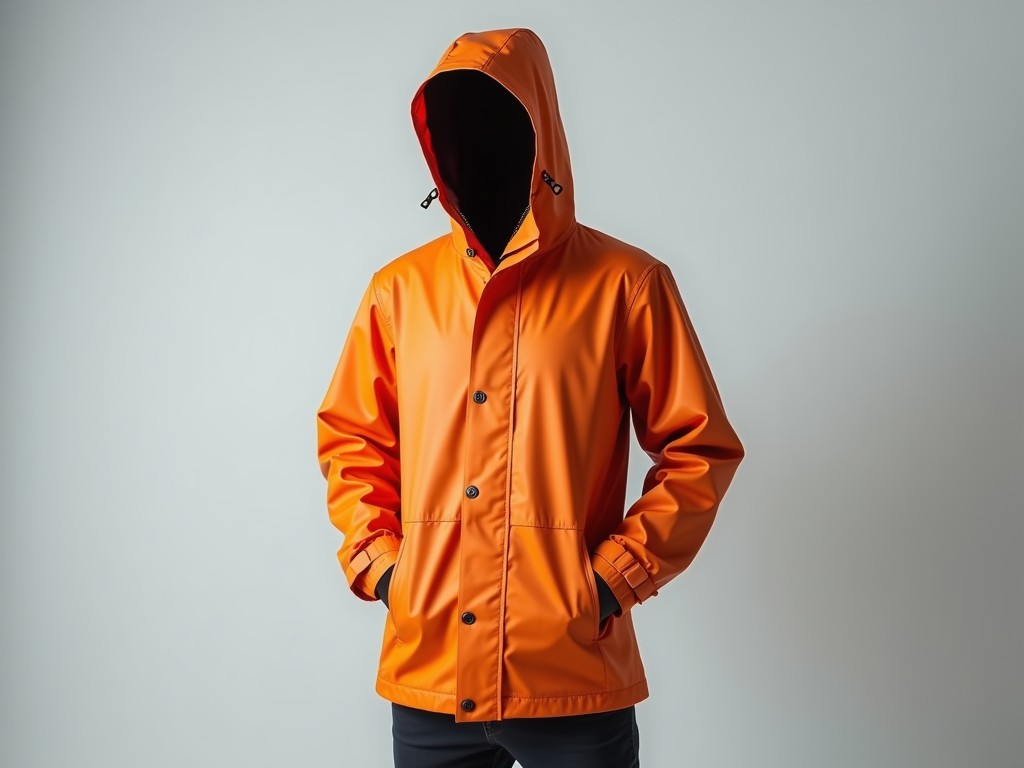
Polyurethane Pu Raincoat Manufacturers And Suppliers
Polyurethane PU Raincoat Manufacturers and Suppliers
Polyurethane (PU) raincoats are engineered protective garments designed for industrial environments where resistance to water, chemicals, and mechanical stress is required. Unlike traditional rubberized or PVC-based rainwear, PU coatings offer a balance of flexibility, durability, and breathability while maintaining a barrier against liquid penetration. The material is formed by applying a polyurethane layer to a textile substrate—commonly polyester or nylon—creating a composite that resists degradation from oils, acids, and alkaline substances frequently encountered in manufacturing, mining, and utility work.
The performance of PU raincoats depends on the coating thickness, substrate type, and curing process. Typical coating weights range from 150 to 300 g/m², directly influencing tear strength and abrasion resistance. Substrates with higher denier counts (e.g., 420D nylon vs. 210D polyester) provide greater puncture resistance but may reduce flexibility. Manufacturers adjust formulation ratios of polyols and isocyanates to tailor hardness, elongation at break, and low-temperature flexibility—critical for use in climates ranging from -20°C to +60°C.
Key Technical Specifications
Industrial buyers evaluate PU raincoats based on measurable properties that correlate with service life and safety compliance. These include hydrostatic head resistance, tear strength, seam integrity, and flexibility under cold conditions. Standard test methods such as ISO 811 (water resistance), ISO 9073-4 (tear strength), and ISO 13937-2 (seam strength) are routinely applied to verify performance claims.
| Property | Typical Range | Test Standard |
|---|---|---|
| Hydrostatic Head | 5,000–10,000 mmH₂O | ISO 811 |
| Tear Strength (Warp/Weft) | 25–45 N / 20–35 N | ISO 9073-4 |
| Seam Strength | Minimum 180 N/50mm | ISO 13937-2 |
| Low-Temp Flexibility | No cracking at -20°C | ISO 17493 |
| Abrasion Resistance | >10,000 cycles (Martindale) | ISO 12947-2 |
Seam construction is a critical failure point in rainwear. Industrial PU raincoats typically use heat-sealed or ultrasonic welded seams rather than stitching, which can create capillary pathways for water ingress. Seam strength values above 180 N/50mm ensure resistance to peeling under stress, such as when carrying equipment or moving through confined spaces. Abrasion resistance exceeding 10,000 Martindale cycles indicates suitability for prolonged contact with rough surfaces like concrete, metal grating, or conveyor systems.
Material Selection and Customization
The choice of substrate and PU formulation is driven by the specific hazards and ergonomic demands of the application. Polyester substrates offer superior UV resistance and dimensional stability, making them suitable for outdoor utility and telecommunications work. Nylon substrates provide higher tensile strength and abrasion resistance, preferred in mining, construction, and heavy equipment maintenance where contact with rough surfaces is frequent.
Customization options extend beyond material selection to include ergonomic design features. Storm flaps over zippers, adjustable cuffs with hook-and-loop closures, and ventilated underarm gussets are commonly integrated to improve usability without compromising waterproofing. Reflective tape compliance with ANSI/ISEA 107 standards can be applied for high-visibility requirements in low-light or traffic-exposed environments. Hood designs may incorporate adjustable drawstrings and integrated brims to maintain visibility during precipitation.
- Substrate options: 210D–420D polyester or nylon
- PU coating thickness: 150–300 g/m²
- Closure types: YKK®-grade zippers, storm flaps, snap fasteners
- Seam methods: Heat-sealed, ultrasonic welded, or taped
- Visibility enhancements: ANSI/ISEA 107 Class 2 or 3 reflective tape
- Additional features: Insulated liners, tool pockets, detachable hoods
Color options are not limited to standard yellow or navy; custom Pantone matching is available for corporate branding or site-specific identification codes. However, pigment selection must consider UV stability—certain dyes may degrade faster under prolonged sun exposure, affecting both appearance and coating integrity. Manufacturers typically provide accelerated weathering test data (e.g., ISO 4892-3) upon request to validate colorfastness claims.
Quality Control and Manufacturing Considerations
Consistent performance in PU raincoats relies on precise control over coating uniformity, adhesion strength, and curing consistency. Variability in coating thickness across a single garment can lead to weak points where water penetration occurs prematurely. In-line monitoring during the coating process—using laser thickness gauges or beta radiation sensors—ensures tolerances remain within ±10% of target weight.
Adhesion between the PU layer and substrate is critical; delamination compromises both waterproofing and structural integrity. Peel adhesion tests (ASTM D903) are conducted routinely, with minimum values of 2.5 N/mm considered acceptable for industrial use. Post-curing conditions—temperature, duration, and humidity—are carefully regulated to ensure complete polymerization of the polyurethane, which directly affects chemical resistance and long-term flexibility.
Final inspection includes hydrostatic testing on randomly sampled units, seam integrity checks under tension, and visual inspection for defects such as pinholes, thin spots, or contamination. Batch traceability is maintained through lot numbers linked to raw material certificates and process parameters. For regulated industries (e.g., oil and gas, pharmaceuticals), additional documentation such as REACH compliance or Oeko-Tex® Standard 100 certification may be provided upon request.
Applications Across Industries
PU raincoats are selected in environments where traditional rubber rainwear fails due to chemical exposure or thermal stress. In petroleum refining, workers face splashes of hydrocarbons and diluted acids; PU coatings resist permeation by these substances better than PVC, which can swell or crack under similar conditions. The material’s flexibility at low temperatures also makes it suitable for offshore platforms in Arctic climates, where PVC becomes brittle below -10°C.
In food processing and pharmaceutical manufacturing, PU raincoats meet hygiene requirements because they do not plasticize or leach phthalates—common concerns with PVC-based garments. Their smooth, non-porous surface allows for effective cleaning and disinfection without degradation. Some formulations are compliant with FDA 21 CFR §177.1630 for indirect food contact, enabling use in areas where incidental exposure to product may occur.
Utility workers maintaining power lines or water treatment facilities benefit from the combination of electrical insulation (when properly grounded) and resistance to alkaline cleaning agents. Unlike cotton-backed rubber rainwear, PU composites do not absorb moisture, reducing weight gain and heat stress during prolonged use. In mining, the abrasion resistance of nylon-based PU raincoats withstands constant contact with rock and conveyor belts, extending service life compared to laminated alternatives.
Procurement and Technical Support
Industrial procurement requires clear communication of technical specifications, lead times, and compliance documentation. Manufacturers typically provide detailed technical data sheets (TDS) containing test results, material safety data (MSDS), and recommended use limitations. Quotations are based on factors such as order volume, customization complexity, and required certifications—standard lead times range from 4 to 8 weeks for stocked materials, extending to 10–12 weeks for fully customized orders with special coatings or branding.
Sample evaluation is a standard step in the procurement process. Manufacturers supply pre-production samples for wear testing under actual site conditions, allowing buyers to assess comfort, mobility, and performance before full-scale commitment. Feedback from these trials often informs adjustments to sizing, closure placement, or ventilation design. Export shipments are protected using moisture-barrier polybags and corrugated cartons with edge protection to prevent damage during transit.
For technical inquiries, buyers should provide details on: expected chemical exposure (type and concentration), temperature range, required visibility class, substrate preference, and any required certifications. This information enables accurate material selection and reduces the risk of over-specification or under-protection. Contact methods include direct email, phone, or online inquiry forms—response times are typically within 24 business hours for technical questions.
Inquiry
To request a quotation, technical data sheet, or sample evaluation, provide your application details including:
- Primary hazards (chemicals, temperature, abrasion)
- Required certifications (e.g., ANSI/ISEA 107, REACH, FDA)
- Order quantity and delivery timeline
- Customization needs (color, branding, features)
- Preferred contact method and technical contact
Submit your inquiry via the contact form or email. A technical representative will respond with material recommendations, lead time confirmation, and pricing based on your specifications.
Submit Inquiry