
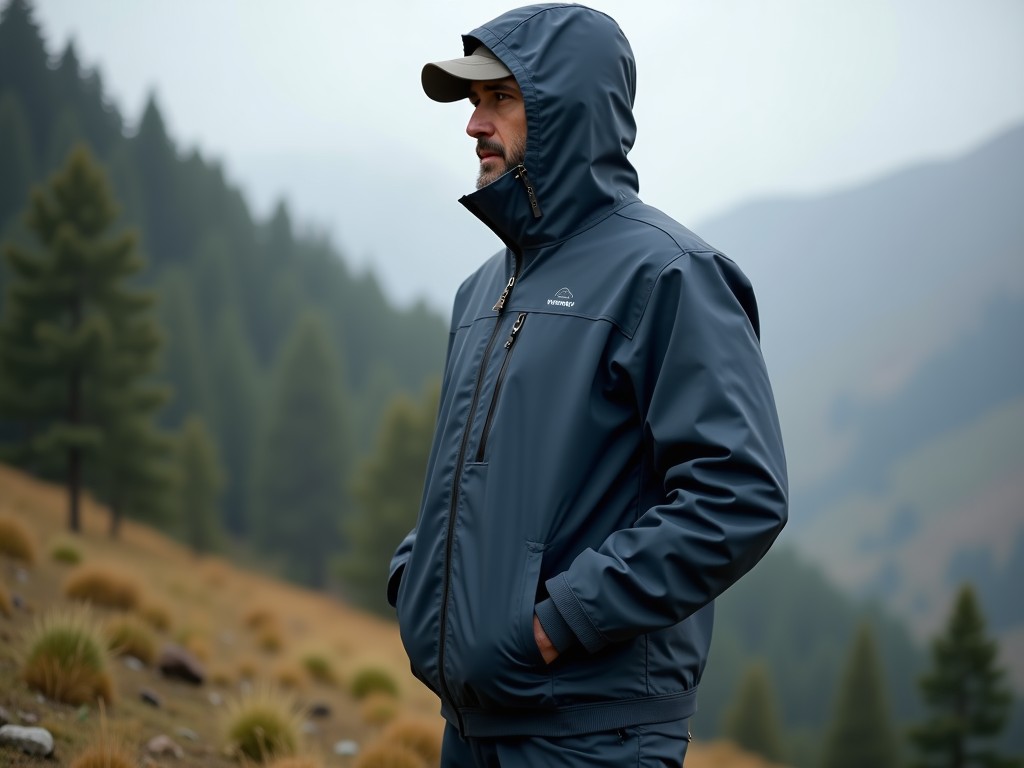
Outdoor Waterproof Trousers For Men
Outdoor Waterproof Trousers for Men
Outdoor waterproof trousers for men are engineered garments designed to provide reliable protection against precipitation, wind, and abrasion in demanding environments. These trousers integrate technical fabrics, sealed seams, and functional design elements to maintain wearer comfort and mobility while preventing water ingress. Industrial buyers select these garments based on verified performance criteria such as hydrostatic head rating, breathability metrics, and durability under repeated stress, rather than subjective claims of quality.
Core Technical Specifications
The primary performance indicator for waterproof trousers is the hydrostatic head (HH) rating, measured in millimeters, which indicates the height of a water column the fabric can withstand before leakage occurs. Standard outdoor trousers typically range from 5,000 mm to 20,000+ mm HH, with higher values corresponding to prolonged exposure to heavy rain or snow. Equally critical is the moisture vapor transmission rate (MVTR), expressed in grams per square meter per 24 hours (g/m²/24h), which quantifies breathability; values above 5,000 g/m²/24h are generally considered adequate for high-output activities to prevent internal condensation buildup.
Fabric construction commonly employs a 2-layer or 3-layer laminate system. In a 2-layer design, a waterproof membrane is bonded to the outer fabric with a separate hanging liner for protection. A 3-layer construction fuses the outer fabric, membrane, and inner liner into a single composite, reducing bulk and improving durability. The outer fabric is typically nylon or polyester with a denier rating between 40D and 70D, treated with a durable water repellent (DWR) finish to cause water to bead and roll off, preventing saturation of the outer layer that could impair breathability.
Seam Sealing and Closure Systems
Seam sealing is a critical manufacturing process where waterproof tape is applied over stitched seams to eliminate capillary pathways for water ingress. Fully sealed seams cover all stitching, while critically sealed seams target high-exposure areas such as the inseam, outseam, and seat. The effectiveness of seam sealing depends on tape adhesion strength, width (typically 20-25mm), and compatibility with the fabric laminate; delamination under flex or washing compromises waterproof integrity.
Closure systems include front zippers with storm flaps, adjustable waistbands, and ankle cuffs. Water-resistant zippers feature coated teeth or polyurethane laminates to resist water penetration, often backed by an internal storm flap that overlaps the zipper track. Waist adjustments may use internal elastic, drawcords, or tab-and-velcro systems, allowing users to seal the garment against wind and snow ingress. Ankle cuffs commonly incorporate hook-and-loop straps or elastic gussets to accommodate boots while maintaining a tight seal against water and debris.
Functional Design Elements
Articulated patterning, particularly at the knees and seat, enhances freedom of movement during dynamic activities such as climbing, kneeling, or traversing uneven terrain. This is achieved through pre-shaped seams or gusseted inserts that reduce fabric strain and prevent binding. Reinforcement panels in high-wear areas — such as the inner cuffs, seat, and knees — use higher denier fabrics (e.g., 100D-200D nylon) or abrasion-resistant overlays to extend service life under repeated contact with rocks, vegetation, or equipment.
Ventilation options, such as thigh-mounted zippered vents, allow users to regulate microclimate without removing the garment. These vents are typically protected by storm flaps and mesh linings to maintain water resistance while enabling airflow. Pocket placement and design also consider usability with harnesses or packs; chest-accessible pockets are often avoided in favor of hip-mounted, zip-secured compartments with drainage grommets to prevent water accumulation.
Material Options and Performance Trade-offs
- Standard polyester/nylon laminates offer a balance of weight, cost, and performance, suitable for general outdoor use.
- High-tenacity nylon fabrics provide superior tear and abrasion resistance, preferred in rugged environments but at a higher weight penalty.
- Recycled polyester variants maintain comparable technical performance while reducing environmental impact, increasingly specified in sustainability-focused procurement.
- Stretch-enhanced laminates incorporate elastomeric fibers (e.g., spandex) in the outer or inner layer to improve mobility, though long-term elastomer durability under UV exposure requires evaluation.
Typical Performance Values
| Parameter | Typical Range | Test Standard |
|---|---|---|
| Hydrostatic Head | 5,000 – 20,000+ mm | ISO 811 |
| Moisture Vapor Transmission Rate (MVTR) | 3,000 – 15,000+ g/m²/24h | ASTM E96 |
| Fabric Weight (Shell) | 80 – 180 g/m² | ASTM D3776 |
| Tear Strength (Trapezoid) | 15 – 40 N (warp/weft) | ASTM D5587 |
| Abrasion Resistance (Martindale) | 10,000 – 50,000+ cycles | ASTM D4966 |
Applications in Industrial and Professional Settings
Outdoor waterproof trousers are specified in professional sectors where personnel operate in exposed environments for extended periods. In utility maintenance, workers repairing power lines or water infrastructure in adverse weather require garments that prevent hypothermia risk while allowing freedom of movement for tool handling and pole climbing. The combination of waterproofing, breathability, and abrasion resistance reduces downtime due to weather-related discomfort or garment failure.
In forestry and land management, professionals conducting surveys, trail maintenance, or firebreak clearing face prolonged exposure to wet vegetation, brush, and variable terrain. Trousers with reinforced cuffs and seat panels resist abrasion from saplings and rocks, while articulated knees prevent fatigue during repeated kneeling. The ability to vent excess heat without removing the garment supports thermal regulation during strenuous uphill work followed by stationary observation tasks.
Emergency response teams, including search and rescue and flood mitigation units, deploy in rapidly changing conditions where gear must perform immediately upon issuance. Waterproof trousers with reliable seam sealing and storm-flapped closures ensure consistent protection during wading, boat operations, or debris navigation. The durability of reinforced zones ensures integrity after contact with submerged obstacles or rough terrain, maintaining protective function across multiple missions.
Customization and Procurement Considerations
Industrial buyers often require modifications to standard designs to meet specific operational or safety requirements. Common customizations include adjusting inseam length for tall or short statures, adding reinforced knee pads compatible with external inserts, or incorporating high-visibility trim compliant with ANSI/ISEA 107 standards for low-light visibility. Pocket configurations can be altered to accommodate specific tools, radios, or instrumentation, with drainage features added to prevent water pooling.
Material selection can be tailored based on environmental exposure; for example, specifying a higher HH rating (e.g., 15,000 mm+) for prolonged wet exposure or selecting fabrics with enhanced UV stabilizers for desert or high-altitude use where solar degradation is a concern. Flame-resistant treatments are available upon request for industries with arc flash or flash fire risks, though these may add weight and reduce breathability, requiring trade-off analysis.
Quality assurance protocols should be defined during procurement, including batch testing for hydrostatic head and seam seal adhesion, visual inspection for stitching consistency, and functional testing of zippers and closures. Packaging options range from individual poly bags for clean storage to bulk packing in cartons with moisture barriers for long-term shelf life. Lead times vary based on fabric availability and customization complexity, typically ranging from 4 to 12 weeks for made-to-order items.
For technical specifications, customization requests, or quotation inquiries regarding outdoor waterproof trousers for men, please contact our engineering team.
Submit Inquiry