
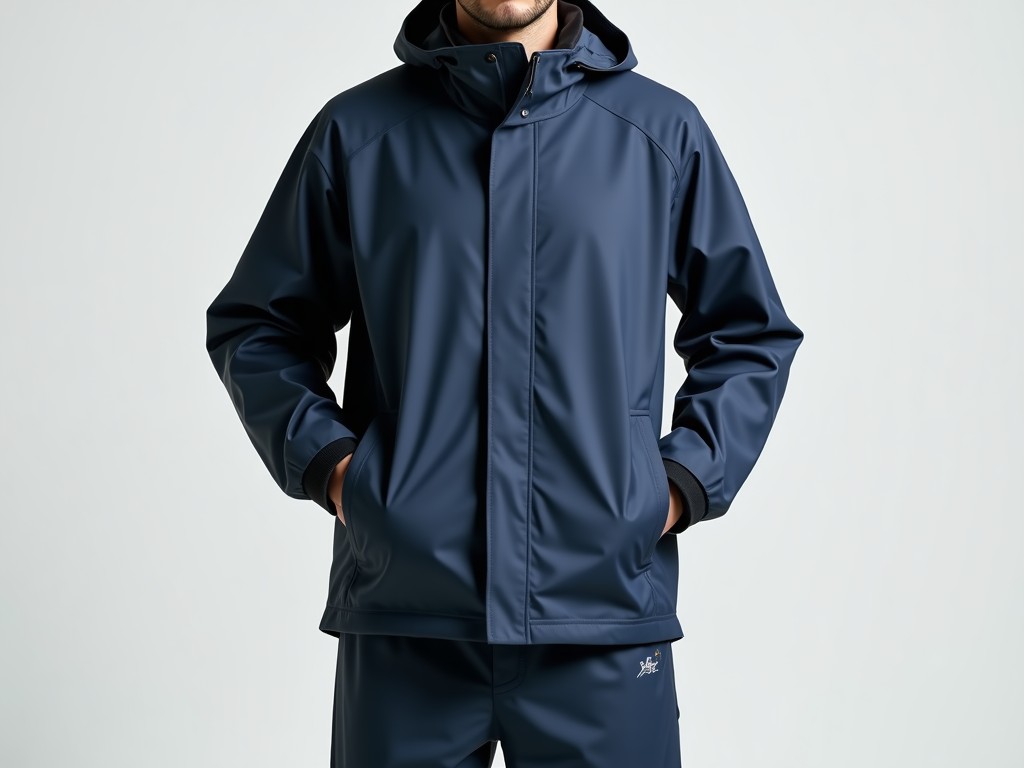
Oem Warm Waterproof Trousers Mens
OEM Warm Waterproof Trousers for Men
Designed for industrial environments where exposure to cold, wet conditions is routine, these trousers combine thermal insulation with a durable waterproof barrier. The construction prioritizes functional performance over aesthetic features, focusing on material integrity, seam sealing, and mobility under load. Each element is selected to reduce the risk of hypothermia, discomfort, and restricted movement during prolonged outdoor operations.
Material Composition and Layer Function
The outer shell uses a 300D polyester oxford fabric with a polyurethane (PU) coating rated for 5,000mm hydrostatic head resistance, providing reliable protection against rain, snow, and wind-driven moisture. Beneath the shell, a 100g/m² polyester fleece liner delivers consistent thermal retention down to -10°C when worn with appropriate base layers. The fleece is anti-pilling treated to maintain loft and insulating efficiency after repeated washing and abrasion.
A breathable microporous membrane is laminated between the shell and liner, allowing moisture vapor transmission at a rate of 3,000g/m²/24h to prevent internal condensation buildup during active work. This three-layer system avoids the bulkiness of traditional insulated rainwear while maintaining a dry microclimate next to the skin. All materials are selected for resistance to UV degradation and oil-based contaminants commonly encountered in industrial settings.
Seam Construction and Waterproof Integrity
All seams are sealed using 15mm wide thermoplastic polyurethane (TPU) tape applied via heat bonding at 180°C, creating a continuous waterproof barrier that eliminates needle-hole leakage points. Seam sealing is performed after assembly to ensure full coverage, including high-stress areas like the crotch, knee articulation zones, and waistband attachments. This method exceeds standard stitching-only construction, which can fail under prolonged hydrostatic pressure or flexing.
The sealing process is validated using hydrostatic pressure testing on finished seams, with samples required to withstand 5,000mm water column for 5 minutes without leakage. Visual inspection under 10x magnification confirms uniform tape adhesion and absence of bubbles, wrinkles, or delamination. This level of seam integrity is critical for applications involving kneeling, sitting on wet surfaces, or exposure to splashing fluids.
Functional Design for Mobility and Utility
The trousers feature a articulated knee construction with a 10° pre-bend to reduce fabric strain during flexion, maintaining waterproof integrity even when kneeling or crawling. A gusseted crotch panel increases range of motion in the hip area, preventing binding during lifting or stair climbing. These ergonomic elements are not optional add-ons but integral to the pattern design, ensuring the garment moves with the body rather than restricting it.
Utility pockets are positioned for accessibility while wearing harnesses or tool belts: two slash-hand pockets with storm flaps, two rear patch pockets with hook-and-loop closures, and a vertical cargo pocket on the left thigh with drainage grommets. All pocket openings are protected by water-resistant zippers or flaps to prevent ingress. Reflective trim is applied at the ankles and waistband using 50mm wide microprismatic tape, compliant with EN ISO 20471 Class 2 requirements for low-light visibility.
Adjustability and Fit System
The waistband incorporates a semi-elastic inner core with adjustable side tabs and a heavy-duty polymer buckle, allowing for ±5cm adjustment without compromising the waterproof seal. Belt loops are reinforced with bar tacking and spaced to accommodate standard 45mm wide industrial belts. Ankle cuffs use a dual-adjustment system: an internal elastic drawcord and external hook-and-loop straps, enabling sealing over boots or gaiters to prevent snow, mud, or liquid ingress.
Fit is based on a standard industrial male anthropometric model, with inseam lengths available in 76cm, 81cm, and 86cm increments to accommodate varying heights. The rise is designed to accommodate layered clothing systems without creating pressure points or restricting torso movement. Sizing follows ISO 8559-1:2017 guidelines for garment measurement, ensuring consistency across production batches.
Quality Control and Testing Protocols
Each batch undergoes raw material inspection for coating thickness, hydrostatic resistance, and tear strength (ASTM D5034) before cutting. In-line checks monitor seam tape adhesion strength and stitch density (minimum 8 stitches/cm). Final random sampling includes waterproof spray testing (AATCC 22), thermal resistance measurement (ASTM F1291), and dimensional stability after 5 wash cycles at 40°C.
Functional trials are conducted with wear testers performing standardized tasks: kneeling for 15 minutes, walking 1km in simulated rain, and climbing a 3-meter ladder while carrying a 10kg load. Feedback focuses on comfort, moisture accumulation, and ease of movement. Any deviation from performance thresholds triggers a root cause review and process adjustment. Documentation of all test results is maintained for traceability.
Applications in Industrial Sectors
These trousers are suited for environments where workers face prolonged exposure to cold precipitation and wet surfaces, such as utility line maintenance in winter, municipal snow removal, and offshore wind farm technician access. The combination of thermal retention and waterproofing reduces the need for frequent garment changes, minimizing downtime and the risk of cold-related fatigue. Unlike non-insulated rainwear, they maintain core temperature stability during intermittent activity.
In food processing washdown zones, the smooth, non-porous outer surface resists chemical cleaning agents and facilitates rapid drying, while the sealed seams prevent bacterial harborage in stitch lines. For forestry and land management roles, the abrasion-resistant shell withstands brush and branch contact, and the quiet fabric minimizes noise during wildlife monitoring. The design avoids features that could snag on equipment, such as exposed cords or loose flaps.
Customization Options for OEM Integration
The base configuration can be adapted to specific operational requirements through modifications to material weight, pocket layout, or trim placement. For example, increasing the fleece weight to 200g/m² extends thermal protection to -20°C, while reducing it to 50g/m² improves breathability for high-exertion tasks in milder climates. Pocket configurations can be reconfigured based on tool carry needs—such as adding radio loops, knife tabs, or reinforced tool pouches—without altering the core waterproof structure.
Color options include standard safety hues (high-visibility yellow, orange) and low-visibility variants (navy, charcoal, olive) for applications where visual signature reduction is required. Reflective trim patterns can be adjusted to meet specific regional safety standards (e.g., ANSI/ISEA 107, CSA Z96). All customizations are subject to minimum order quantities and require technical consultation to ensure compatibility with the waterproofing and thermal systems.
Comparison: Standard Rain Trousers vs. Warm Waterproof Trousers
| Feature | Standard Rain Trousers | Warm Waterproof Trousers |
|---|---|---|
| Thermal Liner | None | 100g/m² polyester fleece |
| Seam Sealing | Taped or untreated | 100% TPU tape, heat-bonded |
| Breathability (MVTR) | < 1,000g/m²/24h | 3,000g/m²/24h |
| Knee Articulation | Straight cut | 10° pre-bent, gusseted |
| Ankle Seal System | Open or elastic only | Drawcord + hook-and-loop |
| Typical Use Limit | Above 0°C, dry activity | -10°C to 5°C, wet/cold |
The table highlights functional differences that directly impact worker safety and comfort in cold-wet conditions. Standard rain trousers lack insulation and often compromise breathability, leading to either overheating or chilling from sweat accumulation. In contrast, the warm waterproof design manages both external moisture and internal microclimate, extending usable temperature ranges and reducing the physiological strain associated with prolonged exposure.
Packaging and Delivery Specifications
Trousers are folded using a standardized method to minimize creasing in critical seam areas and packed in polyethylene bags with desiccant packs to control moisture during transit. Each bag is labeled with size, batch number, and care instructions in ISO-compliant pictograms. Cartons are constructed from single-wall corrugated fiberboard with a burst strength of 275 kPa, optimized for pallet stacking and moisture resistance.
Standard pack quantity is 20 units per carton, with dimensions and weight varying by size range. Export packaging includes corner protectors and stretch-film wrapping to prevent shifting and edge damage. Lead times are dependent on fabric availability and customization complexity, typically ranging from 4 to 8 weeks after approval of pre-production samples. Shipping terms and documentation can be adjusted to meet INCOTERMS® 2020 requirements upon request.