
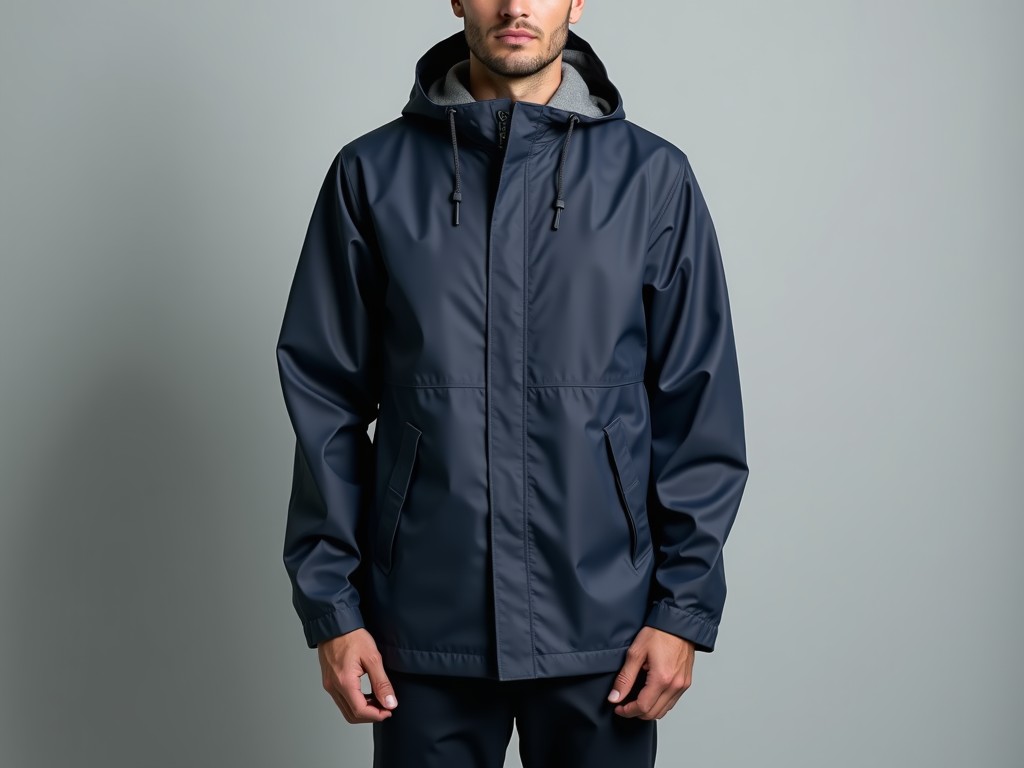
Oem Raincoat For Men Company
OEM Raincoat for Men – Industrial Grade Protective Outerwear
Industrial procurement teams require protective outerwear that balances durability, functional design, and compliance with workplace safety standards. This section outlines the technical specifications, material considerations, and manufacturing logic behind OEM raincoats designed for male workers in demanding environments.
Core Material Selection for Long-Term Performance
The primary fabric used in industrial OEM raincoats is a 3-layer laminated system: an outer shell of 100% polyester with a durable water repellent (DWR) finish, a middle layer of microporous polyurethane (PU) membrane for breathability, and an inner lining of brushed tricot for comfort. This construction achieves a minimum water column resistance of 10,000 mm and a moisture vapor transmission rate (MVTR) of at least 8,000 g/m²/24h under standard test conditions (JIS L 1099 B-1).
Seams are sealed using 100% waterproof tape applied via heat bonding at 160–180°C, ensuring integrity under repeated flexing and exposure to industrial chemicals. Tape width is standardized at 20 mm for shoulder and sleeve seams, increasing to 25 mm on the back yoke and hood attachment points where stress concentration is highest.
Design Features Aligned with Industrial Workflows
The raincoat features a center-front zipper protected by a storm flap with magnetic closures at the top and bottom to prevent water ingress during high-wind exposure. The flap extends 50 mm beyond the zipper on both sides and is secured with dual-row stitching using UV-resistant polyester thread.
Adjustable cuffs use dual-layer neoprene with a 30 mm overlap and a low-profile hook-and-loop system rated for 5,000+ cycles. The hood is three-piece, detachable via YKK® coil zipper, and includes a laminated brim with 15 mm rigid polyethylene insert to maintain shape without obstructing peripheral vision.
Ventilation is managed through two underarm zippered vents (each 180 mm long) with storm flaps and mesh lining to promote airflow while maintaining waterproof integrity. These vents are positioned to align with natural arm movement during lifting and tool use.
Customization Parameters for OEM Integration
OEM clients specify dimensions based on anthropometric data from their workforce. Standard size ranges run from S to 3XL, with chest measurements graded at 25 mm increments. Sleeve length and torso depth are adjustable in 10 mm increments upon request, with pattern grading following ISO 8559-1:2017.
Branding options include heat-transfer polyurethane patches (max size 120×80 mm) on the left chest and back yoke, or silicone-based ink printing for high-abrasion areas. Reflective trim complies with EN ISO 20471 Class 2, using 50 mm wide silver tape placed on sleeves, shoulders, and back hem.
Pocket configurations are tailored to tool access needs: two lower patch pockets with 70 mm vertical zippers and storm flaps, one internal chest pocket with zipper closure (160×100 mm), and a radio loop on the left shoulder seam. All pocket bags are made from 210D nylon ripstop for tear resistance.
Quality Control and Batch Consistency
Each production lot undergoes four-point inspection: fabric roll verification (width, weight, DWR retention), seam seal integrity testing (hydrostatic pressure post-bonding), dimensional stability after 5 wash cycles (ISO 6330), and functional testing of zippers and closures (100 cycles per ASTM D2061).
Colorfastness is validated using AATCC 61-2A for laundering and AATCC 16-2014 for light exposure, with minimum ratings of 4.0 for staining and 3.5 for color change. All materials are OEKO-TEX® Standard 100 certified to confirm absence of restricted substances.
Packaging and Logistics Considerations
Finished garments are folded to 30×40×5 cm dimensions using a standardized board to prevent creasing in high-stress areas. Each unit is placed in a 50 µm polyethylene bag with desiccant pack (5g silica gel) and packed into export cartons of 50 units (dimensions: 60×40×35 cm, gross weight ~18 kg).
Cartons are labeled with barcodes (Code 128) containing SKU, size, color, batch number, and QC passport ID. Palletizing follows ISPM 15 standards with heat-treated wood or plastic pallets, stacked no higher than 1.6 m for container stability.
Applications in High-Exposure Work Environments
These raincoats are commonly specified for offshore wind maintenance crews where prolonged exposure to salt spray and wind-driven rain requires gear that maintains breathability without sacrificing waterproofing. The three-layer laminate prevents internal condensation buildup during extended shifts in humid conditions.
In petrochemical facilities, the chemical-resistant PU membrane and sealed seams provide protection against light splashes of hydrocarbons and mild acids, while the anti-static treatment on the outer shell (surface resistivity <10⁹ Ω) reduces ignition risk in Zone 2 environments.
Utility workers in urban infrastructure projects benefit from the detachable hood and adjustable cuffs when transitioning between outdoor work and confined spaces like manholes or valve chambers. The reflective trim enhances visibility during low-light operations near traffic.
| Parameter | Typical Value | Test Standard |
|---|---|---|
| Water Resistance | 10,000 mm H₂O | JIS L 1099 B-1 |
| Breathability (MVTR) | 8,000 g/m²/24h | JIS L 1099 B-1 |
| Seam Strength | ≥14 N/mm | ASTM D751 |
| Tear Resistance (Trapezoid) | Warp: 25 N, Weft: 22 N | ASTM D5587 |
| Reflective Trim Coefficient | ≥300 cd/lx/m² | EN ISO 20471 |
For technical consultation, sample requests, or to discuss custom specifications for your workforce, contact our engineering team. We provide detailed material data sheets, test reports, and pattern files upon NDA execution.
Request Technical Specification Sheet