
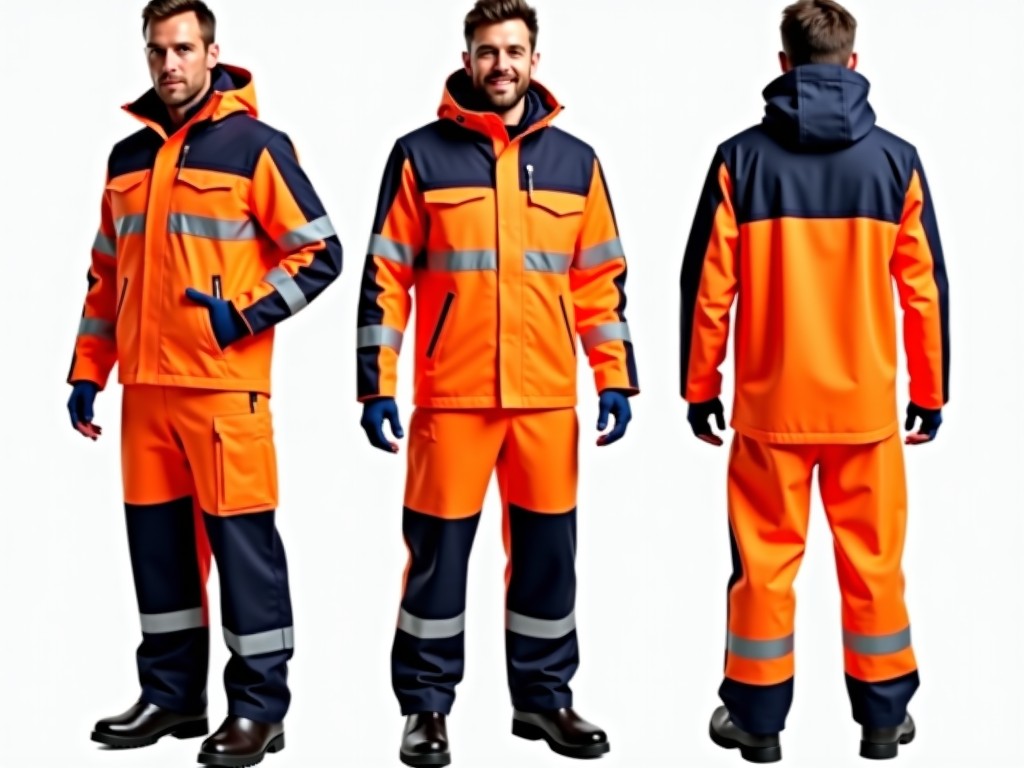
Oem Mens Work Waterproof Trousers
OEM Mens Work Waterproof Trousers
Industrial work environments demand apparel that performs reliably under sustained exposure to moisture, abrasion, and mechanical stress. Waterproof trousers for professional use must balance barrier effectiveness with wearer mobility and long-term durability, particularly in sectors such as construction, utilities, and outdoor maintenance.
Standard rainwear often fails prematurely at stress points or lacks the construction integrity needed for repetitive task movements. OEM specifications address these limitations through defined material performance, seam engineering, and ergonomic patterning tailored to occupational demands.
Material Construction and Performance
The foundation of effective waterproof work trousers lies in the laminate structure and coating technology applied to the base textile. Performance is quantified by hydrostatic head resistance and moisture vapor transmission rate (MVTR), which together determine both external protection and internal comfort during extended wear.
A typical 3-layer laminate consists of an outer abrasion-resistant nylon or polyester shell, a microporous polyurethane (PU) or polytetrafluoroethylene (PTFE) membrane, and an inner protective tricot or mesh lining. This configuration achieves hydrostatic head ratings commonly exceeding 10,000 mm while maintaining MVTR values between 5,000–10,000 g/m²/24h, sufficient for moderate activity levels in wet conditions.
For higher exertion environments, 2.5-layer constructions with a printed protective layer on the membrane reduce weight and improve packability, though abrasion resistance may be lower than 3-layer equivalents. Material selection is dictated by the specific hazard profile and expected service life of the end application.
Seal Integrity and Seam Engineering
Waterproof performance is only as strong as its weakest point, which in sewn garments is typically the seam line. Needle penetration creates micro-channels that can compromise the barrier if not properly sealed, making seam treatment a critical design factor in industrial rainwear.
Fully taped seams apply a waterproof polyurethane tape over the stitched seam using heat and pressure, creating a continuous barrier that matches the fabric’s hydrostatic resistance. Critical seams—such as those along the inseam, outseam, rear rise, and pocket openings—are prioritized for taping based on exposure risk and flex frequency.
Some OEM specifications require triple-stitched seams with waterproof tape applied over both the stitch line and fabric edges for added durability in high-abrasion zones. Seam seal integrity is verified through hydrostatic testing of sealed seams per ASTM D3393 or equivalent standards, ensuring no leakage under specified pressure.
Ergonomic Design and Functional Features
Beyond moisture protection, work trousers must support unrestricted movement and accommodate task-specific tools or gear. Patterning, articulation, and pocket placement are engineered to reduce fatigue and improve operational efficiency without compromising the waterproof barrier.
- Articulated knees with gusseted construction allow full range of motion during kneeling or crouching, reducing strain on the fabric and seam lines.
- Adjustable waist tabs or internal drawcords enable a secure fit over base layers without relying solely on belt loops, which may snag or create pressure points.
- Reinforced kick panels made from abrasion-resistant textiles (e.g., Cordura® or equivalent) protect the lower leg from scuffs and cuts in rough terrain or debris-laden environments.
- Zippered leg openings with storm flaps and adjustable cuffs facilitate easy donning/doffing over boots while maintaining seal integrity.
Pocket configurations are designed for accessibility with gloved hands and include water-resistant zippers or storm flaps to prevent ingress. Cargo pockets may feature internal drainage grommets to prevent water accumulation when used in prolonged wet conditions.
Customization Options for OEM Requirements
OEM procurement involves aligning product specifications with brand standards, safety protocols, and operational workflows. Customization extends beyond aesthetics to include functional adaptations that meet specific regulatory or environmental demands.
| Customization Aspect | Typical Options |
|---|---|
| Outer Shell Material | Nylon 6.6, polyester ripstop, recycled PET blends; denier range 150D–500D |
| Membrane Type | Microporous PU, PTFE, or hydrophilic PU; customizable based on breathability vs. barrier priority |
| Seam Treatment | Fully taped, critically taped, or ultrasonic welded; tape width and adhesion strength adjustable |
| Color and Finish | Standard colors (black, navy, olive, high-vis yellow); custom Pantone matching; DWR finish options |
| Branding and Identification | Screen printing, heat transfer, embroidery, or woven labels; placement per client spec |
| Sizing and Fit | Standard S–3XL; tall, short, and custom inseam options; women’s-specific patterns available upon request |
All customizable elements are subject to minimum order quantities and tooling considerations. Prototyping and wear-trial samples are recommended before full production approval to validate fit, function, and compliance with internal safety or performance standards.
Quality Control and Testing Protocols
Consistent performance in industrial applications depends on repeatable manufacturing processes and rigorous quality verification. Testing protocols are aligned with international standards to ensure that finished goods meet the performance claims specified in the technical datasheet.
- Hydrostatic head testing (ASTM D3393 or ISO 811) measures resistance to water penetration under pressure, typically conducted on both fabric and sealed seams.
- Moisture vapor transmission rate (ASTM E96 or ISO 11092) evaluates breathability to assess comfort during physical exertion.
- Abrasion resistance (ASTM D3884 or ISO 12947) determines fabric durability against surface wear, critical for high-contact areas like knees and seat.
- Tear strength (ASTM D2261 or ISO 9073-4) and tensile strength (ASTM D5034 or ISO 13937-2) verify mechanical integrity under load.
- Dimensional stability after washing (AATCC 135 or ISO 6330) ensures minimal shrinkage or distortion following repeated cleaning cycles.
Batch testing is conducted on raw materials, in-line production, and finished goods. Acceptance quality limits (AQL) are applied based on defect severity, with critical failures (e.g., seam leakage) subject to 0.1% AQL and major defects (e.g., stitching flaws) to 1.0% AQL. Documentation of test results is available upon request for audit or compliance purposes.
Applications Across Industrial Sectors
The selection of waterproof work trousers is driven by the specific environmental challenges and task requirements of each industry sector. Rather than a one-size-fits-all approach, performance attributes are matched to exposure duration, mechanical hazards, and mobility needs.
In utility and telecommunications work, personnel often operate in prolonged rain or wet conditions while climbing poles or accessing underground vaults. Trousers with high MVTR and articulated knees reduce heat stress and fatigue during elevated work, while reinforced cuffs prevent abrasion from rough surfaces.
Construction and infrastructure crews face variable weather combined with debris, tools, and kneeling on rough substrates. Here, abrasion-resistant outer shells, triple-stitched seams, and kick-panel protection extend service life in demanding conditions.
For outdoor maintenance, landscaping, and environmental monitoring, lightweight packability and quick-drying properties become valuable. Trousers with adjustable ventilation zippers and compatible layering systems allow adaptation to changing weather without compromising protection.
Engineers and procurement specialists seeking OEM mens work waterproof trousers with defined performance criteria, customizable construction, and validated quality control are invited to submit detailed specifications for evaluation.