
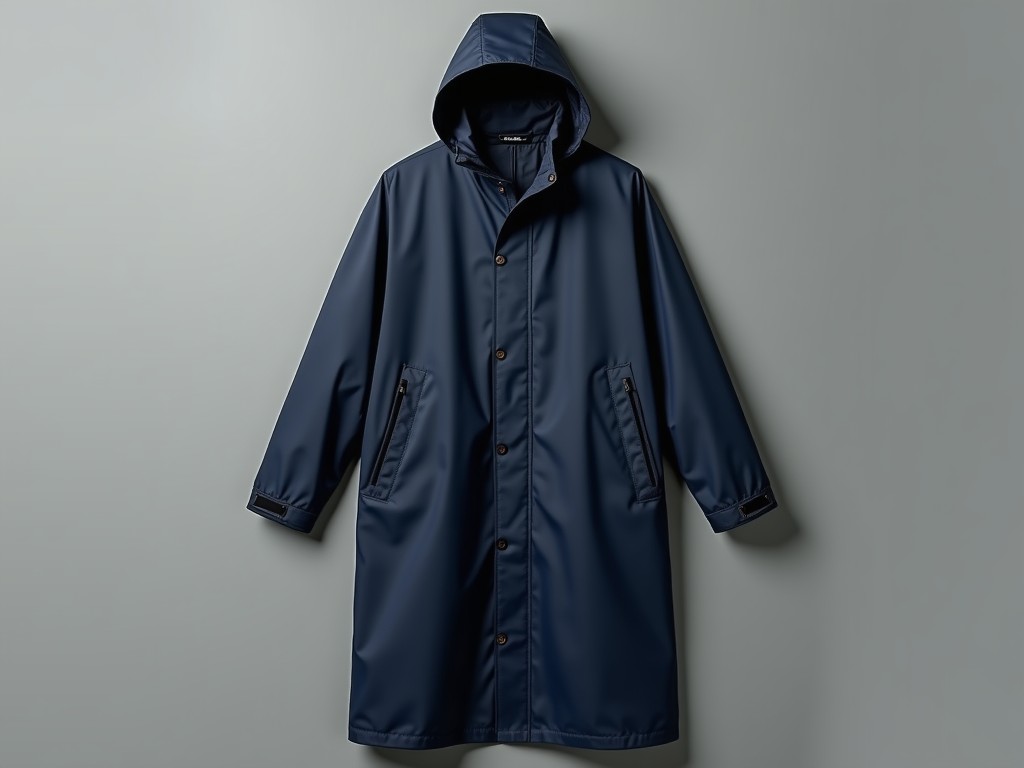
Oem Long Coat Waterproof Mens
OEM Long Coat Waterproof Mens
An OEM long coat waterproof mens is a technical outer garment designed for extended wear in wet environments, combining full-length coverage with engineered waterproofing to protect workers in industrial, logistics, and field service operations where exposure to precipitation, spray, or high humidity is routine.
Unlike standard rainwear, these coats are developed to OEM specifications, meaning they are produced to exact dimensional, material, and performance requirements defined by the purchasing organization, ensuring compatibility with existing safety gear, uniform standards, or operational workflows.
The "long" designation typically refers to a coat length extending below the knee, often to mid-calf, providing enhanced protection for the lower torso and legs—critical in applications where bending, kneeling, or working in puddles is common, such as utility maintenance, wastewater treatment, or outdoor equipment servicing.
Waterproofing is achieved through a combination of membrane technology, sealed seams, and water-resistant zippers, not merely a surface coating, ensuring sustained performance under prolonged exposure and repeated flexing without delamination or leakage at stress points.
Material selection prioritizes durability alongside waterproofing, commonly using polyester or nylon face fabrics laminated to polyurethane or ePTFE membranes, chosen for tear strength, abrasion resistance, and flexibility at low temperatures—properties verified through standardized tests like ISO 14360 for water resistance and EN 343 for breathability classification.
Breathability is a critical but often overlooked feature; without adequate moisture vapor transmission, internal condensation can reduce comfort and increase heat stress, so OEM specifications frequently include minimum RET (Resistance to Evaporative Heat Transfer) values, typically targeting RET < 15 m²Pa/W for moderate activity levels in temperate climates.
Seam sealing is performed using heat-activated tape applied to all stitched joints, a process requiring precise temperature and pressure control to ensure adhesion without damaging the membrane—this step is often audited in OEM quality plans as a key failure point if improperly executed.
Closure systems typically include storm flaps over zippers, adjustable hook-and-loop cuffs, and drawcord hems, designed to prevent water ingress at openings while allowing for layering over insulated mid-layers or safety vests without compromising seal integrity.
Pocket placement and design are often customized per OEM requirements—internal chest pockets for documents, external flap-covered hand pockets for tool access, and sometimes radio or device ports with waterproof gaskets—each positioned to maintain accessibility without creating water traps.
Sizing follows standardized industrial charts but is frequently adjusted for OEM clients to accommodate layering, regional anthropometric data, or specific mobility needs—pattern grading accounts for shoulder slope, sleeve length, and torso taper to ensure unrestricted movement during tasks like climbing ladders or operating machinery.
Color options are not merely aesthetic; high-visibility variants use retroreflective tape compliant with ANSI/ISEA 107 or EN ISO 20471, while darker shades may be selected for low-visibility operations or to minimize dirt show in industrial settings—colorfastness is tested against UV exposure and repeated washing cycles.
Care instructions are integral to OEM specifications, as improper washing (e.g., using fabric softeners or high heat) can degrade membrane performance; therefore, care labels specify mild detergents, cold wash, and tumble dry low or line dry, with guidance often provided in multiple languages for global workforces.
Packaging for OEM orders typically involves individual polybagging with barcode labels, then bulk packing in corrugated cartons sized to optimize palletization and reduce shipping damage—custom packaging, such as branded inserts or reusable containers, is available upon request.
Lead times depend on material availability, customization complexity, and order volume, but typically range from 4 to 8 weeks after approval of pre-production samples, which are submitted for fit, function, and waterproofing validation before full-scale production begins.
| Parameter | Typical OEM Specification Range | Test Standard |
|---|---|---|
| Water Resistance (Hydrostatic Head) | 5,000 – 20,000 mm | ISO 811 |
| Breathability (RET) | < 15 m²Pa/W (target for active use) | ISO 11092 |
| Seam Strength | Minimum 80% of fabric tensile strength | ASTM D5034 |
| Abrasion Resistance | > 20,000 cycles (Martindale) | ISO 12947-2 |
| Temperature Flexibility | No cracking at -20°C | ASTM D2136 |
Applications span industries where prolonged outdoor exposure is inherent: utility workers repairing power lines in storm conditions, transit personnel maintaining outdoor rail infrastructure, agricultural equipment operators in humid climates, and logistics teams managing outdoor loading docks—each scenario demands consistent protection without sacrificing mobility or causing thermal discomfort.
OEM buyers prioritize traceability and consistency; therefore, production batches are linked to material lot numbers, and inspection records include seam seal integrity checks, waterproofing spot tests, and dimensional audits against approved patterns—this documentation supports warranty claims and quality audits.
Customization extends beyond size and color to include functional details: reinforced elbow patches for abrasion-prone zones, internal suspension systems to reduce shoulder fatigue, or compatibility with specific harnesses via engineered attachment points—each feature is evaluated for its impact on waterproofing integrity before inclusion.
Environmental considerations are increasingly part of OEM specs, with requests for PFAS-free durable water repellent (DWR) finishes, recycled polyester face fabrics, or bluesign®-approved materials—suppliers must provide material safety data sheets and compliance documentation to meet corporate sustainability policies.
For procurement teams, the value of an OEM long coat waterproof mens lies not in the garment alone but in the reduced risk of non-conformance, the predictability of performance across orders, and the ability to integrate the item seamlessly into existing safety programs or uniform contracts.
To initiate an OOM inquiry, provide your technical requirements including target hydrostatic head, breathability needs, length specification, layering intent, and any required certifications—our engineering team will review and return a detailed feasibility assessment within 2 business days.
Request OEM Specification Review