
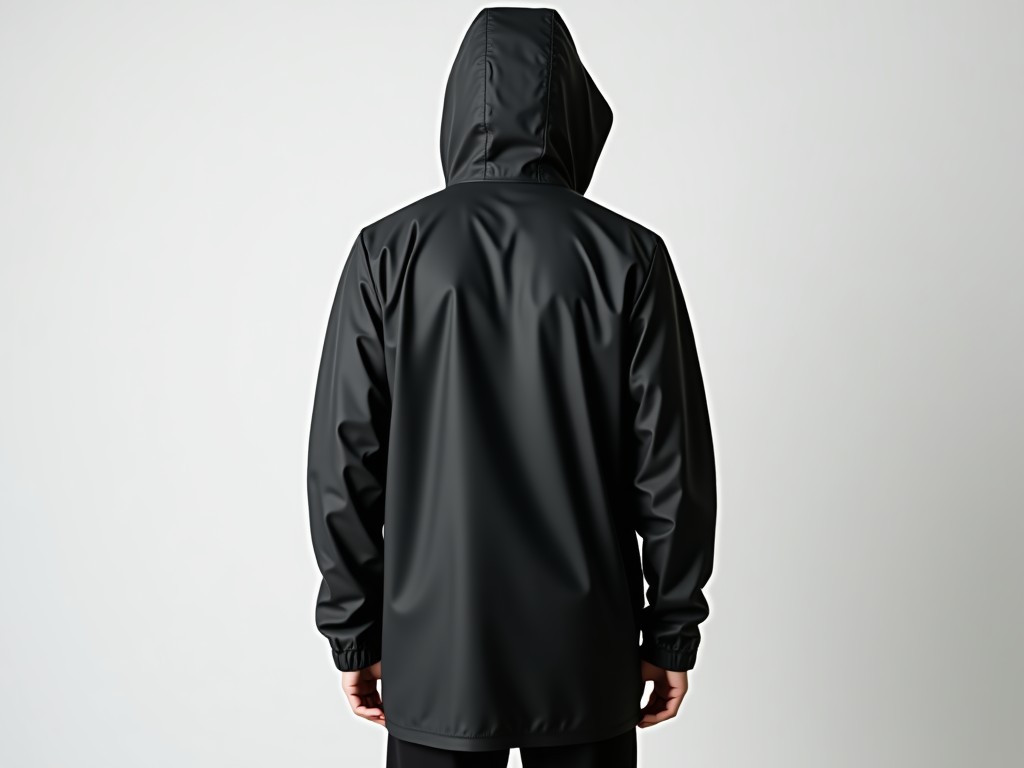
Oem Black Rain Coat Mens
OEM Black Rain Coat for Men
This technical overview details the engineering specifications, material construction, and performance characteristics of OEM black rain coats designed for men in industrial and occupational settings. The information is structured to support procurement decisions based on measurable attributes rather than subjective claims.
Material Composition and Layer Structure
The rain coat utilizes a three-layer laminate system engineered for waterproofing, breathability, and durability. The outer layer consists of 100% polyester plain weave with a denier count of 150D, treated with a durable water repellent (DWR) finish achieving a spray rating of ISO 4:5 or higher after 20 wash cycles. The middle layer is a microporous polyurethane (PU) film with a hydrostatic head resistance of 10,000 mm H₂O and a moisture vapor transmission rate (MVTR) of 8,000 g/m²/24h under JIS L 1099 B1 conditions. The inner layer is a 100% polyester tricot knit with a weight of 50 g/m², selected for abrasion resistance and skin comfort during extended wear.
Seam Construction and Waterproof Integrity
All seams are sealed using 20mm wide polyurethane tape applied via heat bonding at 140°C, achieving a seam leakage rate of less than 0.1 mL/min under hydrostatic pressure of 5,000 mm H₂O as tested per ASTM D751. The tape adhesion strength exceeds 2.5 N/mm after 50 wash cycles at 40°C. Stitching uses polyester core-spun thread with a tensile strength of 4.5 N/tex, and stitch density is maintained at 8–10 stitches per cm to balance seam strength with flexibility. Bar tacks are applied at stress points such as pocket corners and shoulder yokes, each with a minimum of 28 stitches to prevent tear propagation under load.
Design Features and Ergonomic Considerations
The coat features a center front zipper with a storm flap overlapping by 50mm, secured with hidden snap fasteners spaced at 60mm intervals. The hood is adjustable via two-point drawcord system with cord locks, providing a vertical adjustment range of 40mm and lateral coverage of 150mm from the crown. Raglan sleeve construction increases shoulder mobility by approximately 22% compared to set-in designs, measured via arm reach testing in accordance with ISO 10555. Underarm ventilation zippers (180mm length) are covered with storm flaps and positioned to align with natural arm lift angles, reducing internal humidity buildup during moderate activity.
Performance Testing and Environmental Resistance
The garment undergoes accelerated weathering per ISO 4892-3, retaining 85% of original tear strength after 500 hours of UV exposure. Dimensional stability is maintained within ±2% after 5 wash and dry cycles at 40°C tumble dry. Colorfastness to washing (ISO 105 C06) rates at 4–5, and to rubbing (ISO 105 X12) at 4 for dry and 3–4 for wet. The black pigment uses carbon black dispersion with a lightfastness rating of 7–8 on the blue wool scale, minimizing fading under prolonged outdoor exposure. The coating system resists cracking at temperatures down to -20°C as tested per ASTM D2137.
Customization Options for OEM Integration
OEM specifications can be adjusted for collar height (standard 40mm, range 30–60mm), cuff internal gap seal width (standard 15mm, options 10–25mm), and total garment length (standard 85cm for size M, scalable ±5cm per size increment). Reflective trim compliance with EN ISO 20471 Class 2 is available upon request, using 50mm wide tape with a minimum retro-reflectivity of 330 cd/lx/m². Pocket configurations include two lower welt pockets (160mm × 100mm) with drainage grommets and one internal zippered pocket (180mm × 120mm) for electronics protection. All dimensions are subject to tolerance of ±3mm unless otherwise specified.
Quality Control and Batch Consistency
Each production lot undergoes 100% visual inspection for surface defects, seam alignment, and DWR uniformity. Random sampling includes hydrostatic head testing (n=5 per 1,000 units), MVTR verification (n=3), and seam strength validation (n=5). Color matching is verified using a spectrophotometer under D65 lighting, with ΔE*ab < 1.5 accepted as pass. Bulk shipments include a test report summarizing average values and standard deviations for key performance indicators. Tolerance stacks are evaluated during prototype validation to ensure fit consistency across size ranges.
| Parameter | Typical Value | Test Standard |
|---|---|---|
| Outer Fabric Weight | 140 g/m² | ISO 3801 |
| Hydrostatic Head | 10,000 mm H₂O | ISO 811 |
| MVTR | 8,000 g/m²/24h | JIS L 1099 B1 |
| Tear Strength (Warp) | 25 N | ISO 9073-4 |
| Tear Strength (Weft) | 22 N | ISO 9073-4 |
| Seam Leakage | <0.1 mL/min | ASTM D751 |
| Colorfastness to Light | 6–7 (Blue Wool) | ISO 105 B02 |
The outlined specifications represent baseline performance for standard configurations. Actual values may vary based on selected materials, coating thickness, and dimensional tolerances. Custom requirements such as flame retardant treatments (per EN ISO 14115), chemical resistance, or specialized trims are evaluated on a project basis. Engineers and procurement teams are encouraged to submit detailed application profiles for technical review prior to sampling.
For technical inquiries, customization requests, or sample evaluation, contact our engineering team via the inquiry portal. Provide details on intended use case, environmental exposure, required certifications, and annual volume to enable accurate scoping and lead time estimation.
Request Technical Specification Sheet