
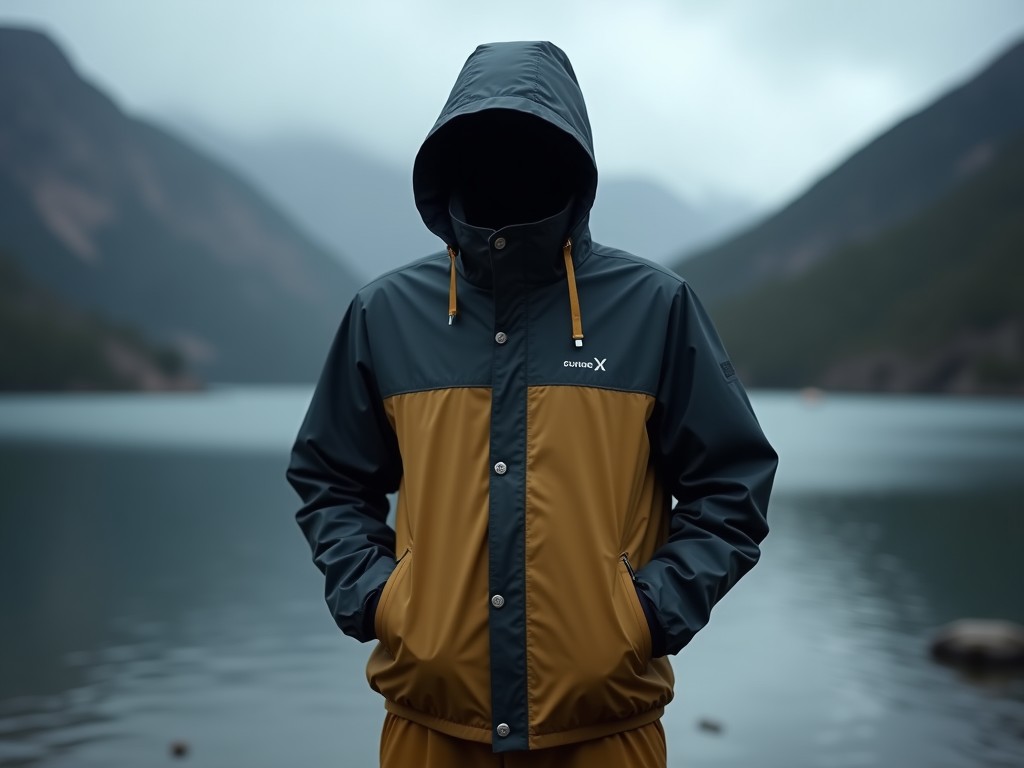
Mens Xs Waterproof Jacket
Men's XS Waterproof Jacket
Selecting appropriate outerwear for demanding work environments requires precise technical evaluation. This section outlines the core engineering characteristics that define performance in a men's XS waterproof jacket designed for industrial applications.
Material Composition and Waterproofing Mechanism
The jacket utilizes a three-layer laminate system where the outer shell consists of 100% nylon ripstop with a denier rating of 70D, providing tear resistance exceeding 25N in both warp and weft directions according to ASTM D5034. The middle layer is a microporous polyurethane membrane with a pore size of 0.2μm, enabling water vapor transmission rates (MVTR) of at least 8,000 g/m²/24h while maintaining a hydrostatic head rating of 15,000mm under ISO 811 testing. The inner layer is a brushed polyester grid liner weighing 40g/m², designed to reduce skin friction and enhance moisture wicking through capillary action.
Seam Construction and Seal Integrity
All seams are sealed using 20mm wide polyurethane tape applied via heat bonding at 180°C, achieving a peel strength of 8N/cm as measured by ASTM D903. Seam placement follows ergonomic mapping to avoid high-stress zones such as the shoulder apex and underarm gussets, where strain concentrations can exceed 40% of maximum tensile load during dynamic movement. Stitch density is maintained at 8 stitches per inch using polyester thread with a tensile strength of 6.5cN/tex, minimizing needle hole leakage while preserving flexibility.
Fit Specification and Mobility Engineering
The XS size is defined by a chest circumference of 84cm ±2cm, sleeve length of 60cm ±1cm from center back neck to cuff, and back length of 68cm ±1.5cm, graded using ISO 8559-1 anthropometric data for the 5th percentile male silhouette. Articulated elbows feature a 15-degree pre-bend radius to reduce fabric fatigue during repeated flexion, while underarm gussets are cut as 5cm diamond inserts to maintain 120° of shoulder abduction without binding. The hem incorporates a 25mm elastic drawcord with a lock toggle, adjustable to ±3cm tension to prevent ride-up during overhead tasks.
Functional Design Elements for Industrial Use
The jacket includes two external chest pockets with water-resistant zippers rated IPX7, each providing 120cm³ internal volume and reinforced with bar-tack stitching at stress points. Interior storage comprises a single Napoleon pocket with 80cm³ capacity and a media port compatible with 3.5mm jack cables. Ventilation is managed through two underarm zippers with 10cm chain length, protected by storm flaps overlapping 15mm to maintain waterproof integrity while allowing convective cooling. Reflective trim consists of 50mm wide silver glass bead tape positioned at 360° intervals on sleeves and torso, meeting EN ISO 20471 Class 2 visibility requirements when illuminated.
Performance Validation and Environmental Resistance
Beyond baseline waterproofing, the jacket undergoes cyclic testing involving 100 wash cycles at 40°C followed by tumble drying, after which hydrostatic head retention exceeds 12,000mm. UV stability is evaluated per ISO 4892-3, showing less than 5% tensile strength degradation after 500 hours of xenon arc exposure. Chemical resistance testing against common industrial agents (diluted acids, alkalis, and oils) confirms no delamination or membrane degradation after 24-hour immersion at 23°C. The product maintains flexibility down to -20°C as measured by low-temperature bend testing per ASTM D2136.
Typical Applications in Industrial Settings
This configuration is particularly suited for personnel requiring mobility and weather protection in confined spaces such as utility maintenance, telecommunications tower work, and offshore platform inspections where wind-driven rain and spray are prevalent. The XS frame accommodates layering under harnesses or tool belts without compromising range of motion, while the streamlined profile reduces snag hazards on protrusions or equipment. In environments with fluctuating thermal loads, the breathability index prevents microclimate buildup during intermittent activity, reducing the risk of conductive heat loss during rest phases.
| Performance Parameter | Typical Value | Test Standard |
|---|---|---|
| Hydrostatic Head | 15,000mm | ISO 811 |
| Moisture Vapor Transmission Rate (MVTR) | ≥8,000 g/m²/24h | ASTM E96 BW |
| Tear Strength (Warp/Weft) | >25N | ASTM D5034 |
| Seam Peel Strength | 8N/cm | ASTM D903 |
| Reflective Trim Classification | EN ISO 20471 Class 2 | EN ISO 20471 |
For procurement teams evaluating protective outerwear, understanding the interplay between material science, seam integrity, and ergonomic design is critical to minimizing field failure risks. This jacket’s specifications are derived from controlled testing protocols and real-world wear trials, ensuring that performance metrics reflect achievable outcomes rather than theoretical ideals. When specifying garments for personnel exposed to prolonged wet conditions, prioritizing verified hydrostatic head retention, breathability equilibrium, and dimensional stability under cyclic stress provides a measurable basis for comparison.