
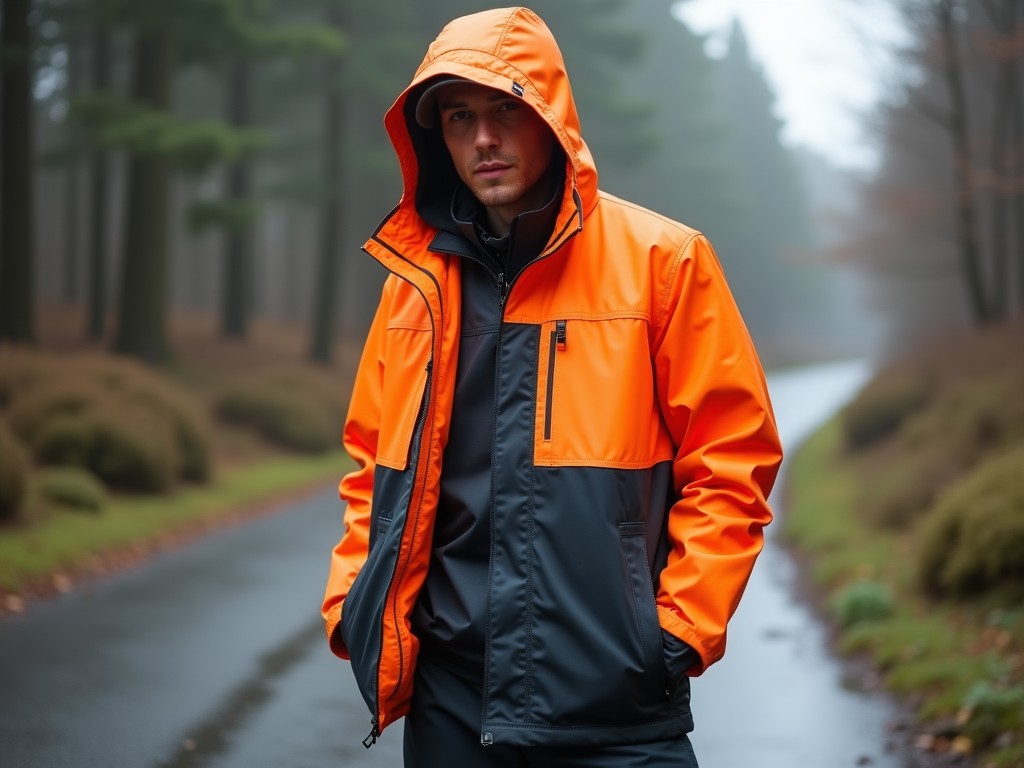
Mens Waterproof Trousers Sale
Men's Waterproof Trousers: Technical Overview for Industrial Applications
Industrial environments demand workwear that maintains protection without compromising mobility or durability. Waterproof trousers designed for professional use must balance fabric integrity, seam sealing, and ergonomic fit to withstand prolonged exposure to moisture, abrasion, and variable temperatures. This page details the technical characteristics that determine suitability for sectors such as utilities, construction, transportation, and outdoor maintenance.
Selection criteria should prioritize measurable performance attributes over subjective claims. Key factors include hydrostatic head rating, seam construction methodology, breathability metrics, and material composition—all of which directly influence service life and user safety in wet conditions.
Material Composition and Performance Characteristics
The outer shell typically employs a nylon or polyester base fabric coated with a microporous polyurethane (PU) or polytetrafluoroethylene (PTFE) membrane. These coatings achieve hydrostatic head ratings between 5,000 mm and 20,000 mm, indicating the water pressure the fabric can resist before leakage occurs. For reference, 5,000 mm suffices for light rain and splashes, while 15,000 mm+ is required for sustained exposure in heavy precipitation or pressurized washdown environments.
Breathability, measured in grams of moisture vapor transmitted per square meter over 24 hours (g/m²/24h), ranges from 3,000 to 15,000 depending on membrane technology. Higher values reduce internal condensation during physical exertion, a critical factor in preventing heat stress and maintaining comfort during extended wear. Fabrics with polyurethane coatings often prioritize durability over peak breathability, whereas PTFE-based membranes offer superior vapor transfer but may require careful handling to avoid abrasion damage.
Reinforcements at high-wear zones—such as the knees, seat, and cuffs—commonly use nylon oxford or Cordura® blends with denier ratings between 500D and 1000D. These additions increase tear resistance by 40–60% compared to base fabric alone, significantly extending service life in environments involving kneeling, crawling, or contact with rough surfaces.
Seal Integrity and Construction Methods
Waterproof performance depends not only on fabric resistance but also on seam integrity. Industrially graded trousers use fully taped seams, where a waterproof polyurethane tape is heat-bonded over stitched joints to eliminate capillary pathways. The tape width typically ranges from 20mm to 25mm, ensuring full coverage over stitch lines while maintaining flexibility.
Stitch density and thread type further influence durability. Lockstitch construction with UV-stabilized polyester thread (size 40 or 60) is standard, providing tensile strength exceeding 4.5 N/tex and resistance to hydrolysis. Some models incorporate double or triple stitching in stress areas, increasing seam strength by up to 30% compared to single-stitch alternatives.
Critical design elements include storm flaps over zippers, adjustable cuffs with hook-and-loop closures, and reinforced belt loops. Zippers are often coated with water-resistant finishes or protected by storm flaps to prevent water ingress through the teeth. These features collectively reduce failure points in dynamic work scenarios.
Ergonomic Design and Functional Features
Fit and articulation directly affect usability in active industrial roles. Trousers designed for mobility incorporate articulated knees, gusseted crotches, and tapered ankle cuts to prevent snagging while maintaining a full range of motion. Inseam lengths typically range from 76cm to 86cm, with adjustable hem systems allowing customization for boot compatibility.
Pocket configuration varies by application. Utility models often include reinforced cargo pockets with flap closures and drainage eyelets to prevent water accumulation. Some designs feature internal mesh pockets for storing gloves or safety gear, keeping contents dry and accessible. Reflective trims, compliant with EN ISO 20471 standards, may be integrated into leg bands or knee patches for low-visibility environments.
Waist adjustment systems range from elasticized backs with belt loops to full side adjusters with buckles. The latter allows precise tightening without restricting movement, particularly beneficial when wearing layered clothing or harnesses. Internal suspenders buttons are included in certain models to support load-bearing configurations.
Comparison of Common Waterproofing Technologies
| Technology | Typical Hydrostatic Head (mm) | Breathability (g/m²/24h) | Abrasion Resistance (Cycles) | Common Use Case |
|---|---|---|---|---|
| PU-Coated Nylon/Polyester | 5,000–10,000 | 3,000–8,000 | 15,000–25,000 | General maintenance, light construction |
| PU Laminate with Reinforcement | 10,000–15,000 | 5,000–10,000 | 20,000–35,000 | Utilities, roadwork, forestry |
| PTFE Membrane (e.g., ePTFE) | 15,000–20,000+ | 10,000–15,000+ | 10,000–18,000* | High-exposure environments, cold-weather work |
| Hybrid PU/PTFE Laminate | 12,000–18,000 | 8,000–12,000 | 25,000–40,000 | Demanding industrial applications |
*Note: PTFE membranes may require protective outer layers to achieve stated abrasion resistance; values shown assume composite construction.
Quality Assurance and Testing Protocols
Manufacturing consistency is validated through standardized testing. Hydrostatic head resistance is measured per ISO 811, with test specimens subjected to increasing water pressure until three points of leakage are observed. Breathability is evaluated using ISO 11092 (sweating guarded hotplate), quantifying evaporative resistance under controlled humidity and temperature gradients.
Abrasion resistance follows ISO 12947-2 (Martindale method), where fabric samples are abraded against standard wool felt until thread breakage occurs. Seam strength is tested via ISO 13935-2, measuring the force required to rupture a sewn seam perpendicular to the stitch line. Results are reported in Newtons (N), with values above 60 N generally considered acceptable for industrial workwear.
Colorfastness to washing, light, and rubbing is assessed per ISO 105 series, ensuring visibility features and reflective elements maintain compliance over time. Batch-to-batch variation is monitored through regular sampling, with tolerance limits set for hydrostatic head (±500 mm) and breathability (±10%) to ensure predictable performance.
Applications Across Industrial Sectors
In utility work, waterproof trousers protect technicians during meter reading, line inspection, and substation maintenance in adverse weather. The combination of water resistance and breathability prevents overheating during physical tasks while shielding against rain, spray, and ground moisture. Kneepad compatibility is often required for prolonged cable trenching or valve access work.
Construction crews use these garments during concrete pouring, roofing, and exterior cladding installation where exposure to rain, washdowns, or damp substrates is common. Reinforced cuffs and ankle zippers facilitate quick removal over boots, while high-visibility trims enhance safety near moving equipment. The ability to layer over flame-resistant base garments extends usability in multi-hazard environments.
Transportation and logistics personnel rely on waterproof trousers during loading/unloading operations, vehicle inspections, and outdoor maintenance in rail, maritime, and aviation contexts. Resistance to wind-driven rain and spray, coupled with durability against abrasion from cargo handling, ensures consistent performance. Pocket layouts are often tailored to hold tools, radios, or documentation without compromising waterproof integrity.
For technical specifications, customization options, or to request a quotation based on your operational requirements, please contact our engineering team.
Request Technical Consultation