
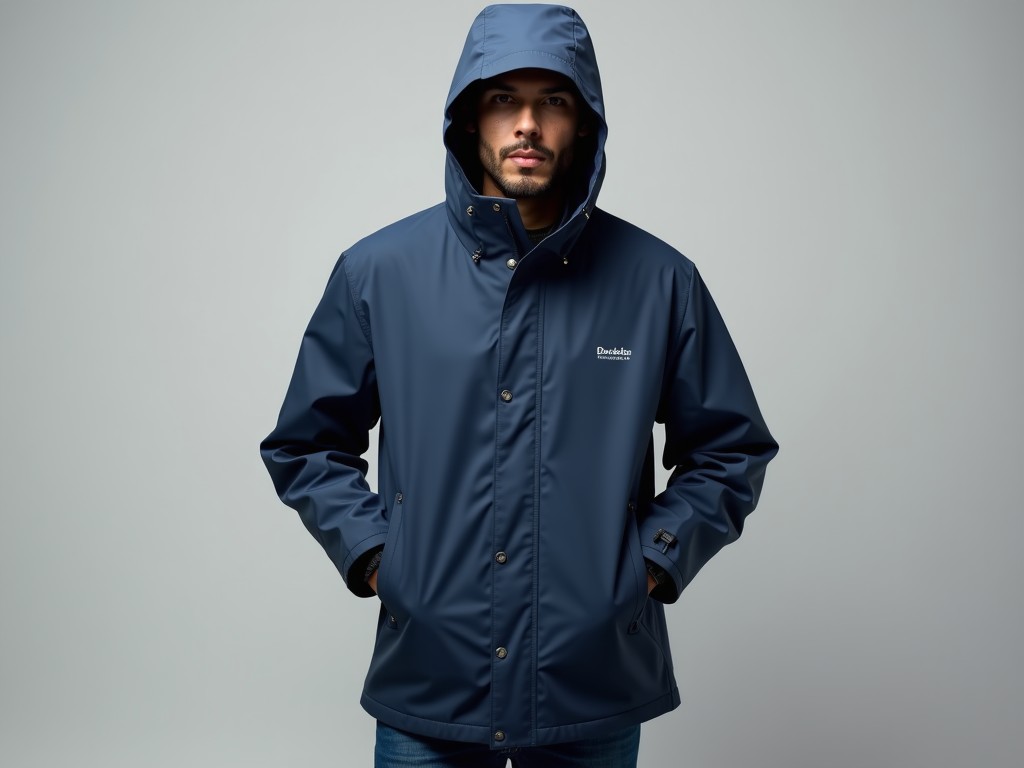
Mens Waterproof Jacket Sale Source Factory
Mens Waterproof Jacket Sale Source Factory
This page details the technical specifications, manufacturing considerations, and procurement-relevant information for men's waterproof jackets sourced directly from production facilities. The content focuses on measurable attributes, material science, and quality control processes to support informed purchasing decisions.
Core Waterproofing Technologies
Waterproof performance in industrial jackets is achieved through either laminated membranes or durable water-repellent (DWR) treatments applied to outer fabrics. Common membrane types include polyurethane (PU) coatings with hydrostatic head ratings typically ranging from 5,000mm to 20,000mm, indicating the water pressure the fabric can withstand before leakage. Microporous membranes such as expanded polytetrafluoroethylene (ePTFE) offer breathability ratings exceeding 10,000g/m²/24h while maintaining complete waterproof integrity. Factory-applied DWR finishes, often based on fluoropolymer or silicone chemistry, reduce surface tension to cause water beading and runoff, though their effectiveness diminishes with abrasion and requires periodic reactivation.
Fabric Construction and Layering
Three-layer laminate constructions bond an outer face fabric, waterproof membrane, and inner protective scrim or tricot lining into a single unit, eliminating internal movement and enhancing durability. Two-layer systems attach the membrane only to the outer fabric, with a separate hanging liner, offering lower cost but potential for delamination over time. Face fabrics are commonly nylon 6,6 or polyester with denier ratings between 70D and 150D, providing tear strength values from 15N to 40N (ASTM D2261). Inner linings may include mesh for ventilation or solid fabrics for added abrasion resistance, selected based on end-use conditions such as industrial maintenance, logistics, or outdoor utilities work.
Seam Sealing and Joint Integrity
Critical seam sealing prevents water ingress through stitch holes using heat-activated thermoplastic tapes applied over sewn seams. Factory sealing typically uses polyurethane or polyester-based tapes with widths of 20mm, applied at temperatures between 120°C and 140°C under controlled pressure. Seal strength is measured by peel adhesion (ASTM D903), with values exceeding 2.0 N/mm considered reliable for long-term exposure. Fully taped seams cover all stitched joints, while critically taped versions focus on high-exposure areas like shoulders, hoods, and cuffs, balancing protection with cost and flexibility.
Closure and Ventilation Systems
Front closures commonly use coil or molded plastic zippers with storm flaps overlapping by at least 25mm to prevent wind-driven water entry. Zipper teeth are often coated with hydrophobic finishes, and sliders include drainage channels to resist corrosion. Underarm ventilation zippers, when present, typically span 20cm to 30cm and are covered with water-resistant flaps to maintain integrity during use. Adjustable cuffs employ hook-and-loop closures or elastic inserts with adjustment ranges of 25mm to 40mm, while hem drawcords use cord locks with tensile strength ratings exceeding 50N to prevent slippage under load.
Quality Control and Testing Protocols
Factory quality assurance includes hydrostatic head testing (ISO 811) on finished garments, not just raw fabric, to account for seam and construction effects. Acceptance criteria often require minimum 10,000mm resistance after three wash cycles per ISO 6330. Breathability is verified via upright cup method (ASTM E96) with results reported in g/m²/24h. Colorfastness to washing (ISO 105 C06) and light (ISO 105 B02) is assessed, with ratings of 4 or higher on the gray scale indicating acceptable durability. Dimensional stability is checked after washing, with shrinkage limits typically set below 3% for both length and width.
Customization and Manufacturing Flexibility
Source factories accommodate modifications to standard patterns, including sleeve length adjustments (±25mm), torso taper changes, and hood dimension alterations. Custom color matching is available using Pantone references with dye lot tolerances of ΔE < 2.0 under D65 lighting. Logo application methods include screen printing, heat transfer, or embroidery, with placement guided by client specifications. Minimum order quantities for customized runs often start at 300 units per style, though this varies based on fabric inventory and complexity of changes.
Packaging and Logistics Preparation
Finished jackets are typically folded to dimensions of 30cm x 40cm x 5cm and packed in polybags with thickness of 50μm, then placed in export cartons measuring 50cm x 40cm x 30cm. Carton strength is specified by burst test (ISO 2758) with minimum values of 275 kPa. Each carton includes a packing list detailing SKU, size breakdown, and quantity. For moisture protection during transit, desiccant packets (silica gel, 5g per unit) are often included, and cartons are sealed with pressure-sensitive tape of 48mm width and adhesion strength exceeding 8N/cm.
| Parameter | Typical Range / Value | Test Standard |
|---|---|---|
| Hydrostatic Head | 5,000 – 20,000 mm | ISO 811 |
| Breathability (MVTR) | 5,000 – 15,000 g/m²/24h | ASTM E96 |
| Face Fabric Tear Strength | 15N – 40N | ASTM D2261 |
| Seam Seal Peel Adhesion | > 2.0 N/mm | ASTM D903 |
| Zipper Lateral Strength | > 80N | ASTM D2061 |
| Colorfastness to Washing | Gray Scale ≥ 4 | ISO 105 C06 |
For procurement teams evaluating suppliers, requesting test reports from recent production batches provides verifiable data on actual performance rather than relying solely on material certifications. Factories that maintain in-house testing capabilities for hydrostatic head, breathability, and seam seal integrity demonstrate greater control over outgoing quality. When comparing quotations, ensure that specifications include details on seam taping coverage, liner attachment method, and zipper type, as these elements significantly affect long-term usability in demanding environments.