
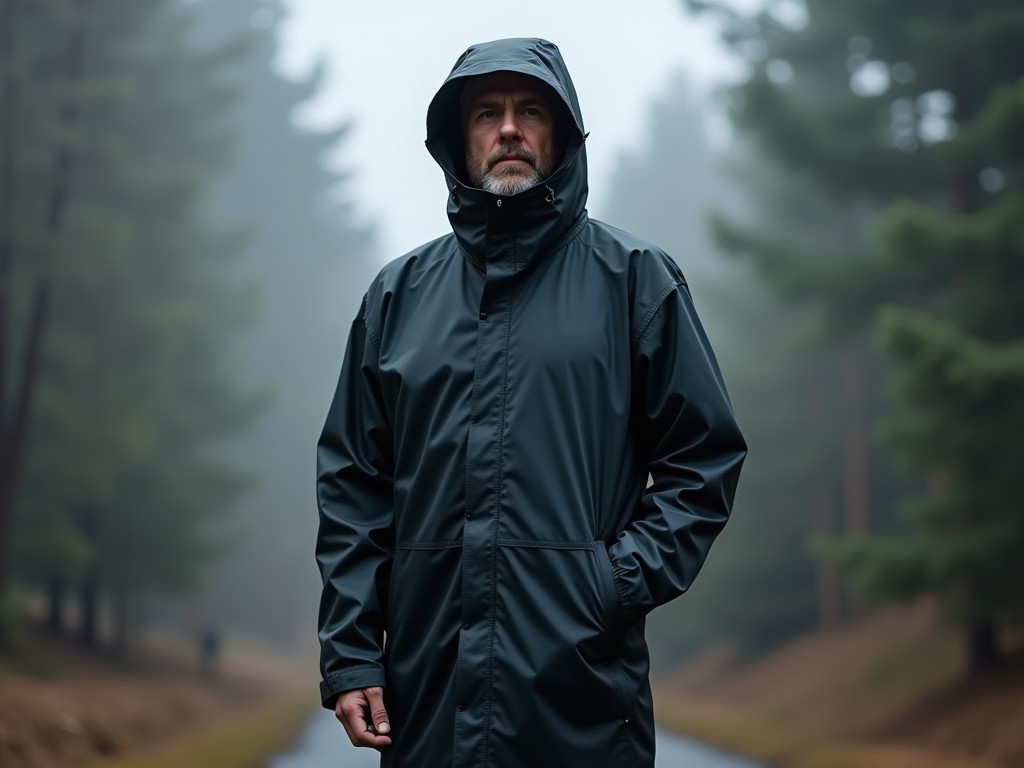
Mens Waterproof Jacket Long
Men's Waterproof Jacket Long
Industrial-grade long-length waterproof jackets for men are engineered to provide sustained protection against prolonged exposure to precipitation, wind, and low temperatures in demanding work environments. These garments integrate advanced membrane technologies, seam sealing protocols, and ergonomic patterning to maintain wearer comfort and mobility while preventing water ingress over extended operational periods. Selection criteria focus on hydrostatic head ratings, breathability metrics, and material durability under cyclic stress—factors critical for minimizing downtime and ensuring consistent performance in sectors such as construction, utilities, transportation, and outdoor maintenance.
Technical Construction and Material Systems
The primary barrier against water penetration is typically a microporous or hydrophilic laminate bonded to a durable outer shell fabric. Common shell materials include nylon 6,6 ripstop or polyester Oxford weaves with denier ratings between 150D and 300D, selected for abrasion resistance and tear strength. The membrane layer—often polyurethane (PU) or expanded polytetrafluoroethylene (ePTFE)—provides hydrostatic head resistance ranging from 5,000 mm to over 20,000 mm, measured under ISO 811 standards. Seams are sealed using heat-activated thermoplastic polyurethane (TPU) tapes applied via ultrasonic or hot-air welding to achieve leak-free integrity at stitch lines, which are otherwise vulnerable points in waterproof construction.
Breathability is quantified through moisture vapor transmission rate (MVTR), expressed in grams per square meter per 24 hours (g/m²/24h). Industrial applications frequently require MVTR values exceeding 5,000 g/m²/24h to manage perspiration during moderate activity, preventing internal condensation buildup that compromises thermal regulation. Laminate constructions may incorporate a protective inner lining—such as brushed polyester or mesh—to shield the membrane from abrasion and enhance next-to-skin comfort. The long cut, typically extending to mid-thigh or knee level, increases coverage without sacrificing articulation, achieved through gusseted underarms, articulated elbows, and a dropped rear hem.
Performance Specifications and Testing Protocols
Waterproof performance is validated through hydrostatic head testing, where increasing water pressure is applied to the fabric surface until leakage occurs. A rating of 10,000 mm indicates the material can withstand a 10-meter column of water before seepage begins—suitable for heavy rain and standing water exposure. Wind resistance is assessed via air permeability measurements (ISO 9237), with values below 5.0 l/m²/s indicating effective wind blocking. Thermal performance, while secondary to waterproofing, is influenced by insulation layers or liner systems; however, many industrial models prioritize shell-only designs to allow layering flexibility based on ambient conditions and work intensity.
Abrasion resistance is evaluated using the Martindale test (ISO 12947), with target values exceeding 20,000 cycles for high-wear areas like shoulders and elbows. Tear strength follows ISO 9073-4, typically requiring minimum values of 20 N in both warp and weft directions to resist propagation from snags or punctures. Colorfastness to light (ISO 105-B02) and washing (ISO 105-C06) ensures visual integrity and professional appearance over repeated industrial laundering cycles. All specifications are subject to verification via third-party testing or internal quality control protocols aligned with ISO 9001 manufacturing standards.
Design Features for Operational Utility
Functional details are engineered to support prolonged use in variable conditions. Adjustable storm flaps with hook-and-loop or snap closures protect zippers from water ingress while maintaining accessibility. Zippers themselves are often coated or laminated with polyurethane to enhance water resistance, complemented by drain holes at the base to prevent water accumulation. Cuffs incorporate internal gaiters with adjustable hook-and-loop tabs to seal against gloves or sleeves, reducing water runoff into the garment. The hood, when present, is designed for helmet compatibility, featuring a rigid brim, vertical adjustment, and peripheral drawcords to maintain visibility and seal in high-wind scenarios.
Pocket configuration emphasizes utility and security. Chest pockets with water-resistant zippers allow access to radios or devices without removing outer layers. Lower pockets may include vertical drainage grommets to expel water that enters during use. Reflective trim, compliant with ANSI/ISEA 107 standards for high-visibility applications, is integrated into strategic locations such as shoulders, sleeves, and back panels to enhance low-light detectability without compromising the waterproof barrier. All trims and accessories are selected for compatibility with the base fabric’s care requirements, ensuring they do not delaminate or degrade during cleaning.
Applications Across Industrial Sectors
In utility work, long waterproof jackets protect line workers and technicians during storm-related repairs, where prolonged exposure to rain and wind is common. The extended length prevents water from reaching inner layers when bending or reaching overhead, maintaining dryness and reducing hypothermia risk. In transportation and logistics, these garments shield drivers and dock personnel during loading/unloading operations in open yards or during inclement weather, allowing uninterrupted workflow without the need for frequent shelter breaks.
Construction crews engaged in exterior concrete pouring, roofing, or facade installation benefit from the jacket’s ability to shed water while accommodating tool belts and harnesses. The durable shell resists abrasion from rough surfaces and equipment contact. For municipal services—such as waste collection, road maintenance, or park management—the long cut provides coverage during prolonged outdoor shifts, especially in early morning or evening hours when temperatures are lowest. The garment’s breathability prevents overheating during physical exertion, a critical factor in maintaining worker comfort and focus.
| Parameter | Typical Range | Test Standard |
|---|---|---|
| Hydrostatic Head | 5,000 – 20,000 mm | ISO 811 |
| MVTR (Breathability) | 3,000 – 10,000 g/m²/24h | ISO 11092 |
| Abrasion Resistance | >20,000 cycles | ISO 12947 (Martindale) |
| Tear Strength | >20 N (warp/weft) | ISO 9073-4 |
| Air Permeability | < 5.0 l/m²/s | ISO 9237 |
Customization and Integration Options
Industrial buyers often require adaptations to align with specific operational protocols or corporate branding. Shell fabric color can be selected from standard industrial palettes—including navy, black, gray, or high-visibility yellow/orange—to meet site safety regulations or corporate identity requirements. Reflective tape width, placement, and compliance level (e.g., ANSI/ISEA 107 Class 2 or 3) are adjustable based on risk assessment outcomes. Zipper type—coil, molded plastic, or metal—can be specified according to environmental exposure, with metal options preferred in high-heat or spark-risk environments despite slightly lower water resistance.
Additional features such as internal ID badge loops, radio loops, or specialized pocket configurations (e.g., for thermal imaging devices or gas detectors) can be integrated during prototyping. Liner systems—removable fleece, insulated quilted, or mesh—may be offered as modular components to extend seasonal usability. All customizations are subject to minimum order quantities and tooling considerations, with lead times varying based on complexity. Prototyping and sample evaluation are recommended to validate fit, function, and compatibility with existing PPE ensembles before full-scale procurement.
Quality Assurance and Lifecycle Considerations
Consistent performance relies on rigorous material inspection and process control throughout manufacturing. Incoming shell fabrics are tested for hydrostatic head and tensile strength before lamination. Membrane adhesion is verified via peel strength tests (ASTM D903) to ensure long-term bond integrity under flexing and washing cycles. Seam sealing effectiveness is validated through hydrostatic pressure testing on sealed seams, with acceptable leak rates defined as zero penetration under specified pressure. Final garment inspection includes dimensional checks, seam integrity verification, and functional testing of closures and accessories.
Care instructions significantly influence service life. Industrial laundering—when permitted—should avoid fabric softeners, bleach, and high-temperature drying, which can degrade membranes and seam tapes. Recommended cleaning typically involves mild detergents at 30–40°C, followed by tumble drying on low heat or air drying to reactivate DWR (durable water repellent) treatments where applicable. Storage in cool, dry conditions away from direct sunlight prevents UV degradation and membrane brittleness. With proper maintenance, a well-constructed industrial waterproof jacket can maintain protective performance for 2–5 years of regular use, depending on exposure severity and maintenance adherence.