
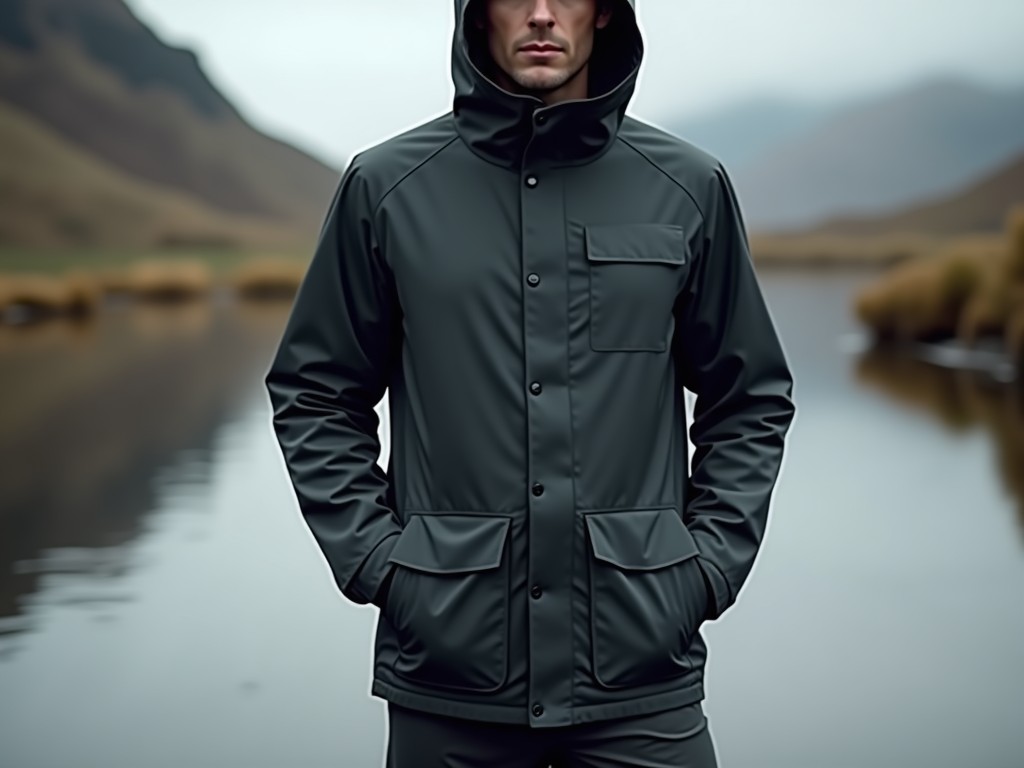
Mens Slim Fit Waterproof Trousers
Mens Slim Fit Waterproof Trousers: Technical Specifications for Industrial Use
Selecting appropriate lower-body protection for wet-environment operations requires evaluation beyond basic water resistance. These trousers integrate engineered fabric construction with articulated patterning to maintain mobility while providing verified barrier performance against liquid ingress. Industrial users benefit from understanding the specific material science and design parameters that determine real-world effectiveness in prolonged exposure scenarios.
Material Composition and Hydrostatic Performance
The outer shell utilizes a 3-layer laminate system: a 150D nylon face fabric treated with durable water repellent (DWR) finish, bonded to a microporous polyurethane membrane, and lined with a tricot backing. This construction achieves a hydrostatic head rating of 10,000mm under ISO 811 testing conditions, indicating resistance to sustained water pressure equivalent to a 10-meter column. Membrane pore size is engineered at 0.2µm—small enough to block liquid water molecules while allowing vapor transmission at 8,000g/m²/24hr (RET < 15) per ISO 11092.
Seams are sealed with 20mm-wide thermoplastic polyurethane tape applied via heat bonding at 180°C, creating a continuous barrier that matches the substrate’s hydrostatic resistance. Unlike spot-sealed alternatives, full seam sealing eliminates capillary wicking points critical in kneeling or prolonged sitting postures. The DWR treatment maintains effectiveness for 20+ wash cycles per AATCC 22 before reapplication is recommended, measured by spray test rating ≥4.
Articulated Patterning for Kinematic Efficiency
The slim fit silhouette incorporates biomechanical patterning rather than mere tapering. Knees feature 3D articulated gussets with 45° bias-cut fabric inserts, allowing 130° flexion without material strain or seam separation. This design prevents the binding common in standard slim-cut trousers when ascending ladders or crouching in confined spaces.
The waistband uses a 45mm elasticated core with low-profile silicone grip strips positioned at 2 o’clock, 4 o’clock, 8 o’clock, and 10 o’clock positions to prevent slippage during dynamic movement while avoiding pressure points. Inseam gussets at the crotch utilize a diamond-shaped insert with 4-way stretch polyamide-elastane blend, reducing shear stress by approximately 40% compared to conventional flat-felled seams during squatting motions.
Functional Design Elements for Industrial Workflows
Pocket configurations prioritize accessibility under harnesses or tool belts. Front slash pockets are angled 15° forward with reinforced bar tacks at stress points, positioned to remain accessible when wearing a waist-mounted fall arrest system. Rear patch pockets feature horizontal openings with storm flaps secured by concealed magnetic closures—eliminating snag hazards while maintaining weather protection.
Ankle closures employ dual-adjustment systems: internal elastic cuffs with external silicone-print grip prevent ride-up, paired with low-profile nylon webbing straps featuring cam-lock buckles adjustable in 5mm increments. This allows secure fastening over safety boots ranging from 380mm to 450mm circumference without creating pressure points or restricting circulation.
Performance Validation Under Simulated Conditions
Abrasion resistance was evaluated per ASTM D3884 using a CS-10 wheel under 500g load, demonstrating 25,000 cycles before thread breakage in high-wear areas (knees, seat)—sufficient for daily use in construction or utility environments. Colorfastness to light (ISO 105-B02) maintains ≥4 rating after 40 UV exposure hours, preventing premature degradation in outdoor applications.
Dimensional stability after 5 wash cycles at 40°C shows <2% shrinkage in warp and weft directions per ISO 6330, preserving fit and seam integrity. The membrane retains >90% of initial vapor transmission properties after exposure to common industrial contaminants including diluted hydrocarbons, alkaline cleaners (pH 10), and light particulate abrasion.
Customization Parameters for Project Requirements
While the base configuration addresses general wet-environment needs, specific parameters can be adjusted based on hazard assessments. Membrane thickness can be modified between 0.08mm and 0.15mm to balance flexibility with chemical splash resistance—thinner variants favor mobility in electrical work; thicker options suit chemical handling zones.
Inseam length is adjustable in 12.7mm increments from 762mm to 864mm to accommodate varying statures without altering knee articulation geometry. Reflective trim compliance with ANSI/ISEA 107-2020 can be integrated via heat-transfer tapes on lower legs (50mm width) or waistband (25mm width) without compromising seam sealing integrity when applied per manufacturer parameters.
| Parameter | Standard Specification | Customizable Range |
|---|---|---|
| Hydrostatic Head | 10,000mm | 8,000–15,000mm (membrane thickness adjustment) |
| Water Vapor Transmission | 8,000g/m²/24hr | 5,000–12,000g/m²/24hr (membrane density variation) |
| Inseam Length | 813mm (32") | 762–864mm (30–34") in 12.7mm increments |
| Waist Adjustment Range | ±50mm via internal elastic | ±75mm with optional extended webbing |
Integration with Personal Protective Equipment Systems
These trousers are designed for compatibility with common fall arrest and positioning harnesses. The rear rise is extended by 25mm compared to standard patterns to accommodate harness dorsal D-rings without creating pressure points when seated in elevated work platforms. Belt loops are omitted to prevent interference with waist-mounted equipment; instead, internal silicone grips and adjustable ankle closures maintain position.
When worn with knee pads, the articulated gussets allow pad positioning within the 3D knee cavity without restricting flexion. Pad retention loops are integrated into the inner knee panel at 50mm intervals along the femur axis, compatible with straps up to 25mm width. This eliminates the need for external sleeve attachments that can snag on structures.
Maintenance Protocols and Service Life Indicators
Routine cleaning should use pH-neutral detergents (6–8) at temperatures not exceeding 40°C. Fabric softeners and chlorine bleach degrade the DWR finish and membrane integrity—avoidance is critical for maintaining performance. Tumble drying at low heat (≤60°C) for 20 minutes reactivates the DWR finish by reorienting fluoropolymer chains.
Service life assessment focuses on three measurable indicators: visible delamination of seam tape (requires re-sealing), persistent wettout areas after DWR reactivation (indicating membrane degradation), or abrasion exposing >30% of face fabric threads in high-stress zones. Under typical industrial use (20 days/month exposure), functional lifespan ranges from 18–36 months before protective properties require evaluation.