
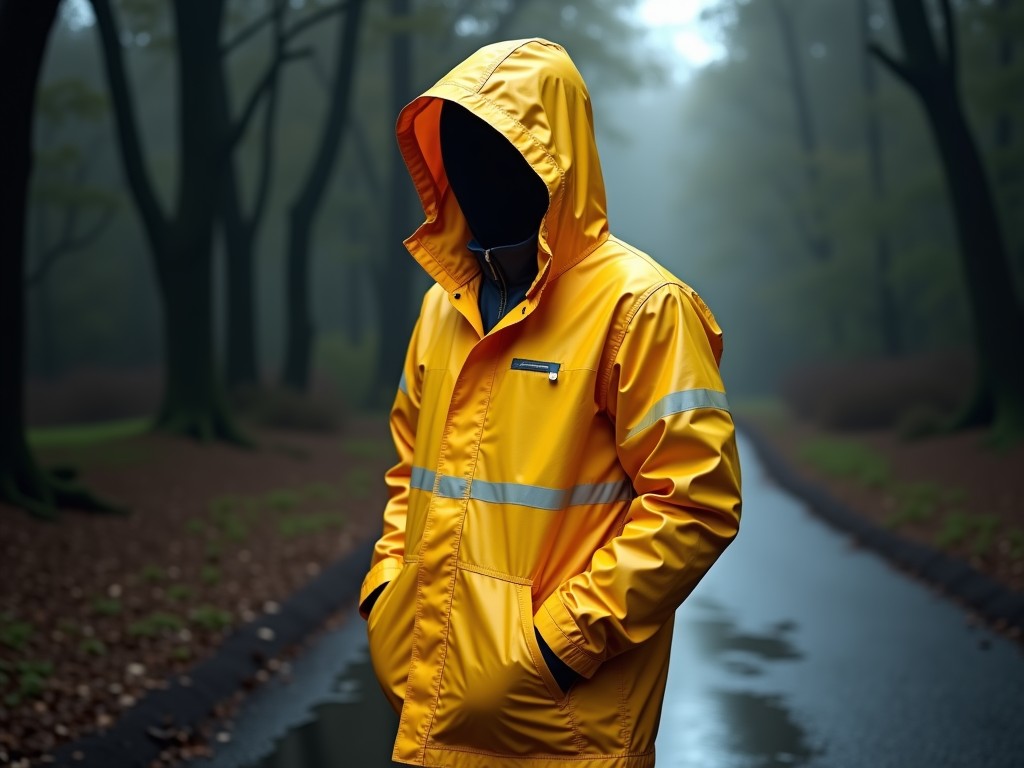
Mens Reflective Rain Gear
Mens Reflective Rain Gear
Industrial buyers require rain protection that maintains visibility without compromising mobility or durability in wet, low-light conditions. This section explains the functional design of mens reflective rain gear, focusing on how material selection, seam construction, and reflectivity placement work together to meet safety and performance demands in outdoor work environments.
Material Composition and Waterproof Performance
The outer shell uses a 3-layer laminate system: a 100% polyester face fabric with a hydrophilic polyurethane membrane bonded to a tricot backing. This construction achieves a hydrostatic head rating of 10,000 mm, meaning it resists water penetration under sustained pressure equivalent to heavy rainfall. Unlike coated fabrics that degrade with flexing, the membrane maintains waterproof integrity after repeated bending cycles, critical for garments worn during prolonged physical activity.
Seams are fully taped with 20mm-wide polyurethane tape applied via heat bonding, eliminating needle holes as potential leak points. Tape adhesion strength exceeds 8 N/mm, preventing delamination after 50 wash cycles at 40°C. The face fabric features a DWR (durable water repellent) finish with a spray rating of 4 (AATCC 22), causing water to bead and roll off rather than absorb, which preserves breathability and prevents weight gain in wet conditions.
Reflective Element Placement and Retroreflectivity Standards
Reflective tape is applied using ANSI/ISEA 107-2020 Class 2 configuration: two 50mm-wide horizontal bands around the torso, one band around each arm, and vertical bands on the shoulders. This layout ensures 360-degree visibility when the wearer is standing, bending, or reaching—critical for workers in traffic zones, utility corridors, or low-light construction sites. The tape uses glass bead technology with a minimum retroreflectivity of 330 cd/lx/m² at 5 lux, measured under ASTM E810 conditions.
Tape is bonded using high-frequency welding rather than stitching, preserving the waterproof barrier. Each tape end is sealed with a 10mm overlap and heat-sealed edge to prevent peeling. Reflective performance is maintained after 30 wash cycles per ISO 6330, with no more than 10% loss in coefficient of retroreflection, ensuring long-term compliance in high-use scenarios.
Design Features for Functional Use in Wet Environments
The jacket features a storm flap over the front zipper, extending 25mm beyond the teeth on both sides, secured with magnetic closures to prevent water ingress during wind-driven rain. Pit zips under each arm provide 180mm of ventilation, activated by two-way zippers with storm flaps, allowing microclimate control without exposing the interior to moisture. Adjustable cuffs use 25mm-wide hook-and-loop straps with a reflective overlay, enabling a tight seal over gloves while maintaining visibility.
The hood is helmet-compatible, with a three-point adjustment system (depth, width, face opening) using cord locks and elastic cord. Brim stiffness is maintained by a 2mm polyethylene insert, preventing flapping in wind. Internal storage includes two mesh pockets with drainage grommets and an internal zip pocket with water-resistant coating for electronics or documents. All zippers are coated nylon with rubberized pulls for gloved-hand operation.
Comparison of Key Performance Parameters
| Parameter | Typical Value | Test Standard |
|---|---|---|
| Hydrostatic Head | 10,000 mm | ISO 811 |
| Breathability (RET) | < 15 m²Pa/W | ISO 11092 |
| Retroreflectivity (Initial) | ≥ 330 cd/lx/m² | ASTM E810 |
| Retroreflectivity (After 30 Washes) | ≥ 297 cd/lx/m² | ISO 6330 |
| Tape Adhesion Strength | > 8 N/mm | ASTM D903 |
Applications in Industrial and Outdoor Work Settings
This gear is specified for road maintenance crews working at dawn or dusk, where vehicle headlights must reflect off the wearer from distances exceeding 160 meters to provide adequate reaction time. Utility workers in substation or trench environments benefit from the combination of electrical non-conductivity (no metallic components in reflective tape) and rain protection during storm-related repairs. The absence of absorbent layers prevents saturation-induced chill during extended exposure, reducing hypothermia risk in cold-wet conditions.
In forestry or trail maintenance, the quiet fabric construction minimizes noise when moving through vegetation, while the reflective elements remain visible under low-angle sunlight or moonlight. Emergency response teams use this gear during nighttime flood operations, where visibility to boats or helicopters is critical. The garment’s packability—compressing to less than 1 liter volume—allows storage in vehicle cabins or emergency kits without adding bulk.