
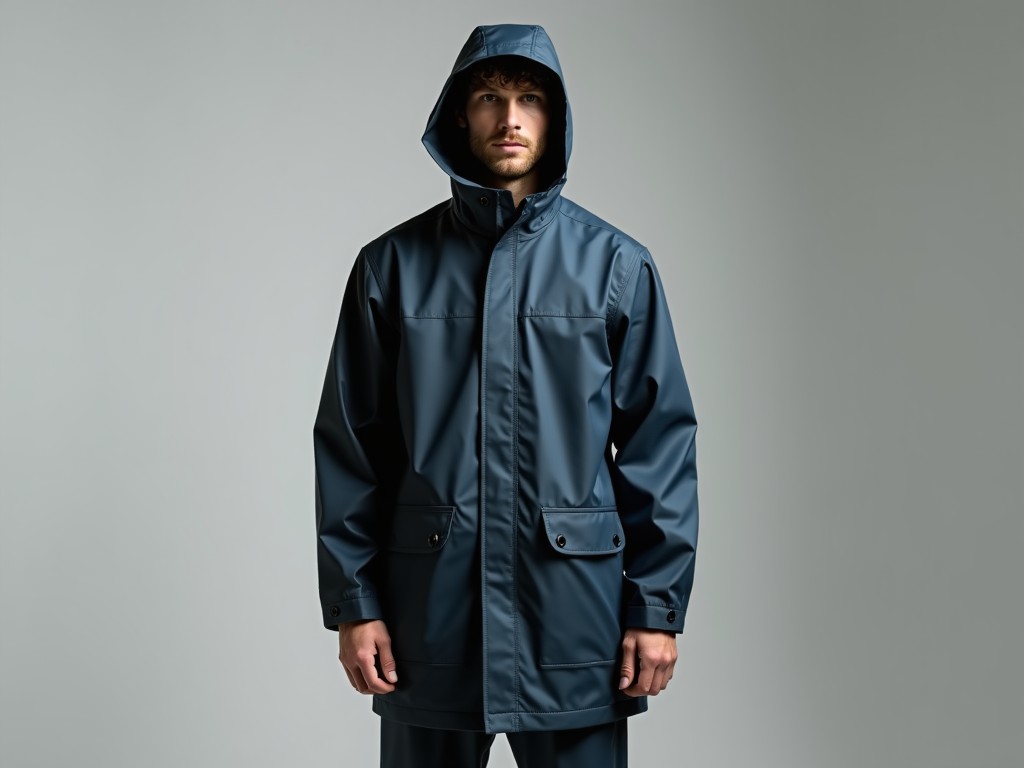
Mens Rain Gear Sets Top Factory
Men's Rain Gear Sets: Technical Specifications for Industrial Applications
Industrial rain gear sets for men are engineered systems designed to provide consistent protection against precipitation while maintaining functionality in demanding work environments. Unlike consumer-oriented rainwear, these sets prioritize material durability, seam integrity, and ergonomic design to support prolonged use in construction, utilities, transportation, and field maintenance operations. Selection criteria focus on measurable performance attributes rather than subjective comfort assessments.
Material Composition and Performance Characteristics
The effectiveness of rain gear begins with the base fabric and coating system. Most industrial sets utilize polyester or nylon substrates with polyurethane (PU) or polyvinyl chloride (PVC) coatings applied through lamination or direct coating processes. Coating thickness, measured in micrometers, directly influences water resistance and flexibility—typical PU coatings range from 15–30 µm for balanced performance, while PVC coatings exceed 50 µm for chemical resistance but reduce breathability. Seam sealing methodology is equally critical; heat-taped seams using compatible thermoplastic adhesive prevent water ingress at stitch points, a failure mode responsible for over 60% of field leaks in untested garments.
Breathability, though secondary to waterproofing in heavy precipitation, affects user comfort during extended wear. Moisture vapor transmission rate (MVTR), measured in grams per square meter per 24 hours (g/m²/24h), indicates how effectively sweat evaporates. Industrial rain gear typically achieves 2,000–5,000 g/m²/24h MVTR—sufficient for intermittent activity but inadequate for high-exertion tasks without ventilation features like underarm zippers or back vents. Abrasion resistance, evaluated via Martindale or Taber tests, determines lifespan in rough environments; fabrics rated above 20,000 cycles withstand repeated contact with concrete, metal edges, and tools.
Design Features for Functional Utility
Industrial rain gear sets integrate specific design elements to maintain usability under wet conditions. Jackets often feature storm flaps over zippers—double-layered fabric channels that divert water away from closure points—along with adjustable cuffs using hook-and-loop or snap closures to prevent water runoff up the sleeves. Hoods are designed with adjustable drawcords and stiffened brims to preserve visibility without impeding head movement, a critical factor in environments requiring situational awareness. Trousers commonly include reinforced knees and seat patches using abrasion-resistant overlays (e.g., Cordura® or PVC-coated nylon) to extend service life in high-wear zones.
Pocket placement and accessibility are engineered for gloved hands. Cargo pockets with vertical openings and storm flaps allow quick access to tools or documents without removing gloves. Reflective trim, when included, follows ANSI/ISEA 107 standards for visibility, with minimum 50 mm width bands positioned on sleeves, torso, and legs to ensure 360-degree conspicuity in low-light conditions. Ventilation systems—such as mesh-lined underarm gussets or back vents with storm covers—enable heat dissipation without compromising waterproof integrity, reducing internal condensation buildup during moderate activity.
Sizing, Fit, and Layering Considerations
Proper fit directly impacts both protection and mobility. Industrial rain gear is designed to accommodate layered clothing systems—typically a base layer, mid-layer insulation, and the rain shell—without restricting movement. Chest and waist measurements are taken over expected underlayers; sizing charts therefore reflect accommodated girth rather than body dimensions alone. A common industry practice is to size up one layer from standard clothing when wearing fleece or insulated liners underneath. Sleeve length and trouser inseam are measured to allow full range of motion: sleeves should extend to the wrist bone when arms are bent at 90 degrees, and trouser cuffs should sit 2–3 cm above the shoe sole to prevent dragging and premature wear.
Adjustability features fine-tune fit in the field. Waist drawcords on jackets and trousers enable users to cinch the garment closed against wind-driven rain, while adjustable ankle snaps on trousers prevent water entry and reduce flapping. Articulated elbows and knees—achieved through pre-bent patterning or gusseted inserts—maintain flexibility during bending and reaching motions. These design details are not cosmetic; they reduce fatigue and prevent premature seam stress caused by constant strain on static patterns.
Quality Control and Testing Protocols
Manufacturing consistency is validated through standardized testing at multiple stages. Fabric lot testing confirms coating adhesion (measured via peel strength in N/cm), hydrostatic resistance (water column pressure in mmH₂O before leakage), and tear strength (using trapezoid or tongue tear methods). Finished garments undergo seam seal validation—typically a spray test per AATCC 22 or hydrostatic head test on sealed seams—to ensure tape adhesion and coverage completeness. Batch sampling for dimensional stability after washing (per ISO 6330) prevents shrinkage-related fit issues that could compromise protection.
Third-party certifications provide objective benchmarks. Common standards include EN 343 for protective clothing against rain (rating water penetration resistance and breathability), ANSI/ISEA 107 for high-visibility components, and ASTM F903 for liquid penetration resistance. Reputable manufacturers maintain traceability records linking raw material batches to final test reports, enabling root-cause analysis if field failures occur. Buyers should request copies of relevant test reports rather than relying on marketing claims; valid documentation includes test method, sample size, environmental conditions, and pass/fail criteria against defined thresholds.
Customization Options for Industrial Procurement
Factory production allows adaptation to specific operational needs beyond standard catalog offerings. Coating type can be selected based on environmental exposure—PVC for chemical splash resistance (e.g., oil, grease, mild acids), PU for flexibility and lower weight, or hybrid systems for balanced performance. Fabric weight (measured in GSM—grams per square meter) ranges from 180 GSM for lightweight mobility-focused sets to 350+ GSM for heavy-duty abrasion resistance. Color options extend beyond standard yellow or navy to include corporate-specific shades, subject to minimum dye lot requirements (typically 300–500 units per color).
Logo application methods vary by durability needs. Heat-transfer prints suit low-abrasion areas like the chest or back, while embroidery provides longer-lasting identification on high-wear zones such as sleeves or hoods—though it requires sealing around stitch holes to maintain waterproofing. Reflective tape width and placement can be adjusted to meet site-specific safety protocols, and pocket configurations can be modified (e.g., adding radio loops, pen slots, or internal document pockets) based on user feedback. Minimum order quantities for customization typically start at 100 units, with lead times extending 2–4 weeks beyond standard production due to tooling and material sourcing.
Applications Across Industrial Sectors
In utility work—such as power line maintenance or water treatment plant operations—rain gear must withstand prolonged exposure to wind-driven rain while allowing workers to manipulate small components and read instrumentation. Sets with adjustable hoods, clear storm flaps over zippered pockets, and reinforced knees support tasks involving frequent kneeling or crouching. The ability to wear thin thermal liners underneath without bulk is essential in climates where temperatures drop during precipitation events.
Transportation and logistics personnel—including truck drivers, railway maintenance crews, and airport ground staff—benefit from designs that prioritize visibility and ease of use. Longer trouser lengths with internal gaiters prevent water entry at the ankle when wearing boots, while side-zip trousers allow quick donning over shoes. Reflective coverage exceeding ANSI/ISEA 107 Class 2 standards is common in nighttime or low-visibility scenarios. For field maintenance in telecommunications or pipeline inspection, lightweight, packable sets with integrated storage sacks enable rapid deployment when weather changes unexpectedly, reducing downtime due to unpreparedness.
Packaging and Logistics Considerations
Industrial procurement requires attention to how products are prepared for shipment and storage. Standard packaging involves folding garments into polyethylene bags with desiccant packs to mitigate moisture during transit, then placing multiple units into corrugated cartons with burst strength ratings suitable for pallet stacking. For orders requiring individual identification—such as distribution to multiple job sites—each unit can be labeled with a barcode or QR code linking to size, color, and customization details. Carton markings include PO number, SKU, quantity, and country of origin to facilitate customs clearance and warehouse sorting.
Bulk orders for remote locations often utilize vacuum-sealed bags to reduce volume and protect against humidity during long-term storage. Shelf life considerations are relevant for PVC-coated fabrics, which may stiffen over time if exposed to UV or extreme temperatures; storage recommendations typically advise cool, dry conditions away from direct sunlight. Lead times are influenced by fabric availability—coated nylons and polyesters have longer lead times than greige goods—and customization complexity. Standard production lead times range from 15–25 days after sample approval, with expedited options available at additional cost for critical projects.
Selecting rain gear sets for industrial use involves evaluating measurable performance parameters against specific job requirements. Prioritize seam sealing methodology, coating thickness and type, abrasion resistance ratings, and ventilation effectiveness when comparing options. Request detailed test reports and consider how design features—such as pocket accessibility, adjustability, and reinforcement placement—align with actual work movements. For organizations with consistent needs, establishing a specification based on these technical criteria ensures repeatable quality and reduces the risk of field failure due to inadequate protection.
Inquiry and Technical Support
To discuss specific requirements for men's rain gear sets—including material selection, customization options, or technical data—please provide details about your operational environment, expected usage patterns, and any applicable safety or visibility standards. Our technical team will review your needs and respond with relevant specifications, sample availability, and lead time estimates. Accurate information enables precise recommendations tailored to your protection and durability requirements.