
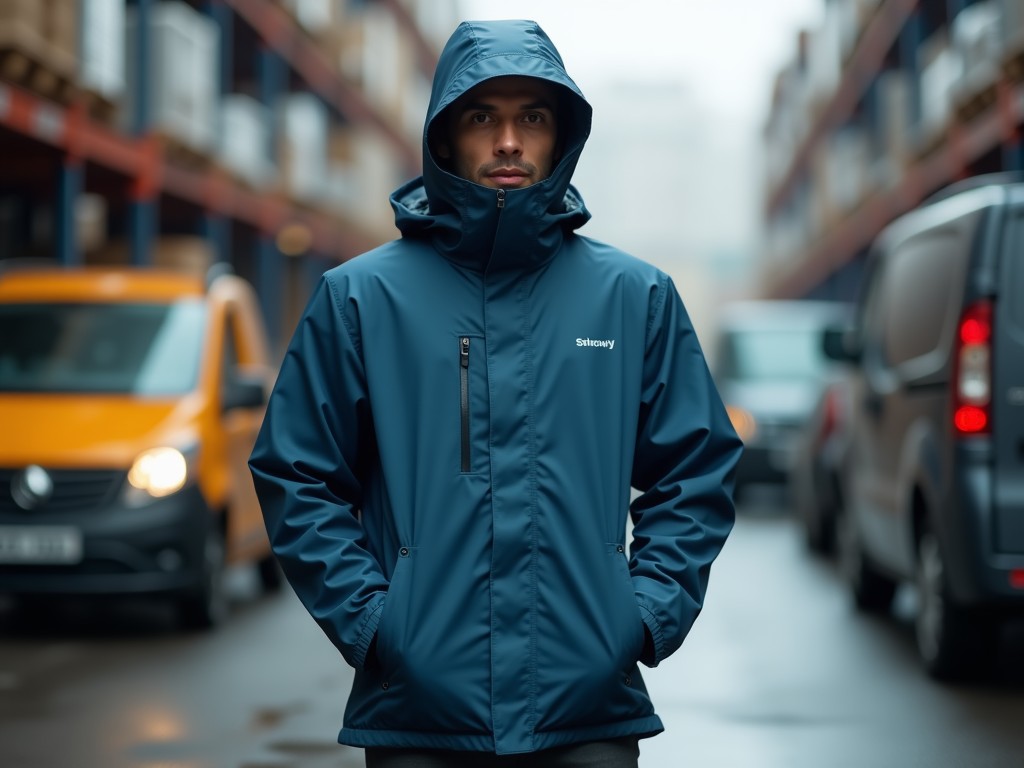
Mens Outdoor Lightweight Rain Gear Top Factory
Mens Outdoor Lightweight Rain Gear Top Factory
Industrial buyers seeking mens outdoor lightweight rain gear tops require precise technical specifications to evaluate performance under variable weather conditions, material durability, and manufacturing consistency. This page details the engineering considerations, material options, and quality controls relevant to bulk procurement of rain gear tops designed for extended outdoor use in demanding environments.
Material Construction and Performance Characteristics
The primary function of a lightweight rain gear top is to provide effective water resistance while minimizing thermal burden and restricting movement. Fabric selection centers on microporous membranes or hydrophilic coatings applied to nylon or polyester substrates, where waterproofness is measured in millimeters of water column (mm H₂O) and breathability in grams of moisture vapor transmission per square meter per 24 hours (g/m²/24h). Typical values range from 5,000 to 15,000 mm H₂O for waterproofing and 3,000 to 8,000 g/m²/24h for breathability, depending on the coating thickness and substrate denier.
Denier rating directly influences tear strength and abrasion resistance; common substrates use 20D to 40D nylon ripstop or polyester taffeta, offering a balance between weight (typically 80–150 g/m²) and mechanical durability. Seam sealing is critical—factory-applied polyurethane tape or heat-bonded films prevent leakage at stitch points, with seal width and adhesion strength tested per ASTM D751 or ISO 811 standards. Zippers and closures employ water-resistant coils or molded plastic with storm flaps to maintain integrity under prolonged exposure.
Design Engineering for Functional Use
Pattern design prioritizes articulation and layer compatibility. Raglan sleeves or gusseted underarms increase range of motion without adding bulk, while adjustable cuffs and hem drawcords allow users to seal against wind-driven rain. Ventilation zones—often laser-perforated or mesh-lined under the arms or along the back—enhance moisture vapor escape without compromising waterproof integrity, a feature validated through sweat mapping tests in controlled climate chambers.
Hood geometry is engineered for peripheral visibility and helmet compatibility; a three-panel design with stiffened brim and rear adjustment ensures the hood moves with the head without obstructing sight. Reflective elements, when specified, use retroreflective tape meeting EN ISO 20471 standards for low-light visibility, positioned on shoulders, sleeves, and back for 360° recognition. All trims and hardware are selected for corrosion resistance, using nylon-coated or stainless steel components in salt-spray exposed environments.
Manufacturing Process and Quality Control
Production begins with fabric inspection for coating uniformity, adhesion, and defect density using automated optical scanners. Cutting is performed via CNC or laser systems to maintain pattern accuracy within ±1mm tolerance, critical for seam alignment and waterproof integrity. Sewing employs flatlock or overlock stitches with polyester thread, followed by seam sealing under controlled temperature and pressure to ensure bond strength exceeds 10 N/cm.
Final inspection includes hydrostatic testing (ASTM D3393) to confirm waterproofness, spray rating tests (AATCC 22) for surface wettability, and breathability verification via inverted cup method (ASTM E96). Dimensional stability is assessed after multiple wash cycles per ISO 6330, with shrinkage limited to <3% in both warp and weft directions. Packaging uses recyclable polybags with desiccant packs to prevent moisture ingress during transit, and each batch is labeled with lot number, test date, and compliance marks for traceability.
Customization Options for Industrial Applications
Buyers can specify substrate denier, coating type (PU, PVC, or ePTFE), and finish (matte, gloss, or DWR-treated) based on end-use environment—whether for forestry, utility work, or coastal operations. Color options extend beyond standard blacks and grays to include high-visibility fluorescents (ANSI/ISEA 107 compliant) or camouflage patterns via sublimation printing. Sizing charts are adjustable; made-to-measure patterns are available for bulk orders exceeding 500 units, with grading rules provided upon request.
Additional features include removable liners (fleece or mesh), internal pockets with water-resistant zippers, and reinforced abrasion patches at elbows and shoulders. Logo application methods—screen printing, heat transfer, or embroidery—are selected based on fabric type and wash durability requirements, with adhesion tested per AATCC 8. All customizations undergo the same QC protocol as standard products to ensure consistency.
| Parameter | Typical Range | Test Standard |
|---|---|---|
| Waterproofness | 5,000–15,000 mm H₂O | ASTM D3393 / ISO 811 |
| Breathability | 3,000–8,000 g/m²/24h | ASTM E96 / ISO 11092 |
| Fabric Weight | 80–150 g/m² | ASTM D3776 |
| Seam Seal Adhesion | >10 N/cm | ASTM D751 |
| Dimensional Change (after 5 washes) | < -3% | ISO 6330 |
Applications in Industrial and Operational Settings
These rain gear tops are specified in environments where workers face prolonged exposure to precipitation without access to immediate shelter—such as utility line maintenance, offshore wind farm inspections, or wildfire suppression crews. The lightweight construction reduces fatigue during extended wear, while the breathable membrane prevents heat buildup during physical exertion, a critical factor in maintaining focus and safety. Unlike heavier PVC alternatives, the flexible substrate allows easy storage in vests or packs, supporting rapid deployment.
In forestry and agricultural operations, the tear-resistant fabric withstands branch snagging and thorn penetration, while the quiet rustle of nylon minimizes disturbance in wildlife monitoring scenarios. For coastal or marine use, salt-resistant coatings and corrosion-proof hardware ensure longevity despite repeated exposure to saline spray. The garment’s compatibility with layered systems—worn over base layers and under insulated jackets—makes it adaptable to seasonal temperature shifts without requiring multiple dedicated outer shells.